Skip to content

Teach Reproduction: How Life Continues in seven steps.

For each idea: show it, ask before you tell, then say one line.

Gather a sprouted potato, steel saucer and a fresh pea pod.

Common misconceptions & worked visual for this chapter · 8 practice questions with answers

How to teach it

How new organisms begin

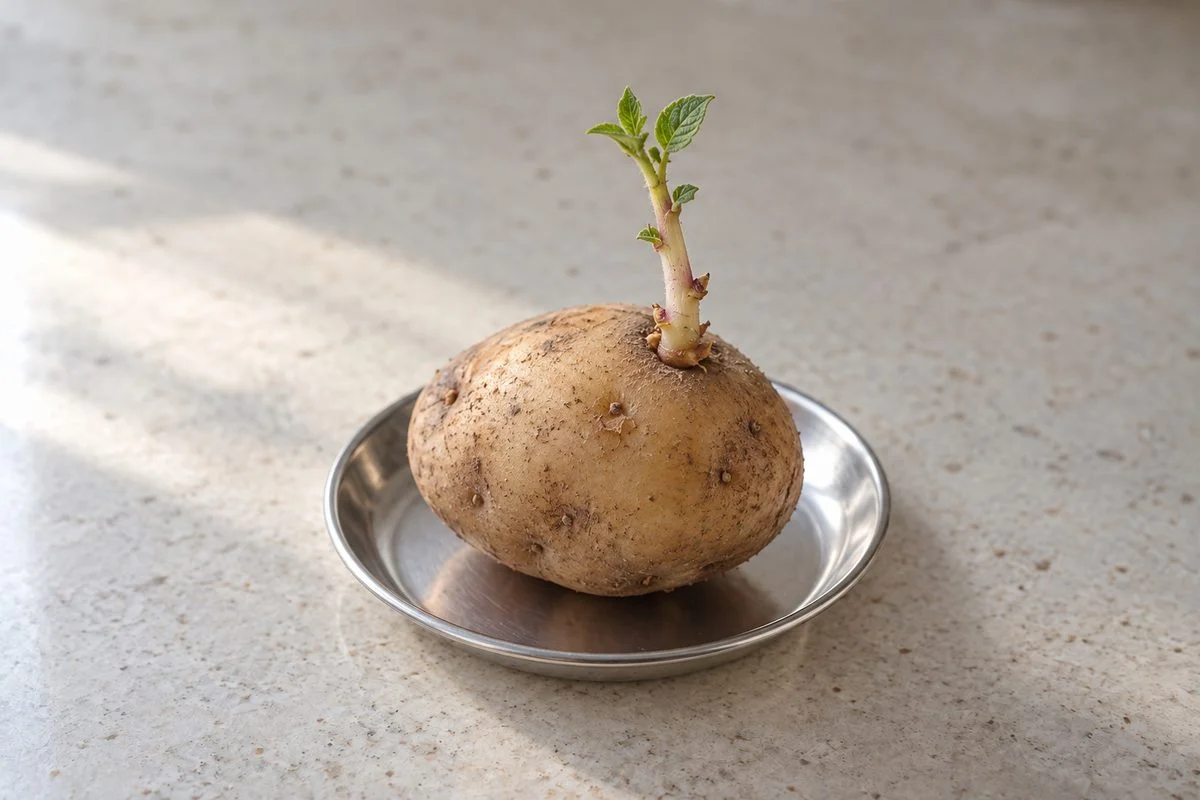
A sprouted potato on a steel saucer, with its shoot visibly attached.

1. Asexual reproduction and vegetative propagation

One parent produces offspring without gametes joining.

Show
Place an already sprouted potato on a saucer. Follow its shoot down to the eye.
Ask
Can this shoot become a plant without starting from a seed?
Say
This potato bud can grow into a plant without a seed.
Used in
Vegetative propagation quickly produces plants while preserving useful traits.
If your child says…“Every new plant starts from a seed.”
Ask
Is this eye part of a seed or the potato stem?
What’s true
Roots, stems or leaves can also produce plants.
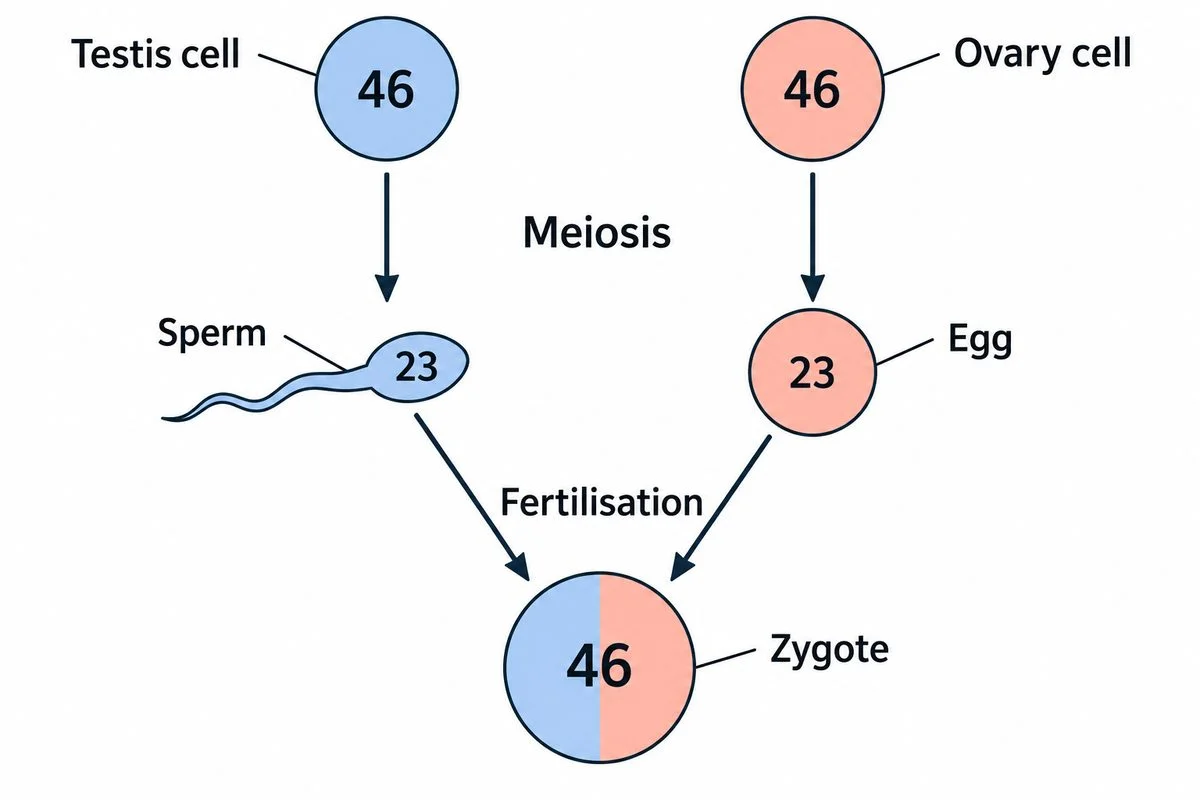
Diagram showing chromosome numbers halving in gametes and returning to 46 after fertilisation.

2. Sexual reproduction and meiosis

Gametes carry half the chromosomes; fertilisation combines both parents' genes.

Show
Look at the diagram’s testis cell and ovary cell, each marked 46. Follow their arrows to the sperm and egg.
Ask
When these gametes join, will their chromosomes add up to 46 or 92?
Say
In humans, meiosis normally halves the count to 23, and fertilisation restores 46.
Used in
Plant breeders combine parents with useful traits to produce new varieties.
If your child says…“Fertilisation halves the chromosomes.”
Ask
Where does the count fall from 46 to 23: before the gametes join, or afterwards?
What’s true
Meiosis halves chromosome numbers; fertilisation restores them.

How flowers produce seeds

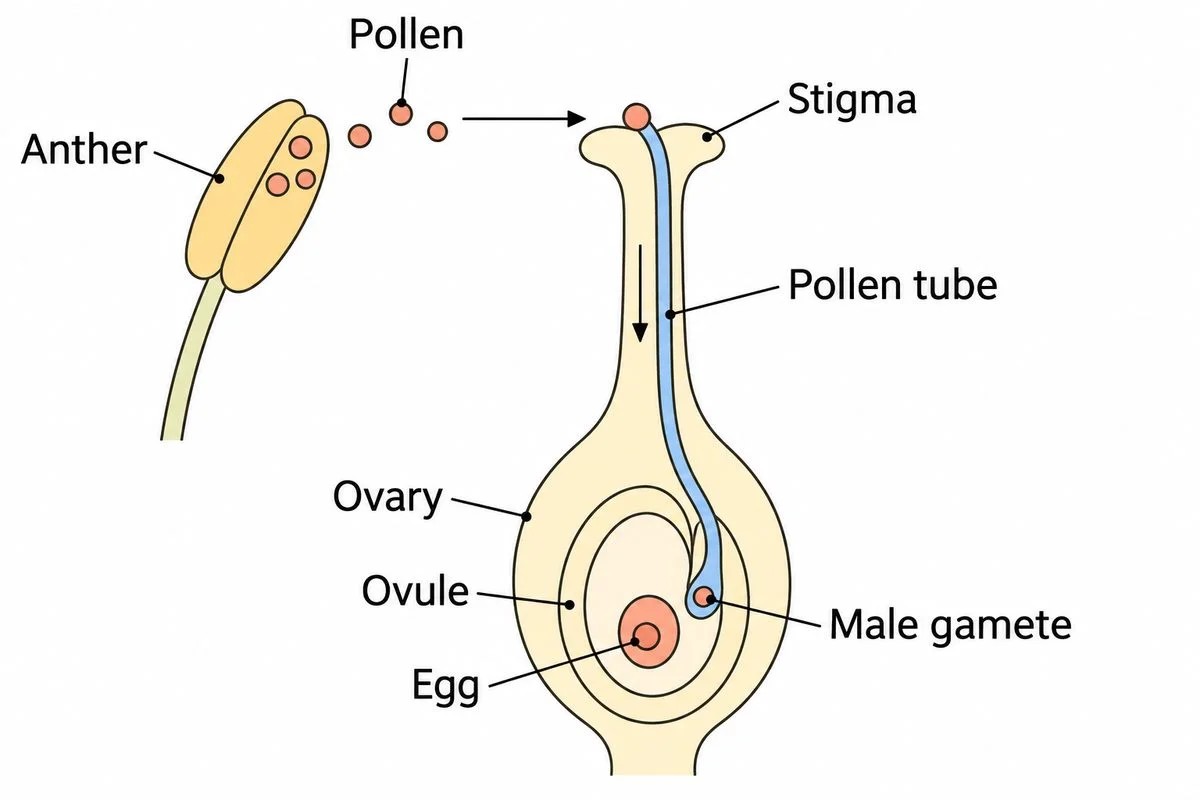
Flower cutaway showing pollen transfer and a pollen tube reaching an egg inside an ovule.

3. Pollination and fertilisation

Pollen arrives first. Male and female gametes join later.

Show
Look at the diagram. Follow pollen from the anther to the stigma. Trace the pollen tube towards the egg inside an ovule.
Ask
How will a male gamete from pollen here reach the egg inside this flower?
Say
Pollen reaching the stigma is pollination. A pollen tube grows down to an ovule. Fertilisation happens there when a male gamete joins the egg.
Used in
Pollinators carry pollen to stigmas, helping flowering plants produce seeds.
If your child says…“Pollination is fertilisation.”
Ask
Has reaching the stigma brought the male gamete inside the ovule?
What’s true
Pollen arriving and gametes joining are separate events.
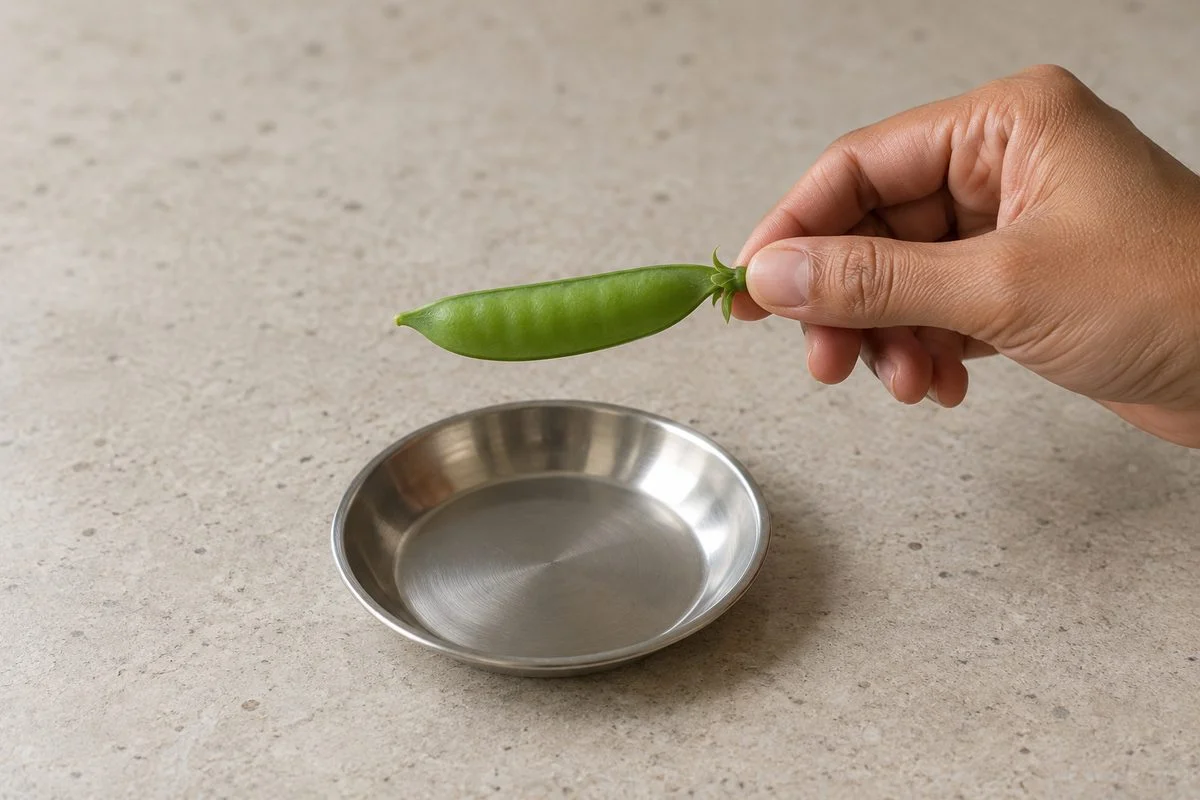
One hand holding a closed pea pod above a steel saucer.

4. Seed and fruit formation

Ovules become seeds. The surrounding ovary becomes the fruit.

Show
Hold a closed pea pod above the saucer. After the prediction, open it by hand.
Ask
Will the seeds be inside the pod or on its outside?
Say
These peas are seeds, and this pod is the fruit. After fertilisation, ovules became these seeds, and the ovary became this pod.
Used in
A seed holds an embryo that can develop into a new plant.
If your child says…“The ovary becomes a seed.”
Ask
Which surrounds the seeds here: the fruit or another seed?
What’s true
Each seed develops from an ovule inside the ovary.

Human reproduction and health

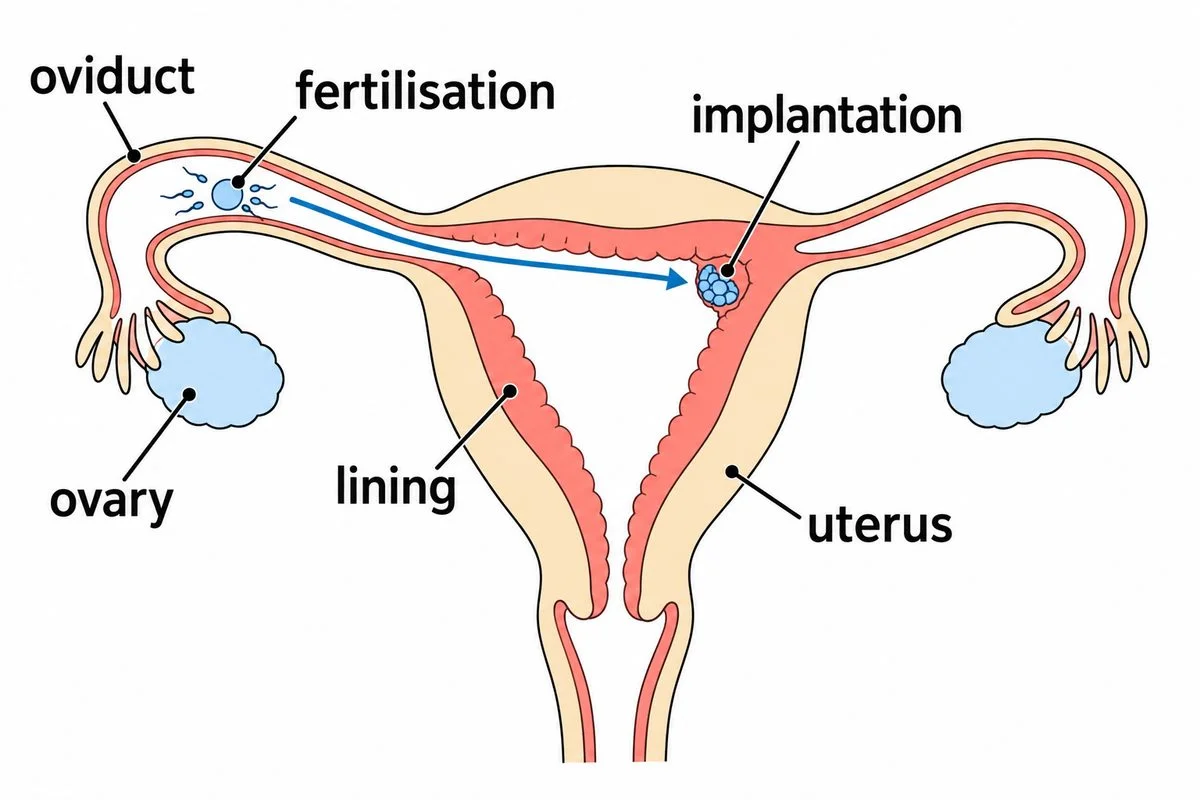
Diagram marking fertilisation in an oviduct and implantation on the uterus lining.

5. Fertilisation and implantation

Gametes usually join in oviducts. Embryos attach to the uterus lining.

Show
Find fertilisation in the diagram’s oviduct. Follow the arrow to implantation on the uterus lining.
Ask
Where will the embryo attach?
Say
Sperm and egg usually join in an oviduct. The embryo later attaches to the uterus lining.
Used in
IVF can help people have a baby by placing a laboratory-grown embryo in the uterus.
If your child says…“Sperm and egg meet in the uterus.”
Ask
Is the fertilisation mark inside the tube or on the uterus lining?
What’s true
Fertilisation and implantation happen in different places.
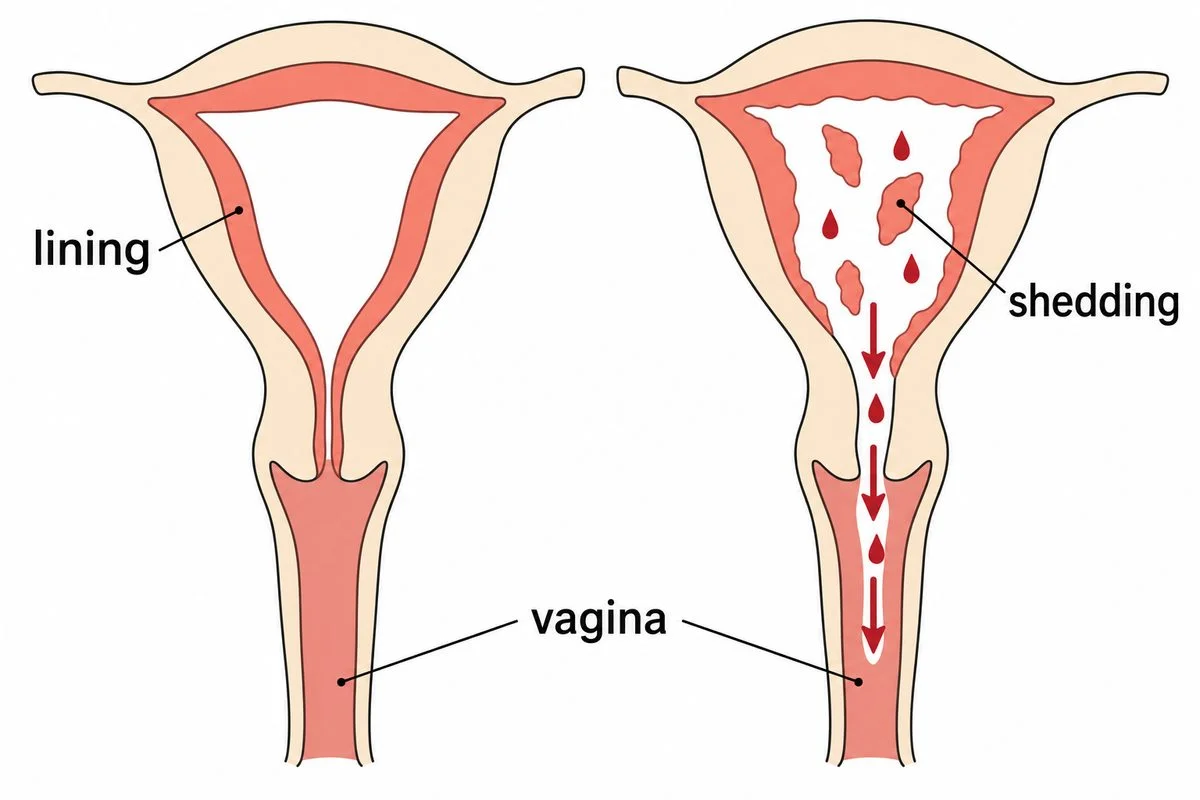
Two uterus diagrams show thick lining and shedding through the vagina.

6. Menstruation

The uterus sheds part of its lining during a period.

Show
Compare the two uterus diagrams. Find the thick lining, then follow the shedding through the vagina.
Ask
Which will remain: the uterus or its shed lining?
Say
Without pregnancy, some lining sheds through the vagina with blood. The uterus remains.
Used in
Tracking periods helps people prepare for bleeding and notice changes in their menstrual cycle.
If your child says…“A period means the egg was fertilised.”
Ask
Why keep a lining for an embryo that has not formed?
What’s true
Fertilisation does not trigger a normal period.
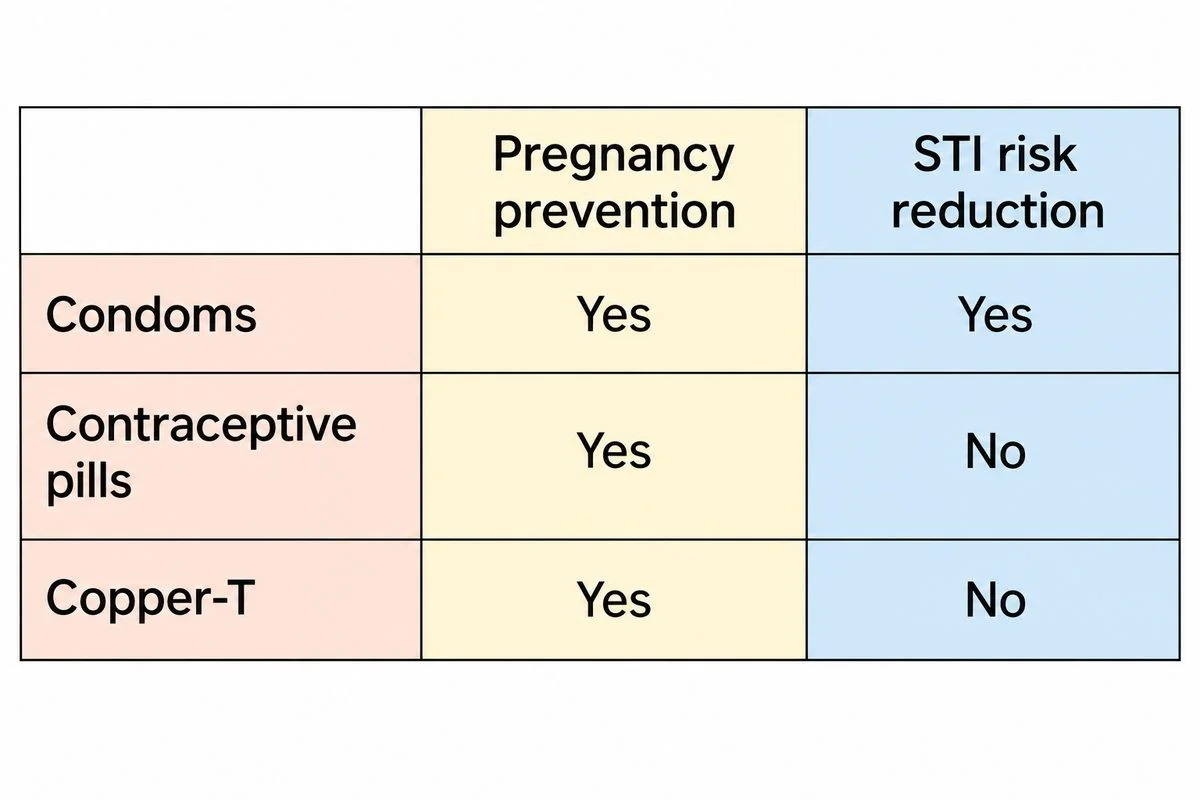
Comparison chart showing pregnancy prevention for three methods and infection risk reduction for condoms.

7. Contraception

Pregnancy prevention and infection protection are different benefits.

Show
Look at the diagram’s pregnancy prevention column. Compare it with the STI risk reduction column. STI means sexually transmitted infection.
Ask
Will every method here that prevents pregnancy also reduce infection risk?
Say
Among these methods, only condoms offer both benefits when used correctly every time. Pills and Copper-T help prevent pregnancy but do not protect against sexually transmitted infections.
Used in
Correctly used condoms help prevent pregnancy while reducing transmission of many sexually transmitted infections.
If your child says…“Every contraceptive protects against infections.”
Ask
Which rows show pregnancy prevention without reduced infection risk?
What’s true
Preventing pregnancy does not automatically prevent infections.

A real problem

Operation Flood helped increase India’s milk production

Before Operation Flood, India’s milk production had barely grown.

Operation Flood began in 1970.

The programme made artificial insemination services available to more dairy cooperative members.

Artificial insemination, animal healthcare, feed and farmer education helped increase milk production and productivity.

NDDBFAONCAER

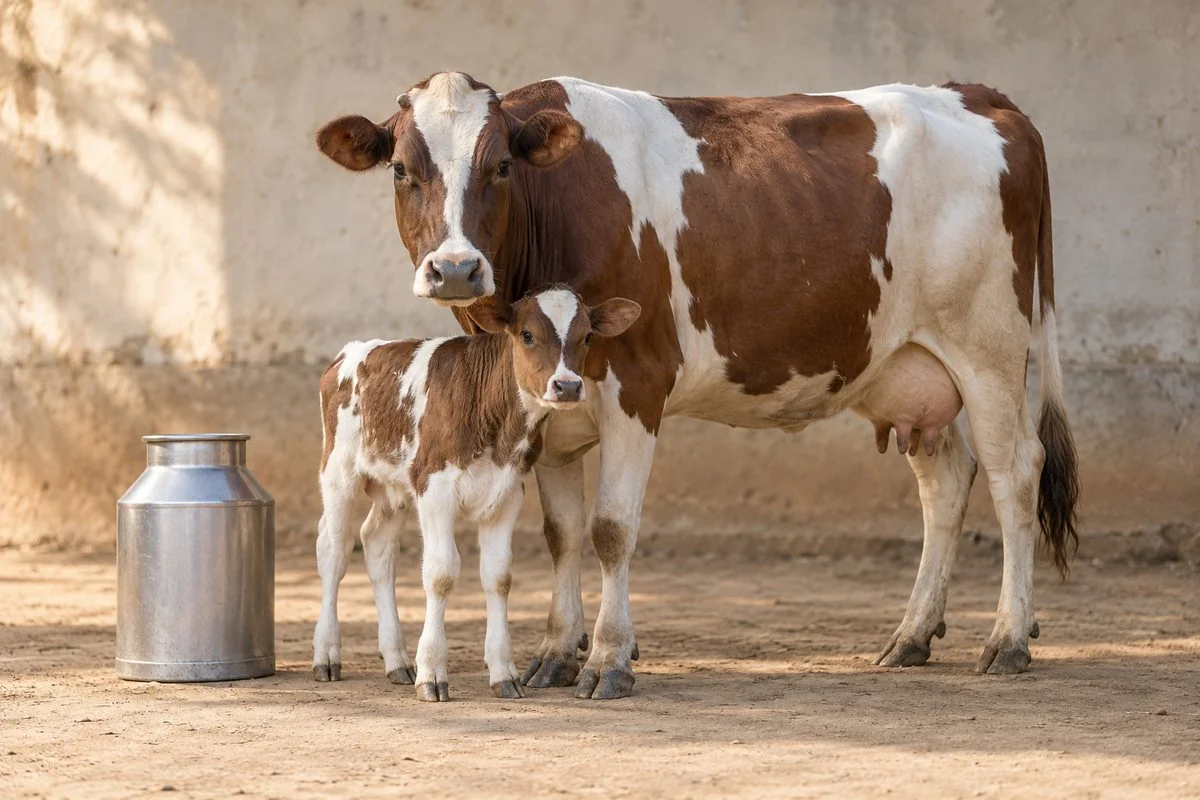
A dairy cow and her calf beside a steel milk can.

Concept Lab · Common misconception

The tempting mistake in Reproduction: How Life Continues

Open standalone misconception page →

Can reproduction happen with one parent?

Wrong

Every living thing needs two parents to reproduce.

Why it feels right. Animal reproduction is the example I know best.

Right

Asexual reproduction can occur from one parent.

Worked example

A single yeast cell grows a bud. The bud can separate as a new cell.
  1. A yeast cell forms a bud that grows and separates.
  2. The bud comes from the single parent cell.

Ask your child seven quick questions.

One per step. The answer and the reason are given.

  1. What specific type of asexual reproduction produces a potato plant from a stem bud?

    Vegetative propagation. The bud grows from a stem, without a seed.

  2. Which process halves chromosome numbers during sexual reproduction?

    Meiosis, when gametes form. Meiosis halves the number before fertilisation restores it.

  3. Pollen has just reached a stigma. Which event has happened?

    Pollination. Fertilisation requires the male gamete to join the egg inside an ovule.

  4. Which flower structure develops into a seed after fertilisation?

    An ovule. The surrounding ovary becomes the fruit.

  5. Where do human sperm and egg normally join?

    In an oviduct. The embryo reaches the uterus afterwards for implantation.

  6. Does a normal period mean an egg was fertilised?

    No. The lining is shed when it is not supporting a pregnancy.

  7. What protection against sexually transmitted infections do contraceptive pills provide?

    None. Pills prevent pregnancy but do not protect against these infections.

8 more questions with answers