Skip to content

Teach Earth as a System: Energy, Matter, and Life in six steps.

For each idea: show it, ask before you tell, then say one line.

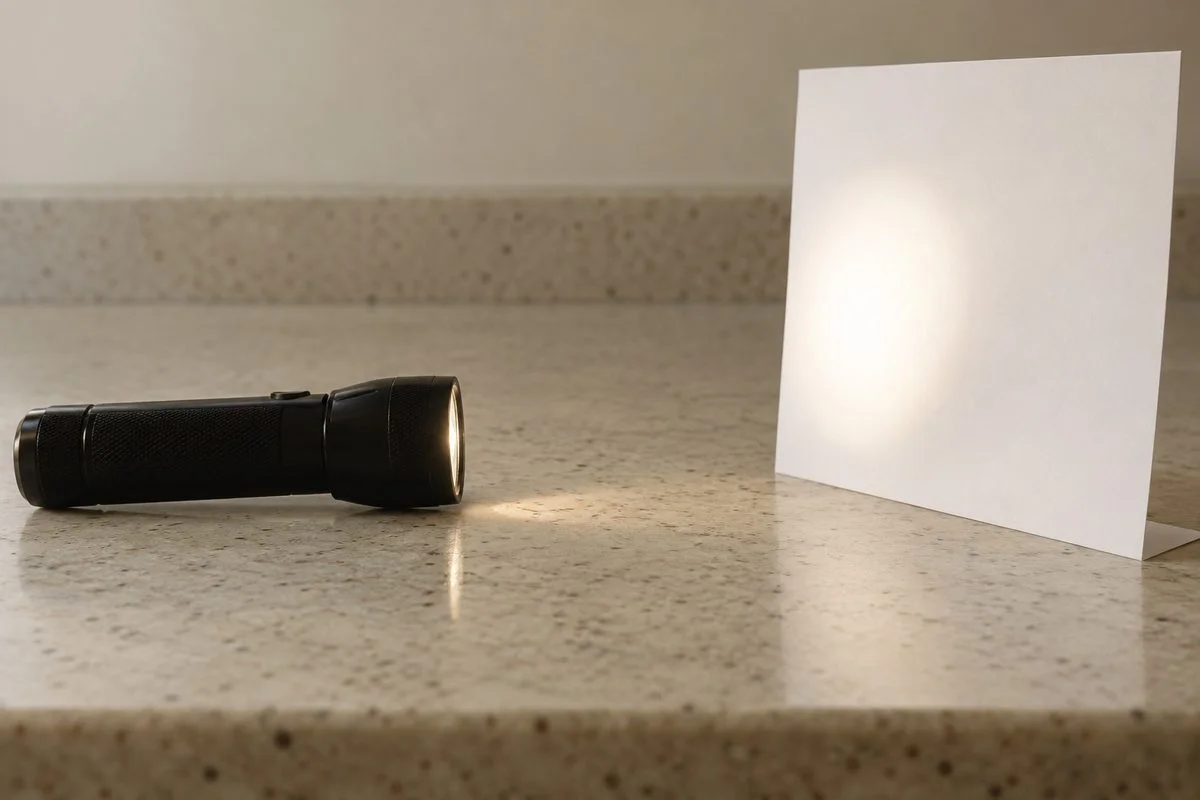
Gather a battery torch and plain paper.

Common misconceptions & worked visual for this chapter · 8 practice questions with answers

How to teach it

How energy moves

Torch aimed straight at plain paper on a pale stone surface.

1. Uneven solar heating of Earth

Different places receive different amounts of solar energy.

Show
Shine a torch straight onto paper. After predicting, tilt the paper.
Ask
Will tilting spread the beam over more paper?
Say
Slanting sunlight spreads its energy over more ground.
Used in
Water needs more heat than an equal mass of sand for the same temperature rise. Seawater usually warms less.
If your child says…“Everywhere gets equal sunlight.”
Ask
After spreading the same beam, does each equal-sized patch receive more energy or less than before?
What’s true
Across the year, equatorial ground receives more solar energy per square metre.
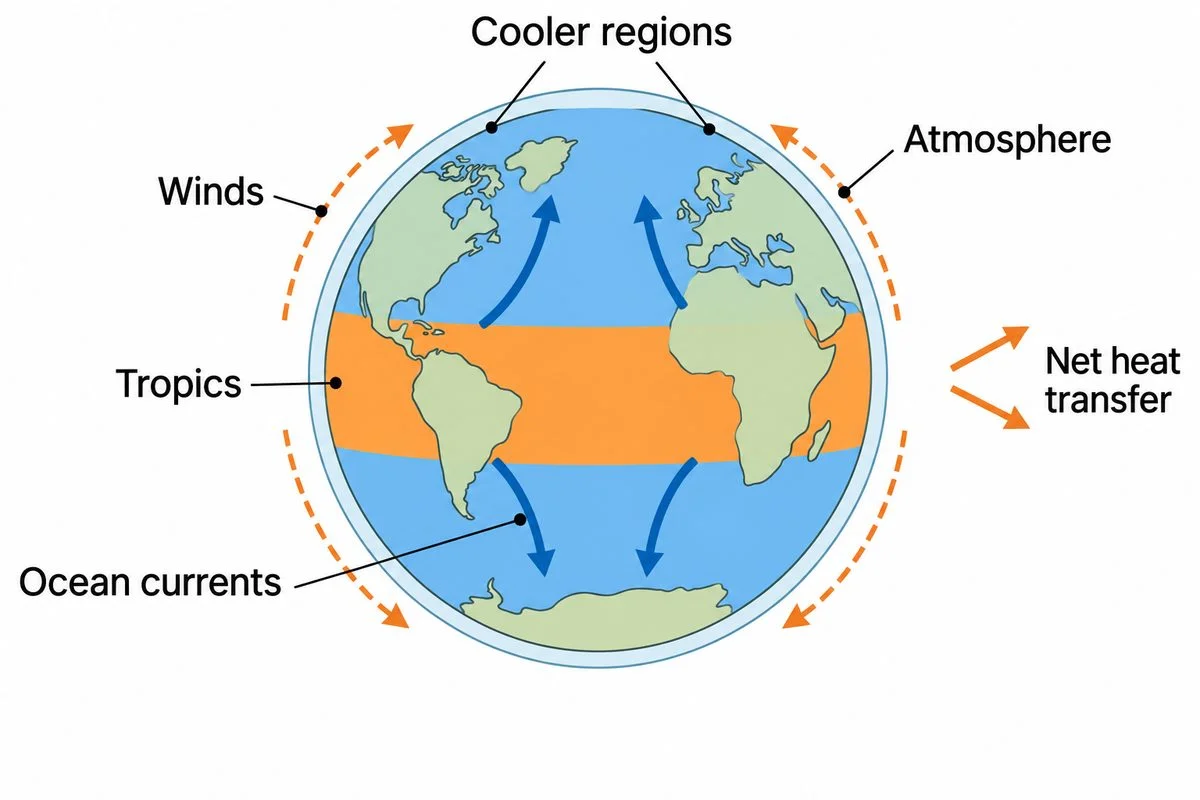
Winds and ocean currents carry heat from the tropics towards cooler regions.

2. Winds and ocean currents

Moving air and ocean water carry heat between places.

Show
Find the warm tropical belt in the diagram. Follow both arrow styles towards the cooler regions.
Ask
What will carry heat from this warm belt towards cooler regions?
Say
Winds and ocean currents carry heat, reducing temperature differences. These arrows show overall heat transfer, not exact travel routes.
Used in
Fishing advisories use ocean patterns to help fishers spend less time searching.
If your child says…“Ocean currents move water without changing coastal temperatures.”
Ask
What happens to the air above water that brings heat to a coast?
What’s true
A warm ocean current warms the air above it and affects the nearby coast.

How matter cycles

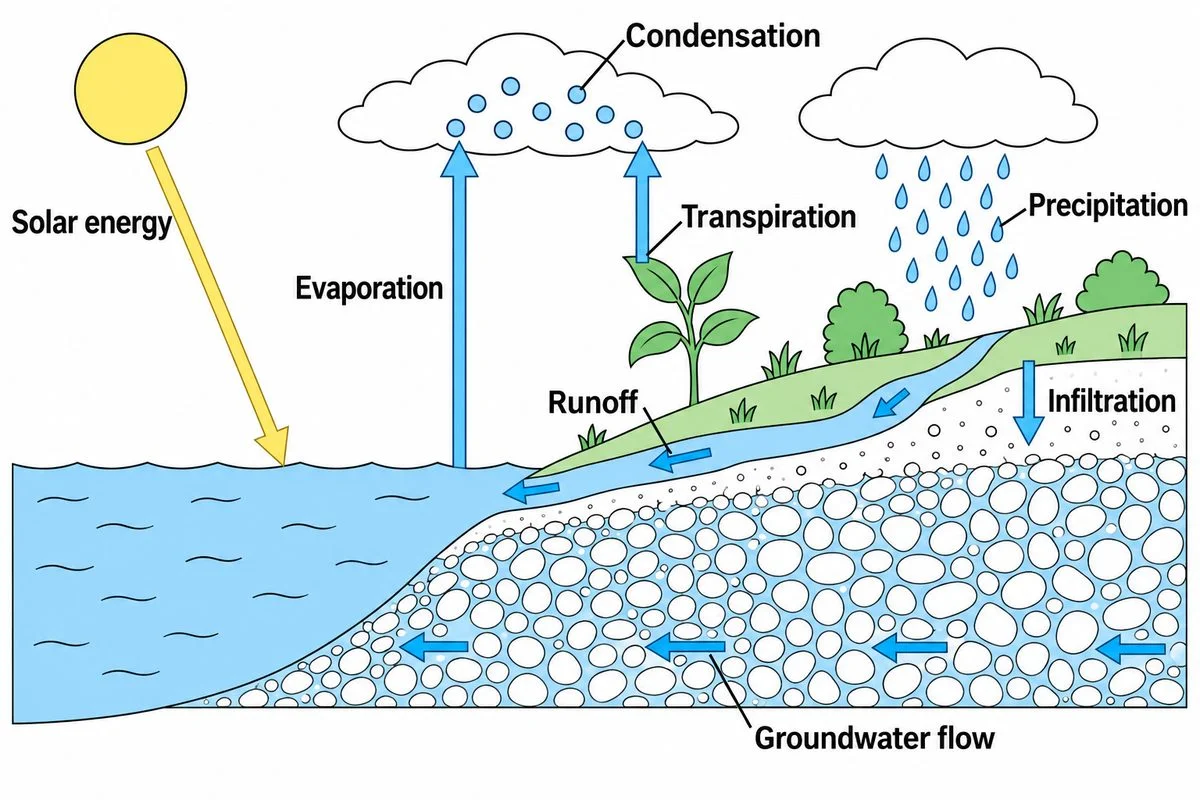
Water moves through clouds, plants, rivers and ground between sea and land.

3. Water cycle

Water circulates through air, land and water bodies.

Show
Find the sea, clouds and hillside in the diagram. Trace the arrows through leaves, rivers and ground.
Ask
After rivers carry water into this sea, how could it return to the hillside?
Say
Sunlight powers evaporation, and plants also release water vapour. Vapour condenses into droplets; precipitation returns water to land. Gravity pulls rain down and carries water downhill through rivers and ground.
Used in
Rain replenishes water on land.
If your child says…“The water gets used up and disappears.”
Ask
Could that water return as droplets?
What’s true
Water changes form without being destroyed.
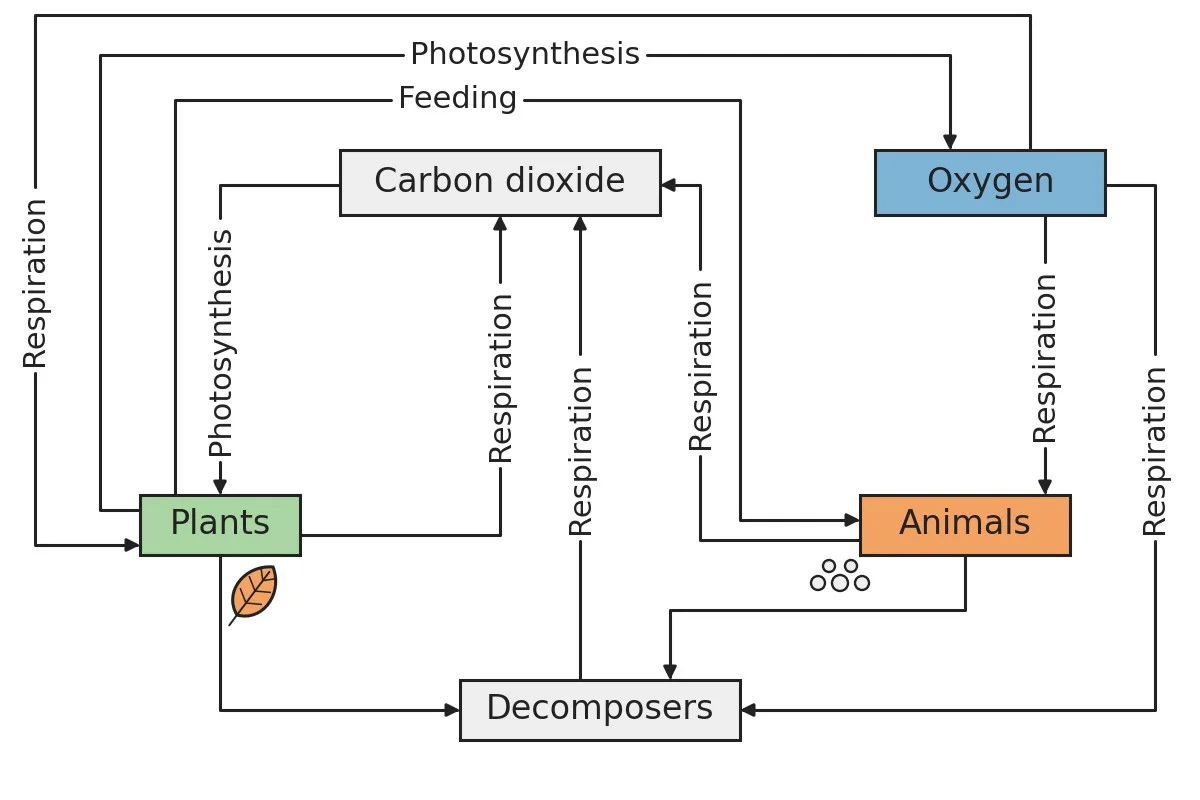
Plants, animals and decomposers exchange carbon dioxide and oxygen through photosynthesis, feeding and respiration.

4. Carbon and oxygen cycles

Carbon and oxygen move between organisms and their surroundings.

Show
Find plants and animals in the diagram. Trace the feeding arrow, then the gas exchanges with plants, animals and decomposers.
Ask
How will carbon from the air reach these animals through food?
Say
Plants turn carbon dioxide into food during photosynthesis, releasing oxygen. Animals gain carbon by eating plants. Plants, animals and decomposers use oxygen during aerobic respiration and release carbon dioxide.
Used in
Photosynthesis replenishes oxygen used by living things.
If your child says…“Plants only release carbon dioxide.”
Ask
Which process takes carbon dioxide back into plants?
What’s true
During photosynthesis, plants take in carbon dioxide and release oxygen.
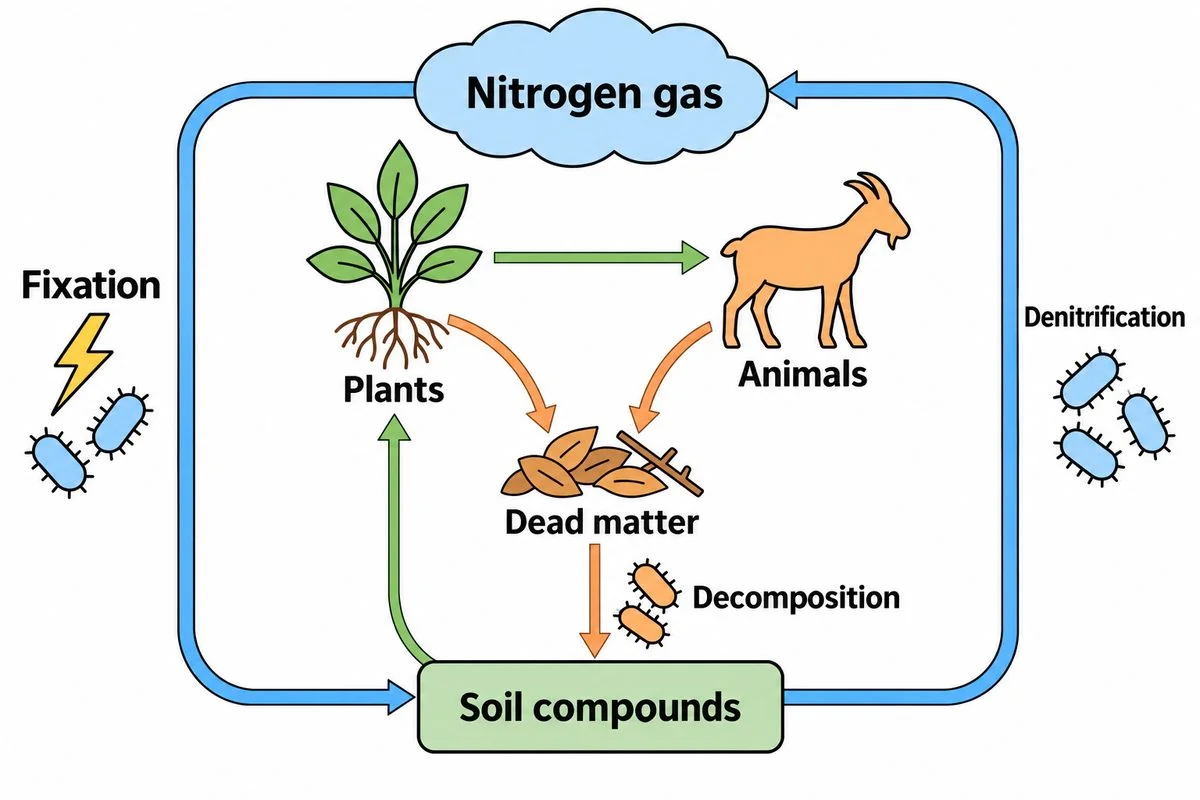
Nitrogen changes form as it moves between air, soil, plants and animals.

5. Nitrogen cycle

Nitrogen circulates through air, soil and living things.

Show
Find nitrogen gas at the diagram's top. Follow fixation into soil, then plants and animals. Trace both return routes.
Ask
Will these roots absorb nitrogen gas directly, or take in nitrogen compounds from the soil?
Say
Certain bacteria or lightning change nitrogen gas into compounds roots can absorb. Feeding carries nitrogen into animals, and decomposition returns nitrogen to soil. Other bacteria return nitrogen gas to the air.
Used in
Nitrogen fixation supplies compounds that plants need.
If your child says…“Plants take nitrogen gas directly.”
Ask
Can roots use nitrogen gas directly, or must it first change into nitrogen compounds?
What’s true
Plants absorb nitrogen compounds from soil.

How human actions affect Earth

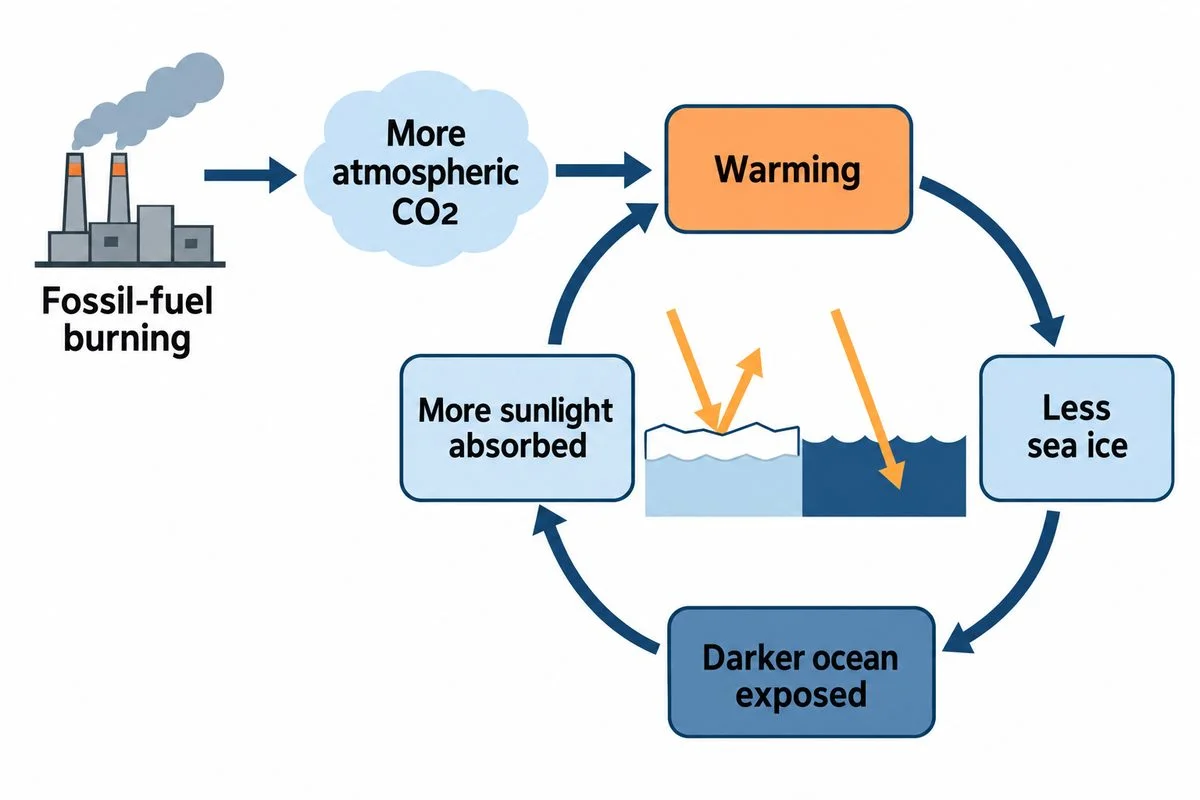
Fossil-fuel burning starts warming reinforced by ice loss and greater sunlight absorption.

6. Human impacts and Earth-system feedbacks

Human actions trigger linked changes; feedbacks can strengthen or weaken them.

Show
Find fossil-fuel burning in the diagram. Follow the arrows to warming, then around the loop through sea-ice loss.
Ask
How could losing this sea ice cause still more warming?
Say
Extra carbon dioxide slows Earth's heat loss, causing warming. Melting ice exposes darker water, which absorbs more sunlight and adds further warming. This feedback strengthens warming.
Used in
Reducing fossil-fuel use limits added carbon dioxide, helping reduce further warming.
If your child says…“Extra carbon dioxide changes the air, but nothing else.”
Ask
Where does the arrow from increased sunlight absorption lead?
What’s true
Changes in the air can affect ice and oceans, which can then affect warming.

A real problem

Fishing advisories help fishers find fish with less searching.

The advisories grew from a marine satellite information programme started in June 1990.

Ocean fronts, swirling currents and places where deeper water rises indicate promising fishing areas.

Satellite-based forecasts reduce the time and effort spent locating groups of fish.

INCOISINCOISISRO

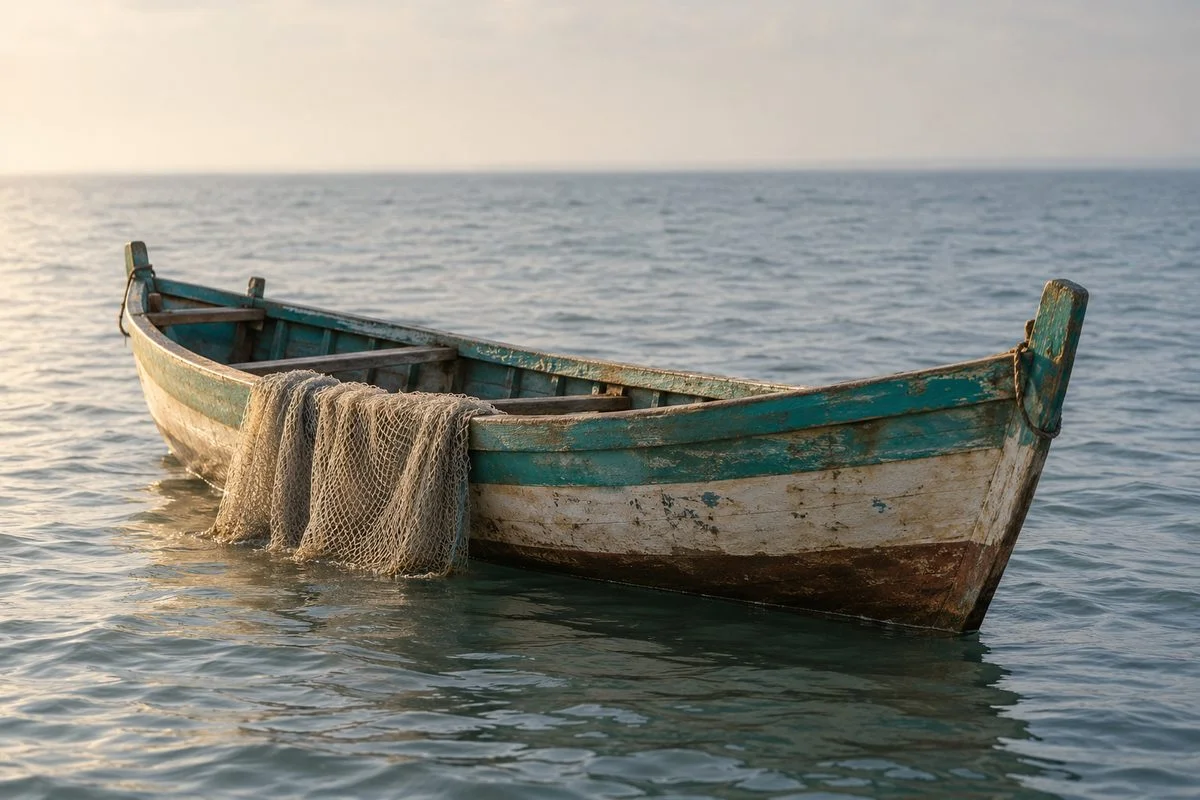
An Indian fishing boat at sea with a net over its side.

Concept Lab · Common misconception

The tempting mistake in Earth as a System: Energy, Matter, and Life

Open standalone misconception page →

Does energy cycle through ecosystems like matter?

Wrong

Energy comes back to producers as dead material breaks down.

Why it feels right. Nutrients return, so energy seems to return too.

Right

Matter can cycle. Ecosystems receive energy and release much of it as heat.

Worked example

Nutrients
Dead material→Decomposers→Nutrients in soil→Plants
Energy
Sunlight→Plants→Ecosystem activity→Heat disperses
The two paths differ. Nutrients can return to plants, while energy needs a fresh input.
  1. Decomposers release nutrients that plants can take up.
  2. Plants still need an energy source such as sunlight to make sugars.

Ask your child six quick questions.

One per step. The answer and the reason are given.

  1. Compare the equator and poles. Which receives more solar energy per square metre annually?

    The equator. Sunlight reaches equatorial ground more directly.

  2. How does an ocean current bringing heat affect a nearby coast's climate?

    It can become warmer. Heat from the current can warm the coast's air.

  3. What can water vapour become when cooled enough, but kept above water’s freezing temperature?

    Liquid water droplets. Condensation changes water’s form without destroying it.

  4. Which gas does photosynthesis produce and release?

    Oxygen. Photosynthesis releases oxygen while taking in carbon dioxide.

  5. In what form do most plants absorb nitrogen from soil?

    Nitrogen compounds. Most plants cannot use nitrogen gas directly.

  6. Why does losing sea ice increase warming in this loop?

    Darker water absorbs more sunlight. The added warming melts more ice, reinforcing the initial change.

8 more questions with answers