Skip to content

Teach Patterns in Life: Diversity and Classification in eight steps.

For each idea: show it, ask before you tell, then say one line.

Gather different fallen leaves, paper and a pencil, and find an outdoor flowering plant with visiting insects.

Common misconceptions & worked visual for this chapter · 8 practice questions with answers

How to teach it

Grouping and naming life

Different fallen leaves lying together before sorting.

1. Biodiversity and classification

Grouping life's variety helps reveal relationships and shared ancestry.

Show
Place different fallen leaves together, ready to sort. After the prediction, sort by colour, then compare their shapes and vein patterns. Explain that sorting leaves compares features but cannot establish shared ancestry.
Ask
Will colour alone reliably group closely related plants?
Say
Colour alone is not reliable. Classification uses several shared features to trace relationships.
Used in
Biologists use classification to identify organisms and study their relationships.
If your child says…“The same colour means the same group.”
Ask
What features besides colour could you compare?
What’s true
Unrelated organisms can look alike, so colour alone can mislead.
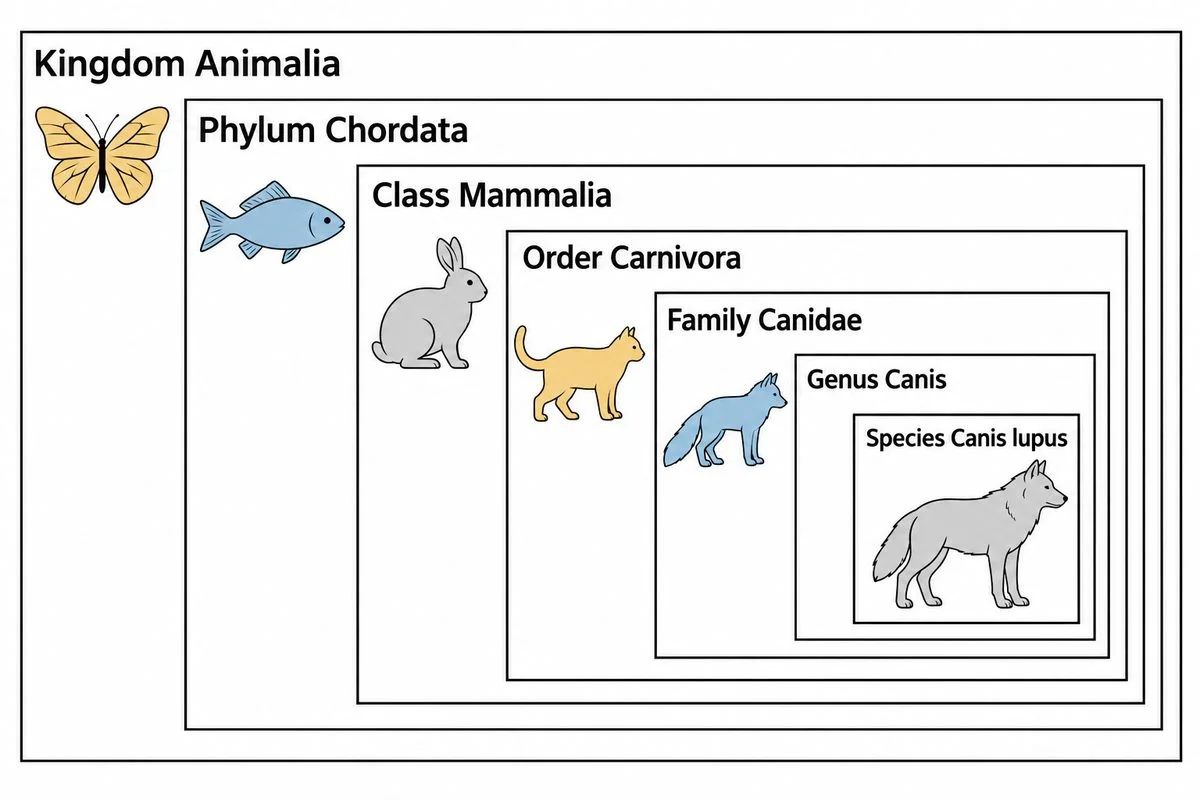
Nested biological groups contain a wolf, with other animals placed in shared broader groups.

2. Classification hierarchy

Broad groups contain smaller groups of more closely related organisms.

Show
Find the wolf inside the diagram's smallest group. Trace outward past the fox, cat, rabbit, fish and butterfly.
Ask
Would another animal placed inside Canis also belong inside Canidae?
Say
The wolf belongs to every group surrounding it. Smaller groups sit inside broader ones and contain more closely related organisms.
Used in
Nested groups let biologists study relationships at different levels.
If your child says…“Species is the biggest group.”
Ask
Which surrounds the other in this diagram: kingdom or species?
What’s true
Species is the narrowest rank in this sequence.

*Homo sapiens*

Homo is the genus.

sapiens is the specific epithet.

3. Binomial nomenclature

A species name combines its genus and specific epithet.

Show
Write these lines. Say, 'People use different local names for the same species.' Point to each part.
Ask
Which complete name would let people using different languages identify this same species?
Say
Homo sapiens combines the genus and specific epithet into one agreed species name. Only Homo starts with a capital. Use italics in print.
Used in
An agreed scientific name lets people identify the same species across languages.
If your child says…“Both words need capitals.”
Ask
Which word names the genus?
What’s true
Only the genus begins with a capital letter.

Distinguishing the five kingdoms

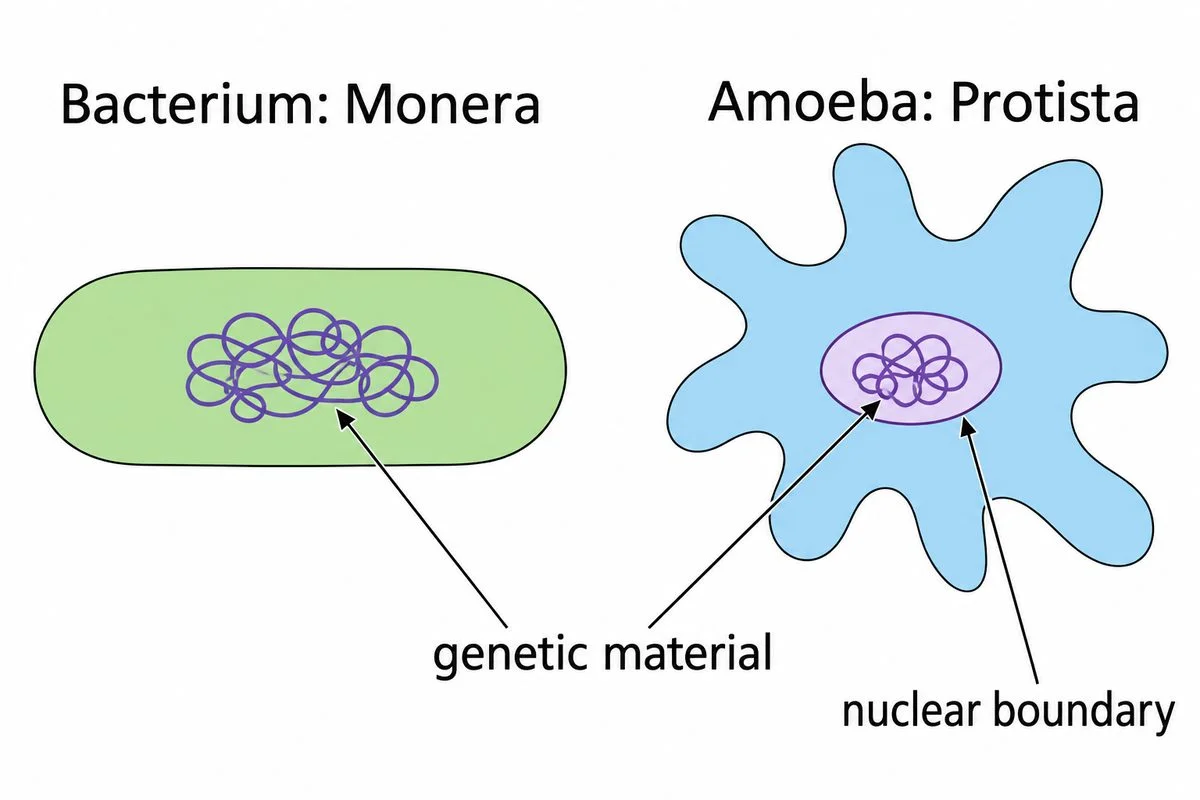
Bacterium and Amoeba contain genetic material; only Amoeba has a nuclear boundary.

4. Monera and Protista

Monera lack membrane-bound nuclei; Protista have nuclei and are usually single-celled.

Show
Look at the diagram. Compare the labelled genetic material in both cells. Find which cell has a nuclear boundary.
Ask
Which cell would have its genetic material inside a nucleus?
Say
The Amoeba has a nucleus. The bacterium has no nuclear boundary.
Used in
Nuclear structure helps biologists distinguish Monera from the other kingdoms.
If your child says…“Bacteria have a proper nucleus too.”
Ask
Does the bacterium's genetic material have a nuclear boundary around it?
What’s true
Bacteria belong to Monera and lack membrane-bound nuclei.
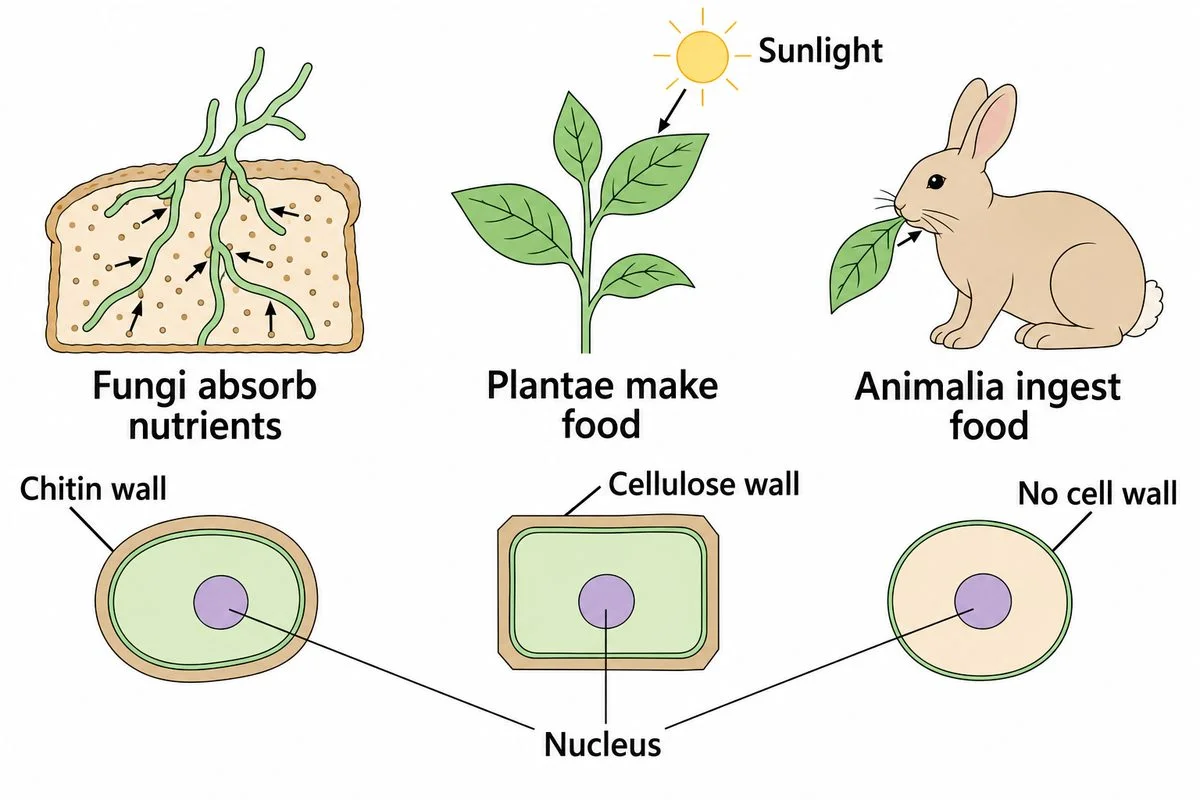
Fungal, plant and animal feeding compared above cells showing nuclei and different boundaries.

5. Fungi, Plantae and Animalia

These kingdoms have nuclei but differ in feeding and cell walls.

Show
Follow the feeding arrows across the diagram: mould, green plant, rabbit. Below each, compare nuclei and cell boundaries.
Ask
Would this mould get food in the same way as the green plant?
Say
Fungi digest food outside themselves, then absorb nutrients. Green plants make food using light, while animals take food into their bodies. Animal cells have no walls.
Used in
Comparing feeding and cell walls helps biologists distinguish these kingdoms.
If your child says…“Fungi are plants that make food.”
Ask
How would a fungus without chlorophyll get its nutrients?
What’s true
Fungi lack chlorophyll and absorb nutrients from living or dead matter.

Past life, adaptation and protection

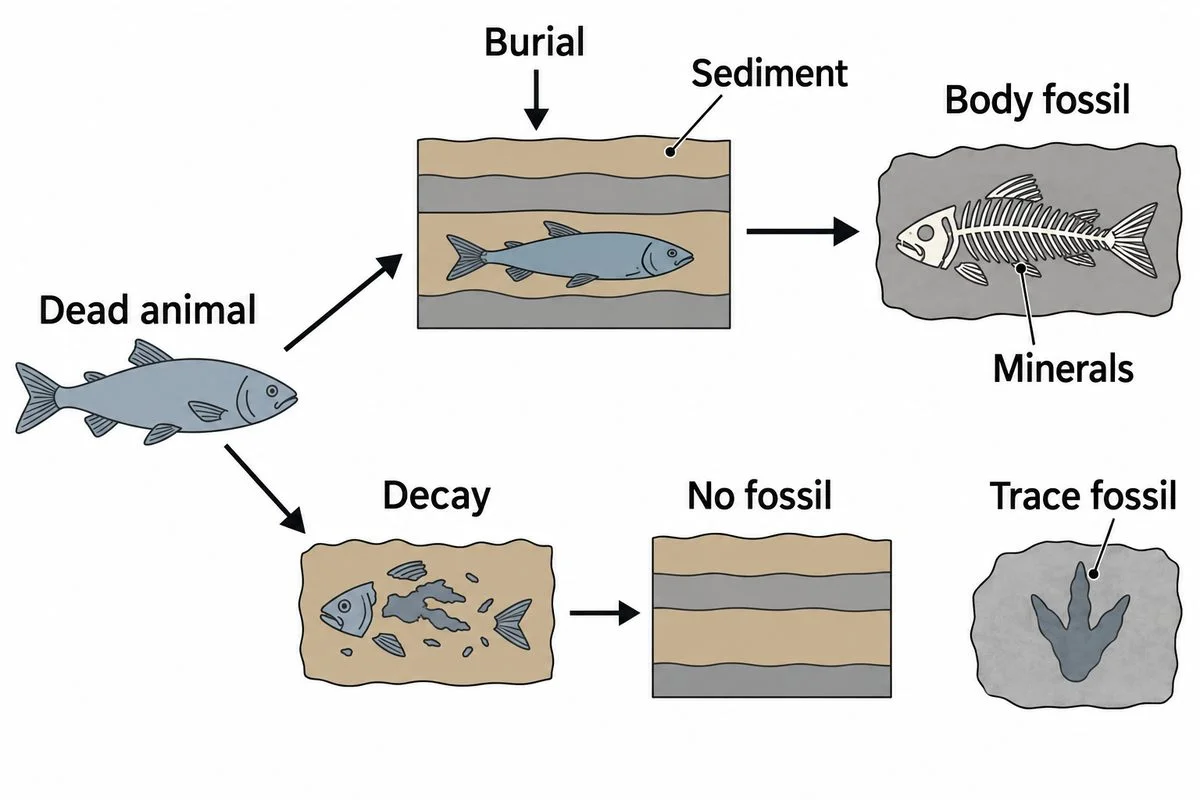
Decay can destroy remains, but some parts or traces can still become fossils.

6. Fossils

Preserved remains or traces reveal some past life.

Show
Follow the diagram from the dead animal through burial to preserved bones. Compare the decay branch and footprint.
Ask
Which branch would be more likely to preserve the animal's bones?
Say
Preserved bones show past organisms, while fossil footprints show their activity. Burial can help remains survive as fossils, but most organisms decay without leaving one.
Used in
Fossils help scientists reconstruct evolutionary change.
If your child says…“Fossils record everything that ever lived.”
Ask
Would a missing trace prove that an organism never existed?
What’s true
Many organisms leave no fossils, and some rocks containing fossils are destroyed.
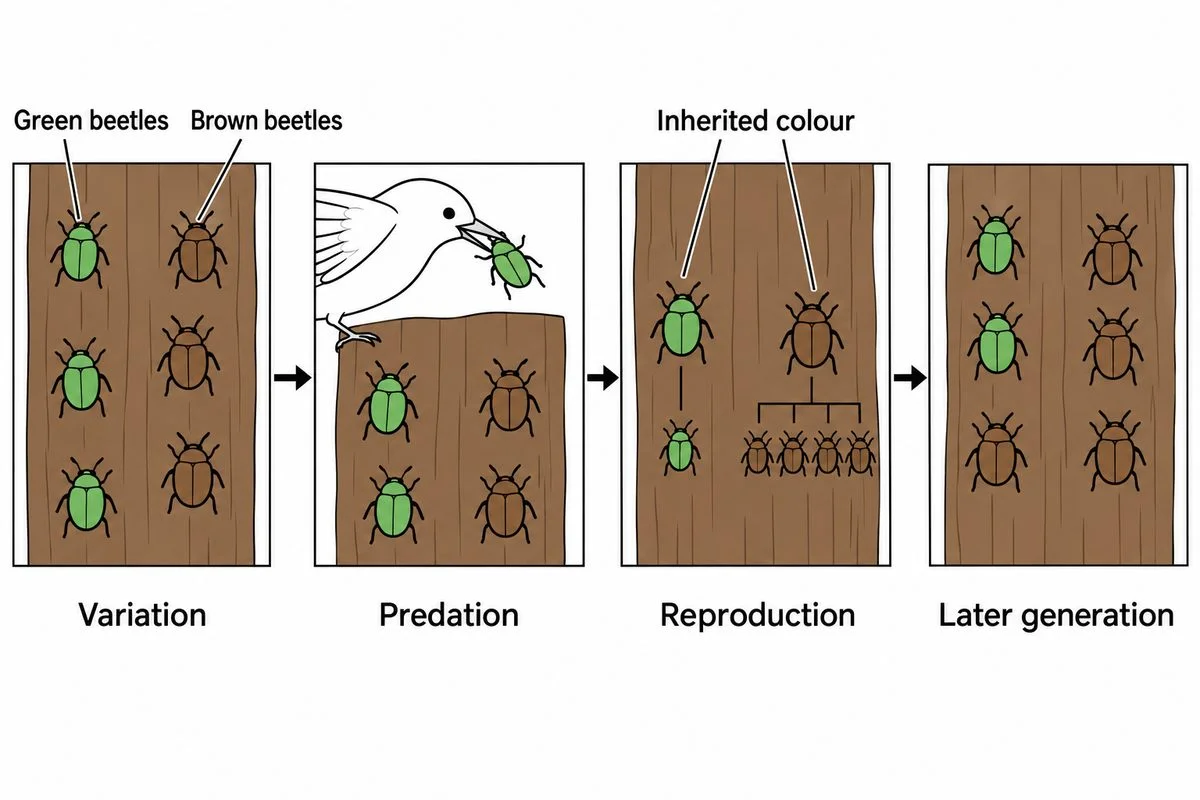
Inherited brown colouring becomes more common as camouflaged beetles survive and reproduce.

7. Evolution and adaptation

Inherited features can spread through better survival and reproduction across generations.

Show
Find the diagram's green and brown beetles on brown bark. Follow the bird, survivors and matching-colour offspring.
Ask
Which inherited colour would become more common after birds eat the more visible beetles?
Say
Brown beetles blend into this bark, so more survive to reproduce. Their inherited colour spreads across generations without individual beetles choosing to change.
Used in
Adaptation helps explain how groups suit their ways of life.
If your child says…“An animal chooses the changes it needs.”
Ask
Did any beetle change colour, or did brown beetles leave more offspring?
What’s true
Individuals cannot choose inherited adaptations when their surroundings change.
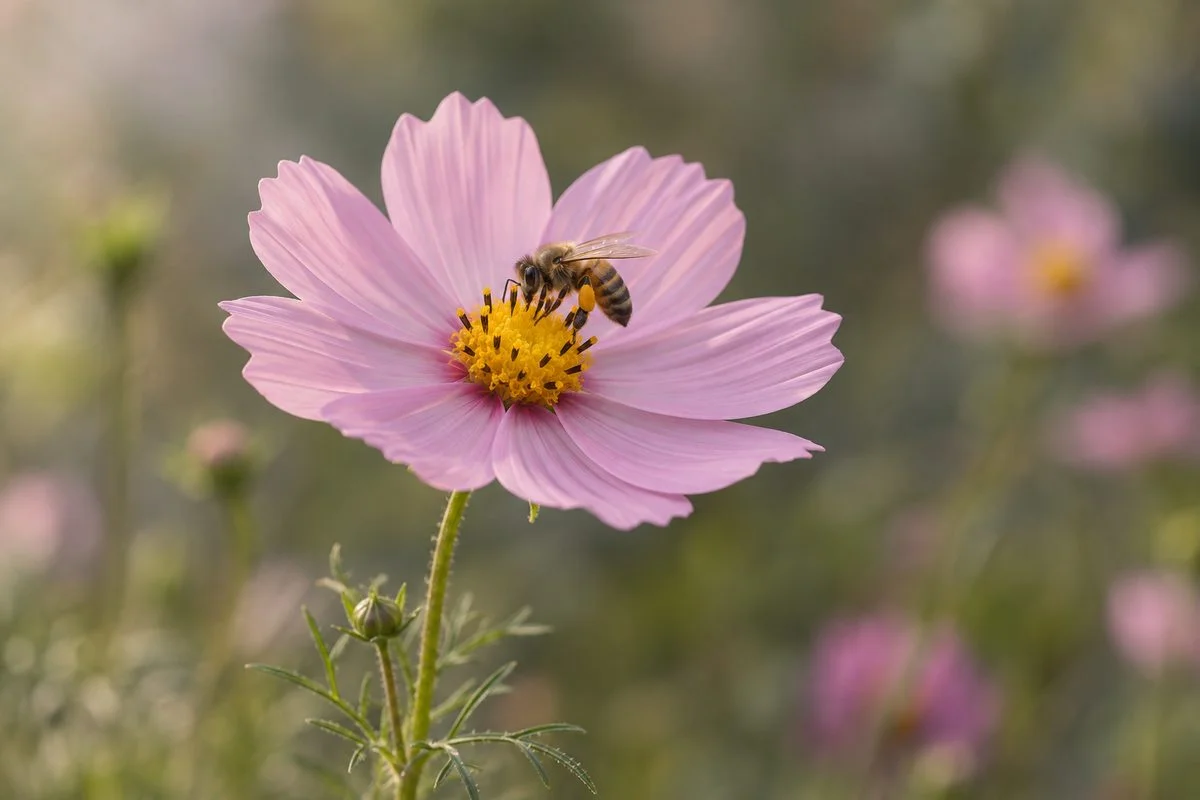
A bee visits a flower on an intact outdoor plant.

8. Biodiversity under threat

Protecting species and habitats helps preserve living things and their connections.

Show
Watch a flowering plant outdoors where insects are visiting. Follow one insect as it moves between flowers.
Ask
What would these insects lose if the flowering plants disappeared?
Say
Flowers feed visiting insects. Clearing flowering plants removes food for these insects.
Used in
Reducing a harmful livestock drug helped slow vulture declines.
If your child says…“Losing one species changes nothing else.”
Ask
What do these flowers provide for the visiting insects?
What’s true
Losing flowering plants can also affect the insects that feed on them.

A real problem

Protecting vultures by reducing a threat

Diclofenac, used to treat livestock, brought India's vultures close to extinction.

India banned diclofenac for treating cattle in 2006.

Research found slower declines, but uncertain estimates meant vulture populations could still be falling.

Bombay Natural History SocietyPress Information BureauPLOS ONE

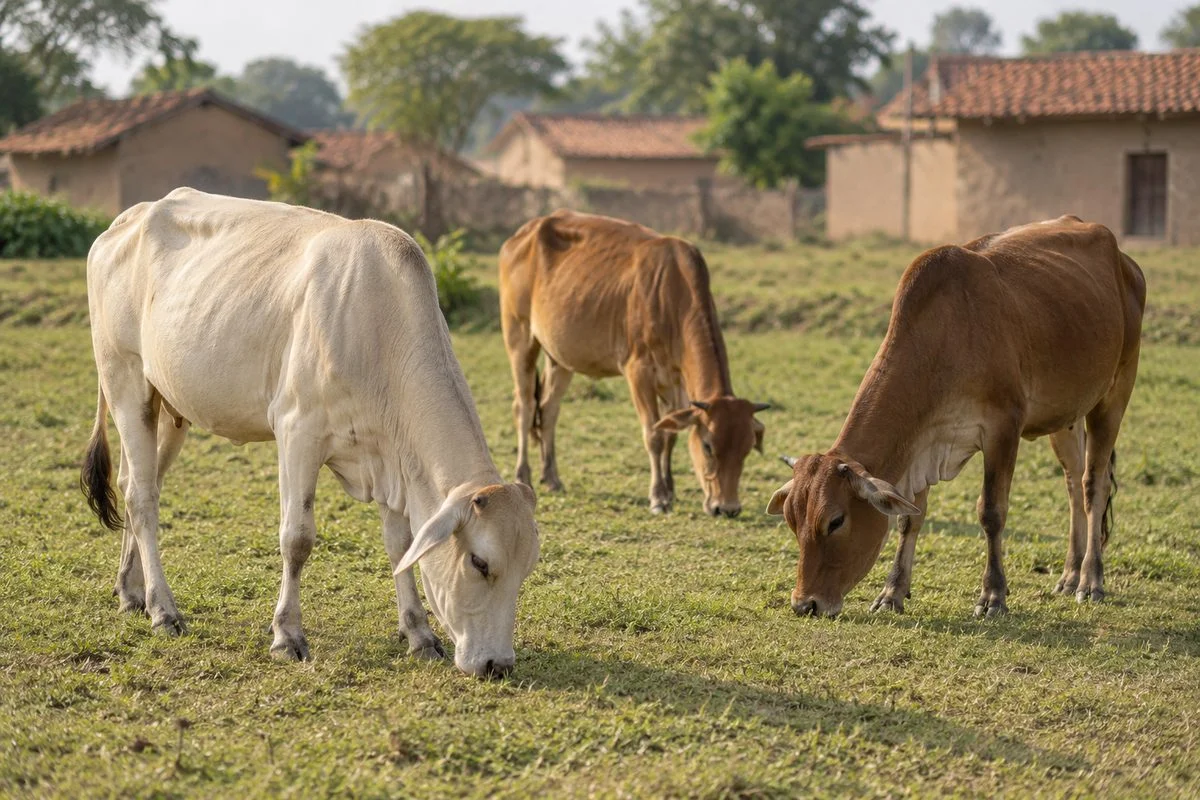
Cattle grazing beside an Indian village.

Concept Lab · Common misconception

The tempting mistake in Patterns in Life: Diversity and Classification

Open standalone misconception page →

Does a similar habitat mean close classification?

Wrong

A dolphin and a shark belong to the same group because both swim.

Why it feels right. Shape and habitat are easy features to see.

Right

Classification uses traits that help identify biological relationships.

Worked example

Dolphin
Streamlined swimmer→Lungs and milk→Mammal
Shark
Streamlined swimmer→Gills→Fish
Similar swimming shapes coexist with different breathing and feeding traits.
  1. A dolphin breathes with lungs and nurses its young.
  2. A shark uses gills.
  3. Similar swimming shapes coexist with different group traits.

Ask your child eight quick questions.

One per step. The answer and the reason are given.

  1. Is matching colour enough to show that two plants are closely related?

    No. Unrelated plants can share colours, so scientists compare several biological features.

  2. Which contains more closely related organisms: a family or a genus?

    A genus. A genus sits within a family and groups more closely related organisms.

  3. How should you capitalise the two words in homo sapiens?

    Homo sapiens. Homo names the genus; sapiens stays lowercase.

  4. A single-celled organism lacks a membrane-bound nucleus. Which kingdom fits?

    Monera. Genetic material in Monera is not enclosed by a nuclear membrane.

  5. An organism has nuclei and cell walls, lacks chlorophyll, and absorbs nutrients. Which kingdom fits?

    Fungi. Nuclei exclude Monera; cell walls alone do not make an organism a plant.

  6. How complete is the fossil record?

    It records only some organisms. Many organisms never fossilise, and some rocks containing fossils are destroyed.

  7. Can an animal choose an inherited adaptation when its habitat changes?

    No. Useful inherited features can spread across generations through greater survival and reproduction.

  8. What could insects lose if this flowering plant disappeared?

    Food. Insects can depend on that plant's flowers for food.

8 more questions with answers