Skip to content

Teach Tissues in Action in eight steps.

For each idea: show it, ask before you tell, then say one line.

Gather paper, pencil, an available white flower, food colouring, a glass, water and scissors.

An adult handles the scissors and keeps fingers clear while cutting.

Common misconceptions & worked visual for this chapter · 15 practice questions with answers

How to teach it

Cells share the work

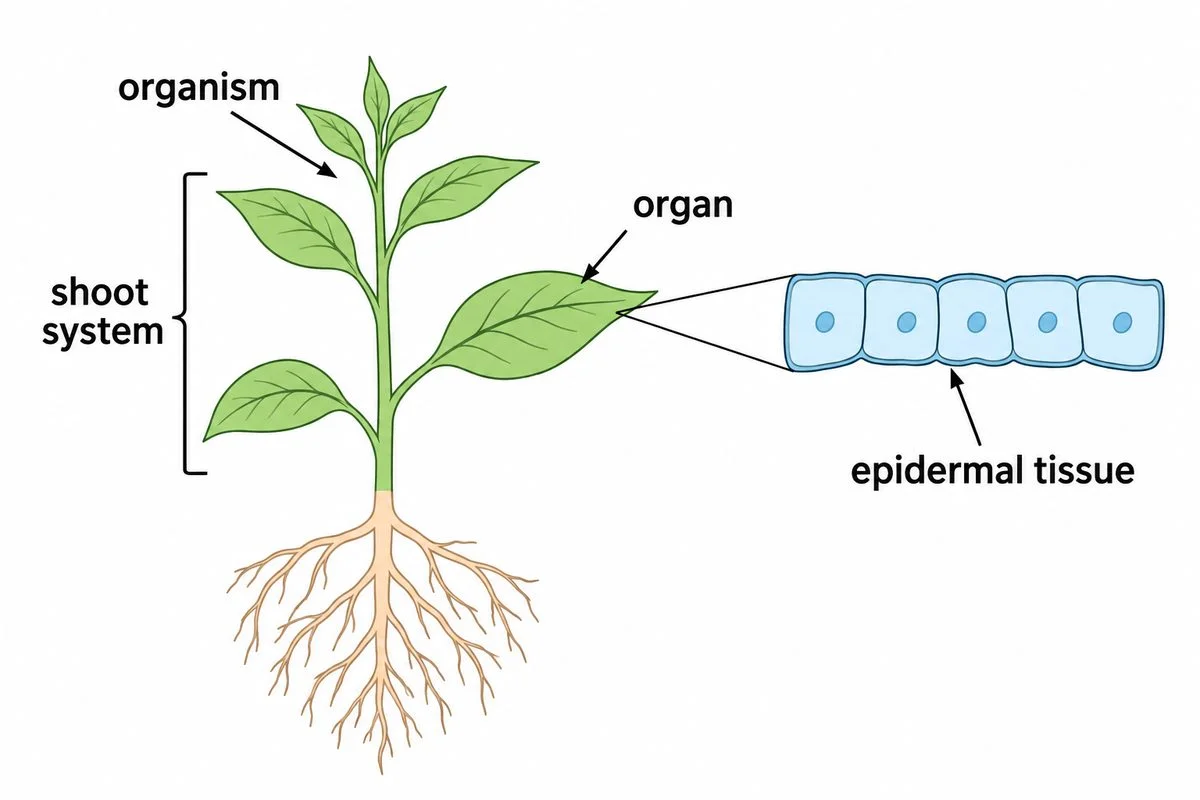
Plant diagram linking a leaf to an enlarged row of outer cells.

1. Tissue organisation

Cells share jobs through tissues, organs and organ systems.

Show
Find the whole plant in the diagram, then its shoot system and leaf. Follow the line from the leaf to the enlarged epidermal tissue.
Ask
Would gaps weaken this covering?
Say
These cells protect together. Their tissue belongs to a leaf, within the plant's shoot system.
Used in
Rooted plants have tissues suited to support; moving animals have tissues suited to movement.
If your child says…“Any cells beside each other make a tissue.”
Ask
What shared job do the cells covering this leaf do?
What’s true
A tissue needs cells organised around a shared job.
Plant tissues

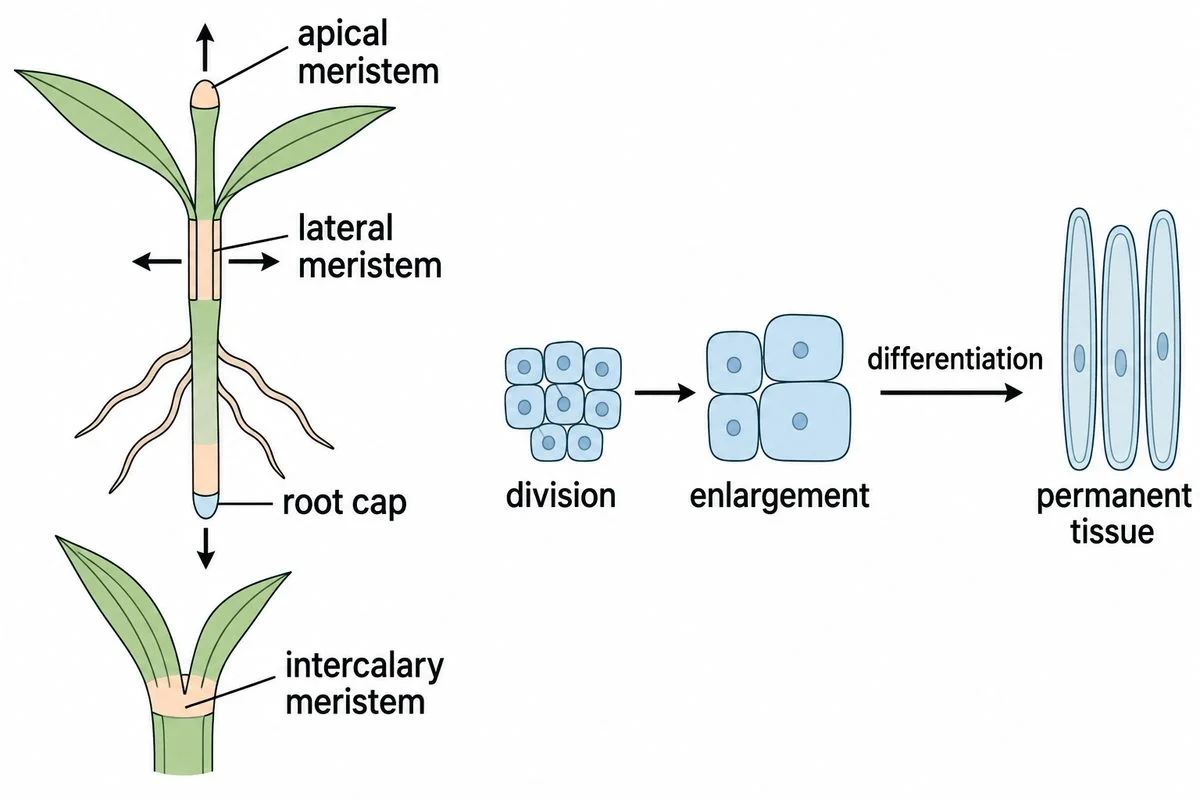
Plant growth regions beside cells dividing, enlarging and specialising.

2. Meristematic tissue and differentiation

Dividing cells supply growth; some later specialise for other jobs.

Show
Find the highlighted growth regions in the diagram, including the grass leaf base. Follow the cells from division through enlargement to differentiation.
Ask
Which highlighted region will make the stem thicker?
Say
Apical meristems lengthen roots and shoots, while lateral meristems thicken stems. Intercalary meristems allow regrowth near grass leaf bases. New cells enlarge, and many specialise into permanent tissues.
Used in
Intercalary meristems let some shoots regrow after grazing.
If your child says…“Plants only make new cells at their tips.”
Ask
Which highlighted growth regions are away from the tips?
What’s true
Dividing tissues also occur along stems and near certain nodes or leaf bases.
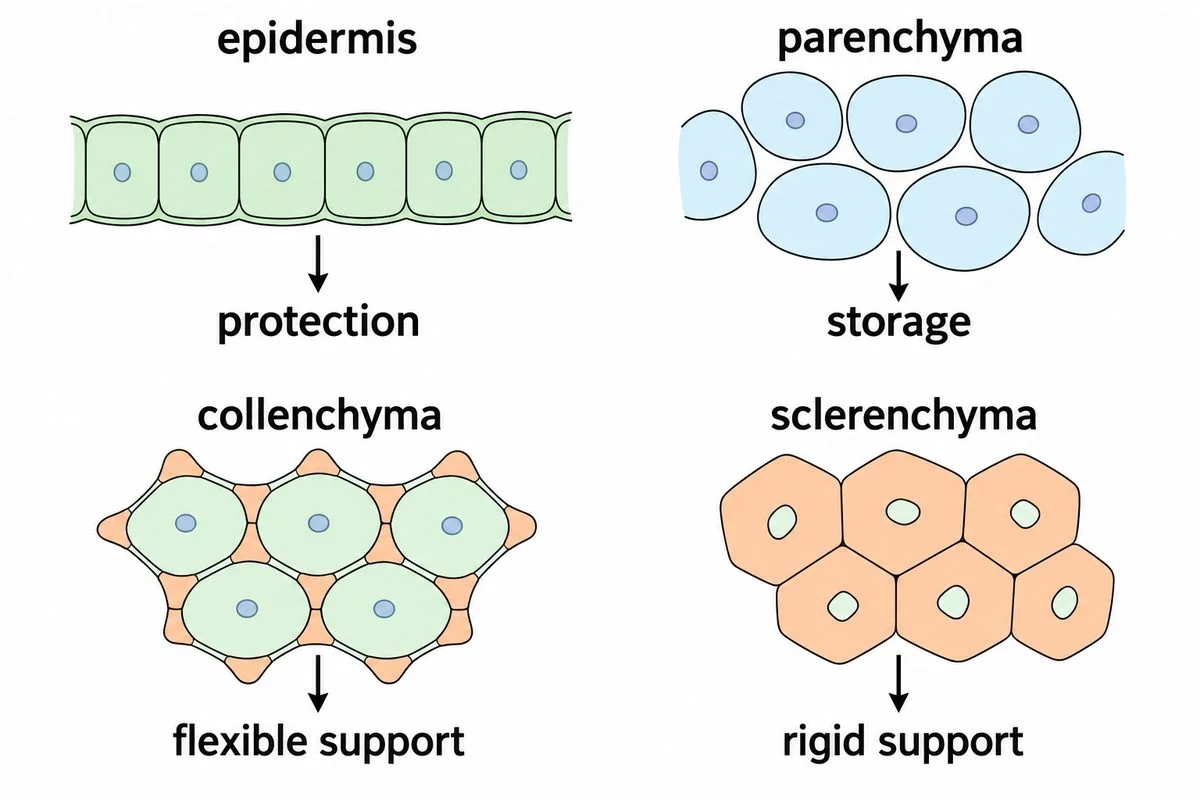
Four plant tissues showing close packing, thin walls, thickened corners and thick walls.

3. Protective and simple permanent tissues

Protective tissues cover plants. Simple permanent tissues store food or support.

Show
Find the close-fitting epidermis in the diagram. Compare parenchyma's thin walls, collenchyma's thickened corners and sclerenchyma's thick walls.
Ask
Which supporting tissue would let a growing stem bend?
Say
Epidermis forms a close-fitting cover. Collenchyma's thickened corners allow flexible support. Sclerenchyma's thick, strengthened walls provide rigid support.
Used in
A plant's cuticle reduces water loss, helping it retain water.
If your child says…“Hard supporting cells are built just like soft storage cells.”
Ask
How do the walls differ between the storage cells and rigid supporting cells?
What’s true
Mature sclerenchyma usually has dead cells with strengthened walls that provide rigid support.
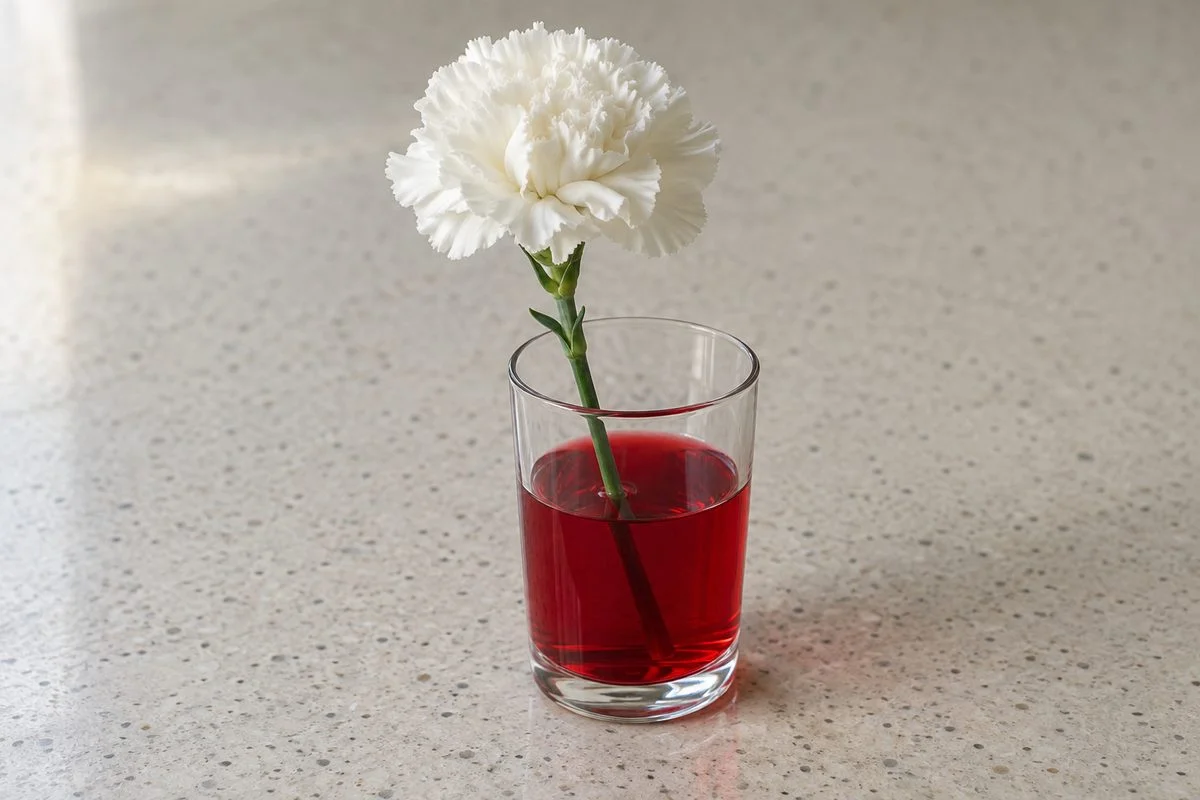
White flower standing in coloured water before its petals change colour.

4. Xylem and phloem

The vascular system carries water, minerals and food through plants.

Show
Use a white flower and food colouring already at home. An adult trims the stem with scissors, keeping fingers clear. Stand it in strongly coloured water. Check the petals later today and tomorrow morning.
Ask
Will the white petals change colour without touching the water?
Say
Colour reaching the petals shows water travelling through xylem.
Used in
Phloem supplies roots with sugars from leaves, supporting growth underground.
If your child says…“Both transport tissues carry the same things.”
Ask
Which route supplies roots with food made in leaves?
What’s true
Water and mineral transport uses xylem; food transport uses phloem.
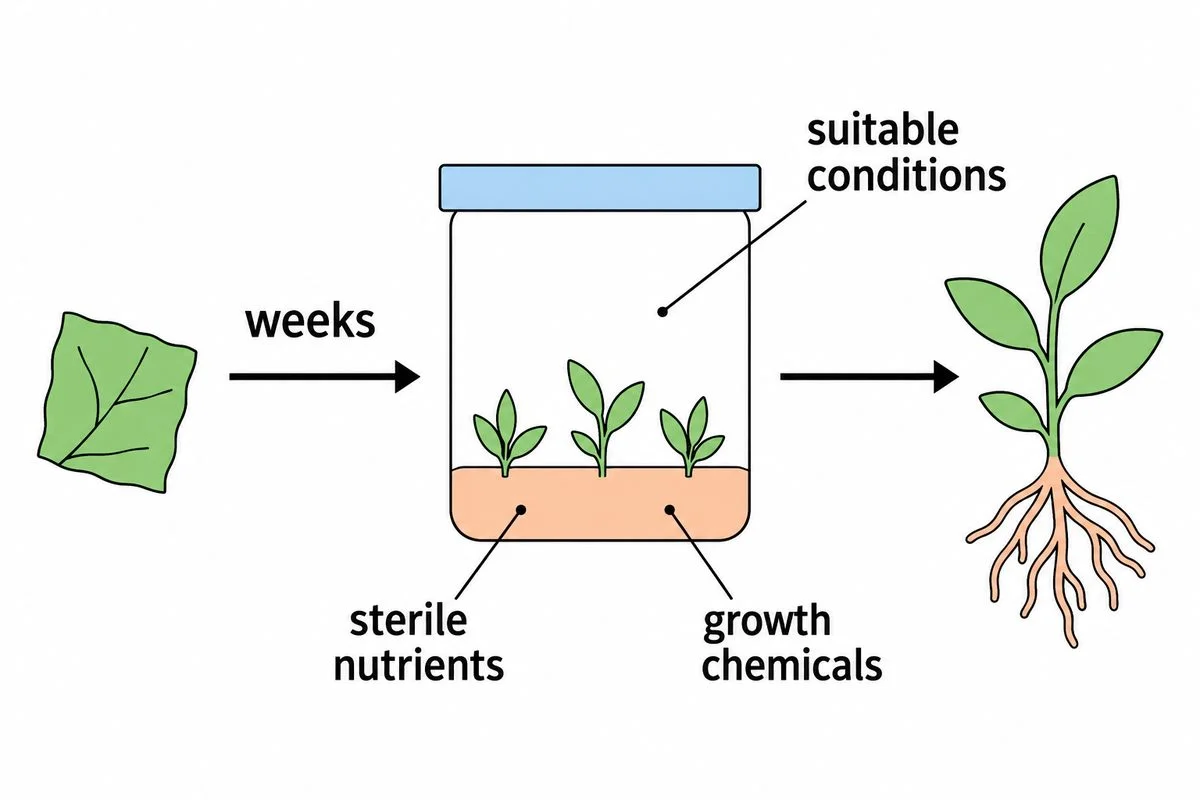
Diagram showing plant tissue, shoots in a culture jar, and a rooted plantlet.

5. Totipotency and tissue culture

Suitable living cells can form plants under controlled conditions.

Show
Follow the diagram from plant tissue through shoots in a jar to a rooted plantlet. Read the conditions beside the jar.
Ask
Would growth continue without nutrients?
Say
This shows laboratory tissue culture. Cells divide, then specialise into roots and shoots.
Used in
Tissue culture raises plants from suitable cells, supporting crop improvement.
If your child says…“Any plant cell can grow a plant unaided.”
Ask
What help does the tissue receive in this diagram?
What’s true
Culture needs living cells, sterile conditions, nutrients, growth chemicals, and suitable light and air.

Animal tissues and movement

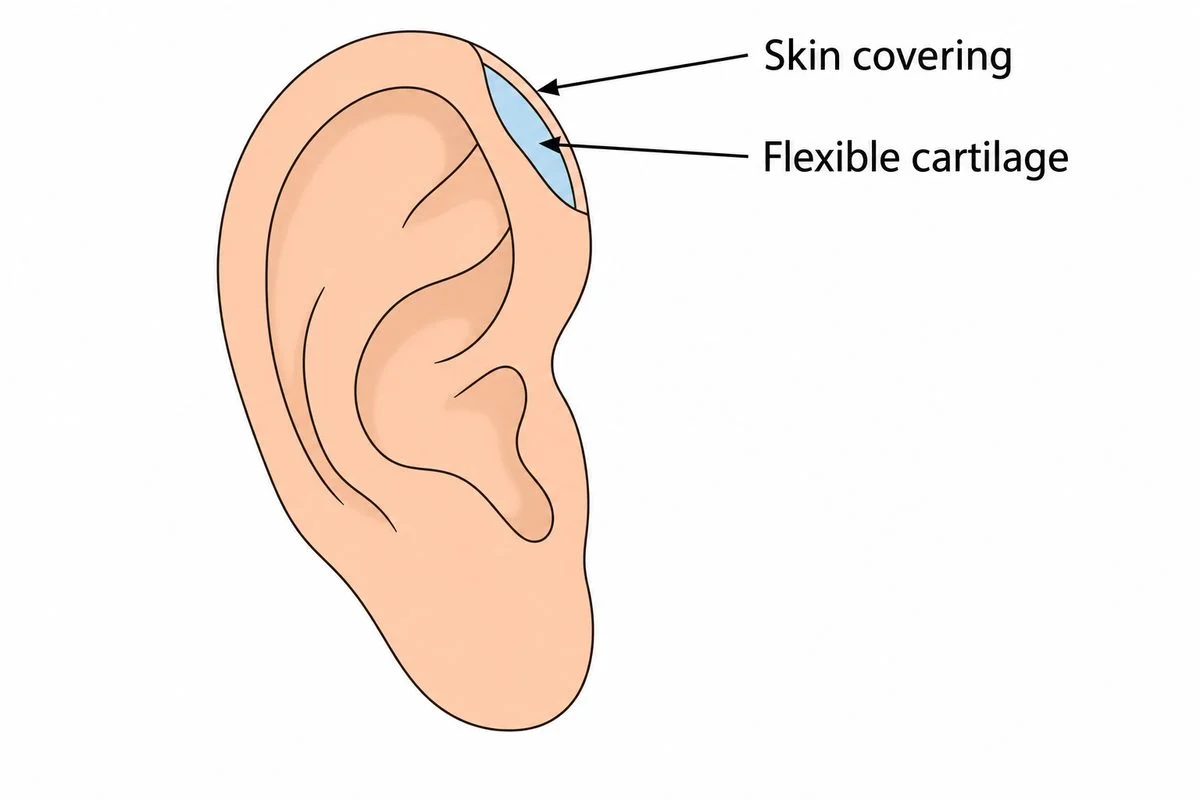
Outline of an outer ear with a cut-away showing skin covering over flexible cartilage.

6. Epithelial and connective tissues

Epithelium covers and lines; connective tissues support, link or transport.

Show
Touch the upper outer rim of your own ear lightly. After predicting, gently bend it and release it. Notice its covering and the flexible support underneath.
Ask
What will happen to the ear's shape when you release it?
Say
The ear's outer skin layer is epithelium, and cartilage beneath gives flexible support.
Used in
Thin lung linings let gases cross quickly between air and blood.
If your child says…“Blood can't be connective tissue because it's liquid.”
Ask
Does carrying substances between body parts require blood to be hard?
What’s true
Connective tissues have different materials around their cells to suit different jobs.
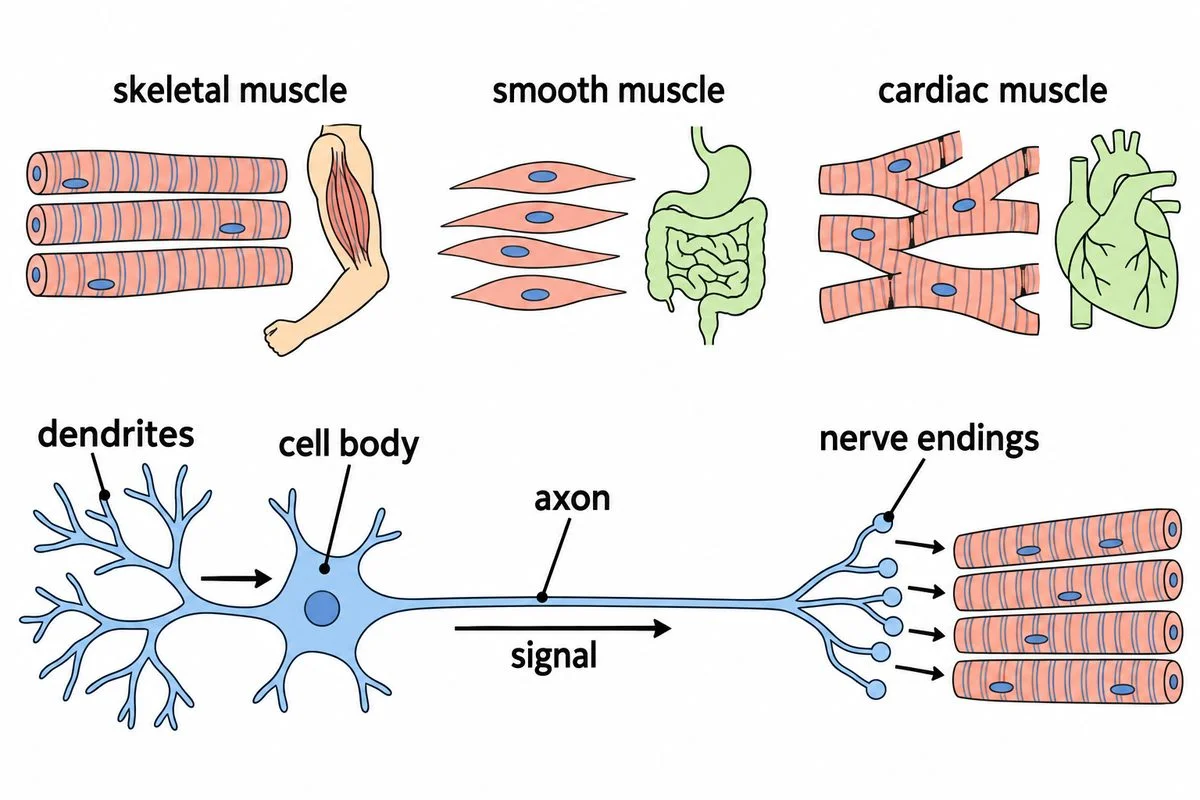
Three muscle types above a neuron carrying a signal towards skeletal muscle.

7. Muscular and nervous tissues

Muscles act, while nerves help control and coordinate their activity.

Show
Find the diagram’s muscle types. Follow the neuron’s signal towards skeletal muscle.
Ask
Will the heart and gut stop when this arm rests?
Say
Skeletal muscle acts by choice; smooth and cardiac muscles act automatically. Signals travel from dendrites through the cell body and axon. Nerves coordinate muscles.
Used in
Automatic gut muscle keeps digestion moving without conscious decisions.
If your child says…“I decide when my gut and heart muscles work.”
Ask
Would your heart wait for a conscious command while you sleep?
What’s true
Gut and heart muscles keep working without a decision for each action.
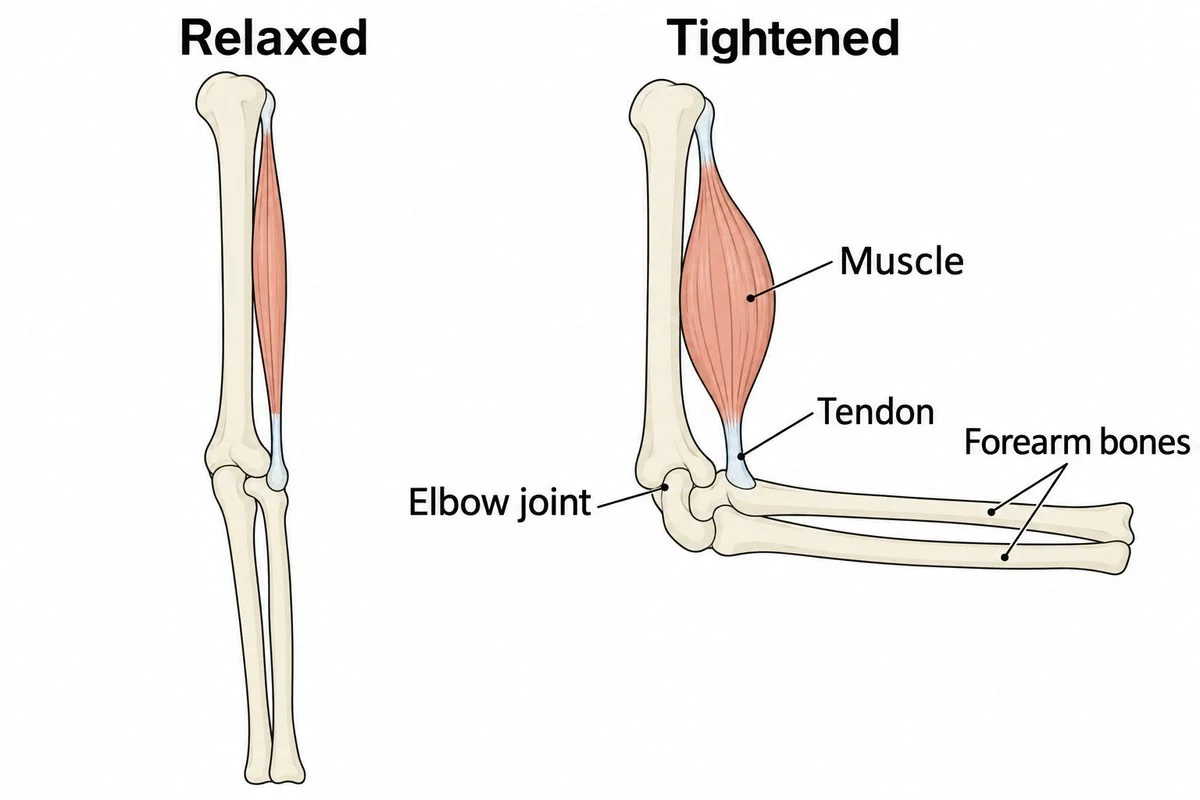
Arm bones with one muscle shown relaxed and then tightened as the elbow bends.

8. Skeleton, muscles and joints

Bones support and protect; muscles pull them at joints.

Show
Let one arm hang comfortably. Rest your opposite hand on the front of its upper arm. After predicting, slowly bend the elbow and feel the muscle tighten. Lower the forearm again.
Ask
What will happen to your upper-arm muscle when you bend your elbow?
Say
The muscle tightens as your forearm rises. It pulls your forearm bones through tendons, while the elbow joint allows bending.
Used in
Flexible cartilage lets the rib cage expand while protecting the heart and lungs.
If your child says…“Joints move bones by themselves.”
Ask
What tightened when your forearm rose?
What’s true
Joints allow movement, but muscles supply the pull.

A real problem

Laboratory-grown skin helped badly burned brothers survive.

The Selby brothers received experimental skin grafts in Boston in 1983.

Their burns left too little healthy skin for conventional grafting.

Researchers grew epithelial skin cells in laboratory flasks with help from fibroblasts.

The brothers survived after receiving the laboratory-grown skin.

Harvard GazetteTIMEIEEE Pulse via PubMed

Folded wound dressing on a pale hospital surface.

Concept Lab · Common misconception

The tempting mistake in Tissues in Action

Open standalone misconception page →

Do all cells in a tissue have the same shape?

Wrong

A tissue can contain only one cell shape.

Why it feels right. Cells working together seem like they should look identical.

Right

A complex tissue can contain several specialised cell types.

Worked example

Elongated vessel elements form a water path. Shorter parenchyma cells have a storage role.
  1. In xylem, elongated vessel elements form tubes for water transport.
  2. Xylem parenchyma cells are often shorter and help store materials.
  3. Both are part of xylem.

Ask your child eight quick questions.

One per step. The answer and the reason are given.

  1. Do cells form a tissue just because they are neighbours?

    No. They must cooperate on a shared job; closeness alone is insufficient.

  2. Which tissue supplies new cells as a stem thickens?

    Lateral meristem. Dividing cells along the stem supply growth in thickness.

  3. How do mature sclerenchyma cells differ from living, thin-walled storage cells?

    Usually dead, with strengthened walls. Their thick walls provide rigid strength.

  4. Which tissue normally carries sugars from leaves to roots?

    Phloem. Phloem transports food, whereas xylem transports water and minerals.

  5. Can suitable living plant cells form whole plants without nutrients and suitable culture conditions?

    No. New cells need nutrients and controlled conditions to grow and specialise.

  6. Which connective tissue transports substances while remaining fluid?

    Blood. A fluid surrounding material suits transport; connective tissue need not be hard.

  7. Which muscle keeps the heart beating without a conscious decision?

    Cardiac muscle. Cardiac muscle works automatically.

  8. What pulls a bone when you choose to bend your elbow?

    A muscle, through a tendon. The joint permits movement but does not generate the pull.

15 more questions with answers