One per step. The answer and the reason are given.
-
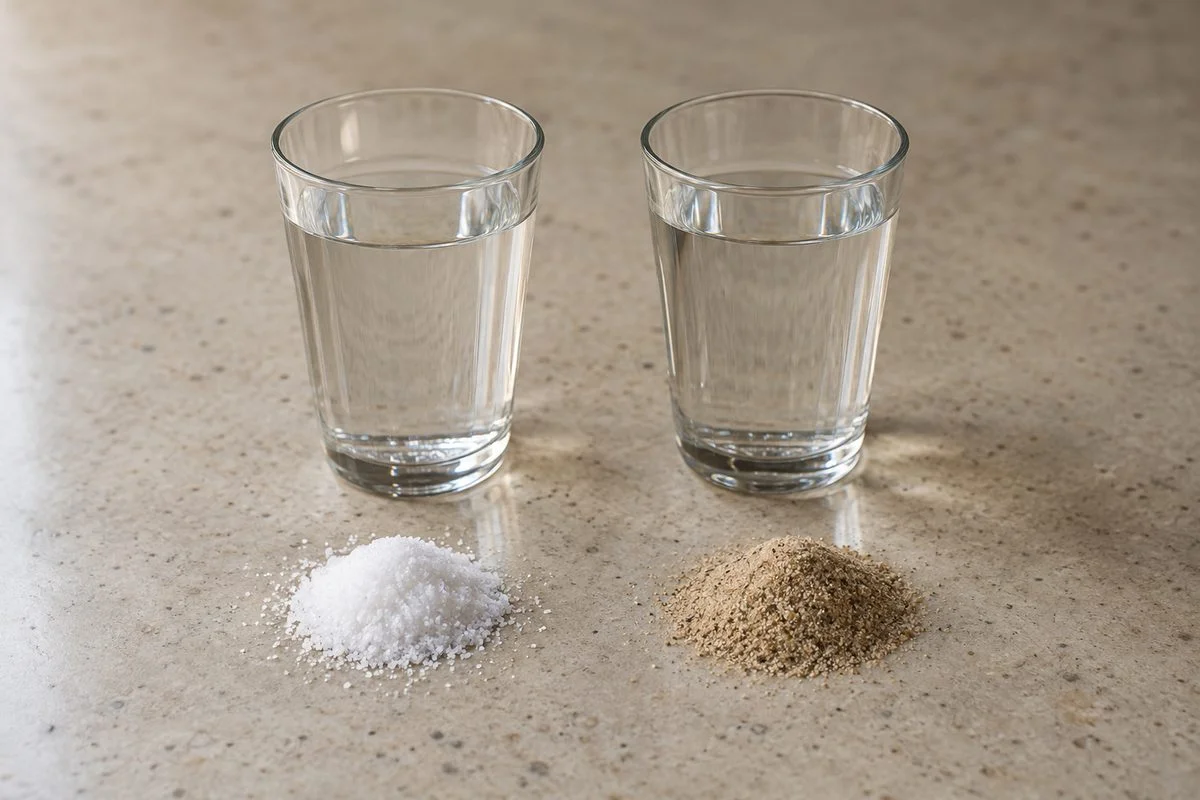
In stirred salt water, how does salt concentration compare at different places?
It is the same everywhere. Dissolved salt spreads evenly through the water.
-
For 10 g salt in 90 g water, what mass belongs in the percentage denominator?
100 g. Include salt and water, so 10 ÷ 100 × 100 gives 10%.
-
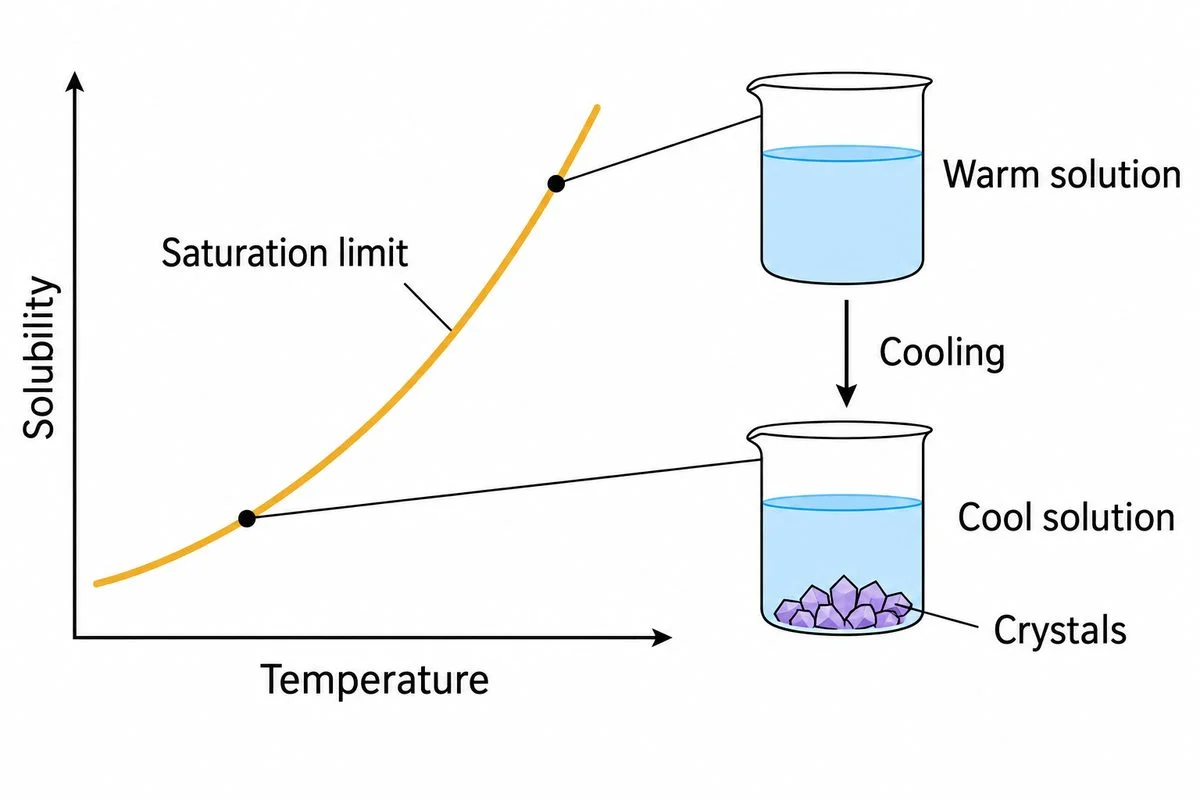
What can separate from saturated potassium nitrate solution on cooling while water remains?
Potassium nitrate crystals. Cooler water dissolves less of this salt, so excess solute becomes solid.
-
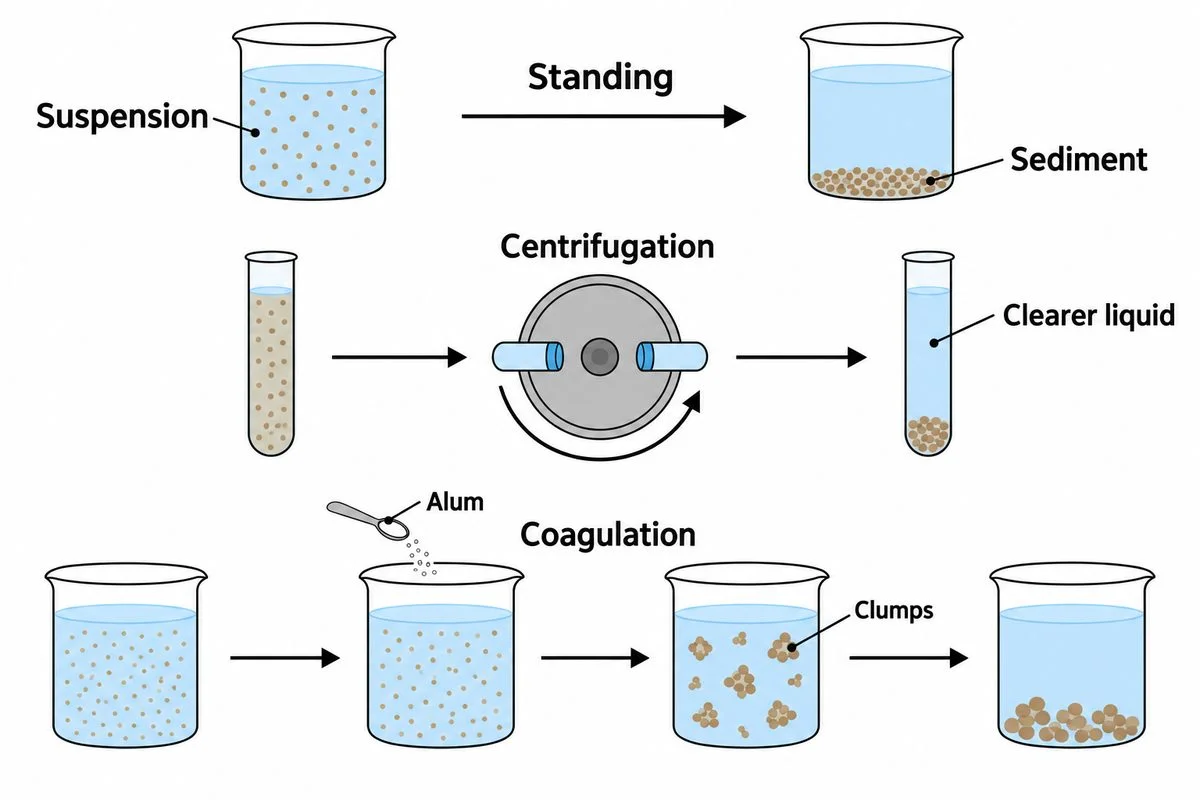
What does alum make fine mud particles do before they settle?
Join into larger clumps. Alum helps particles clump together rather than acting as a filter.
-
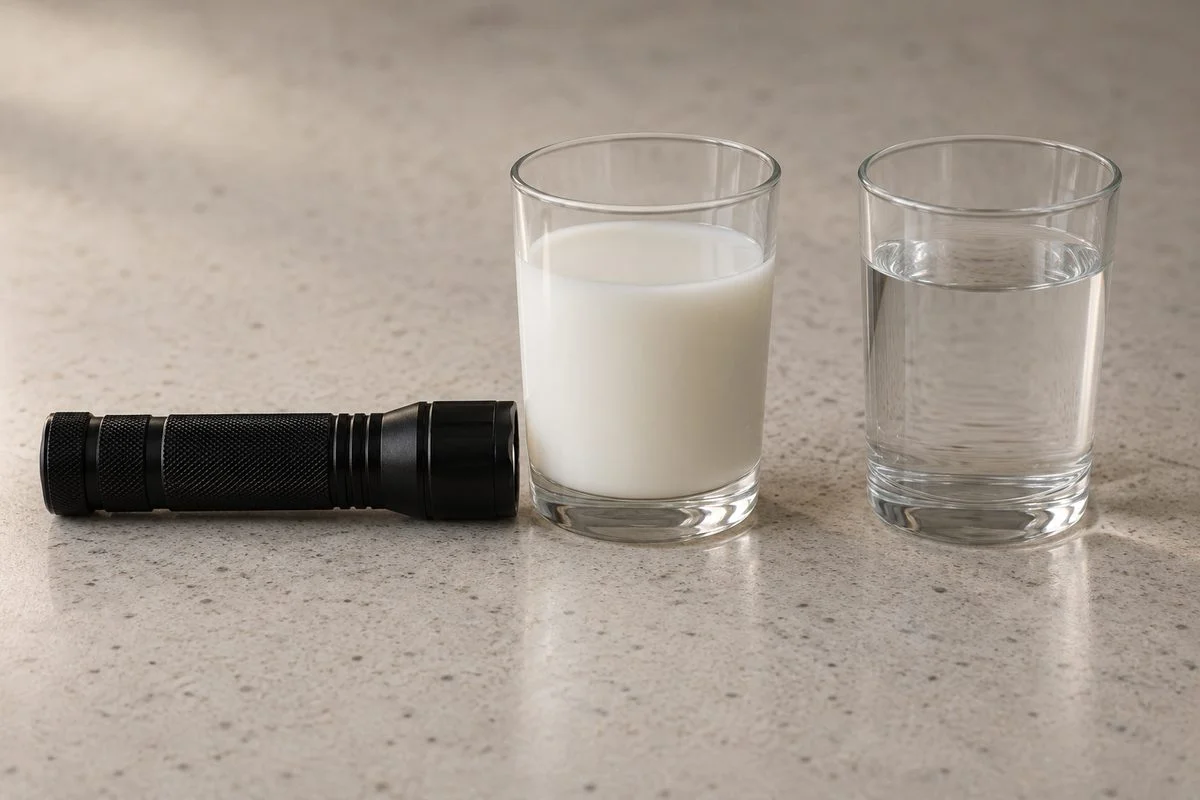
In the torch test, what observation shows milk is not a true solution?
The beam’s path becomes visible. Its particles are larger than true solution particles and scatter light.
-
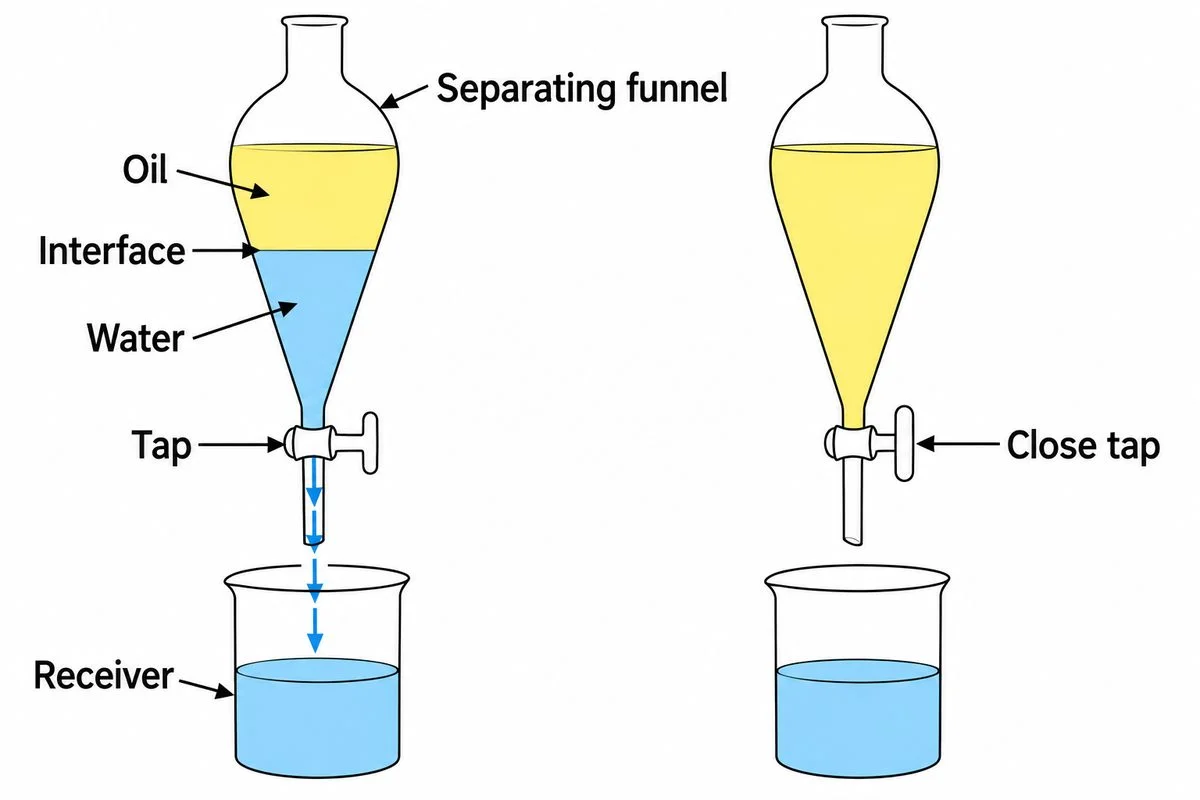
Which layer drains first from a separating funnel holding settled mustard oil and water?
The lower water layer. Water lies below the less dense oil, so it reaches the outlet first.
-
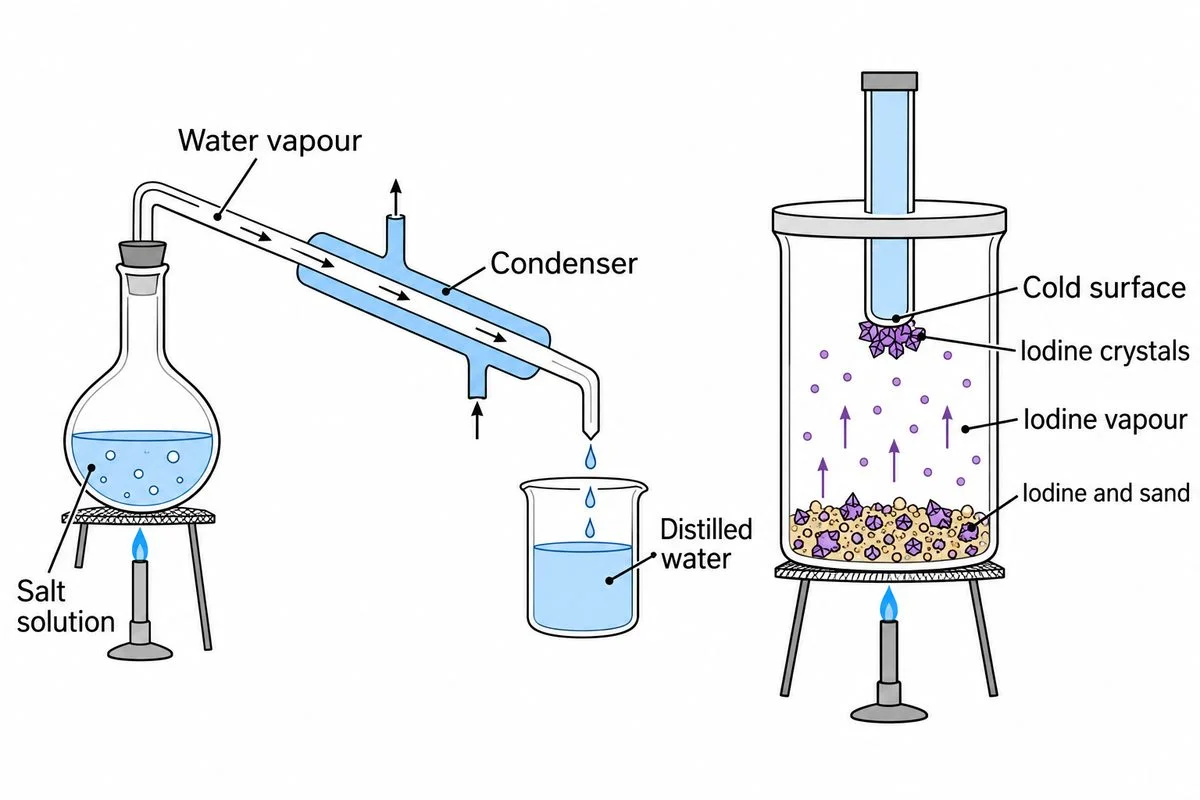
Where does the water collected in the receiver come from?
Cooled vapour from the flask. Water leaves the salt solution as vapour, then condenses in the cooled condenser.
-
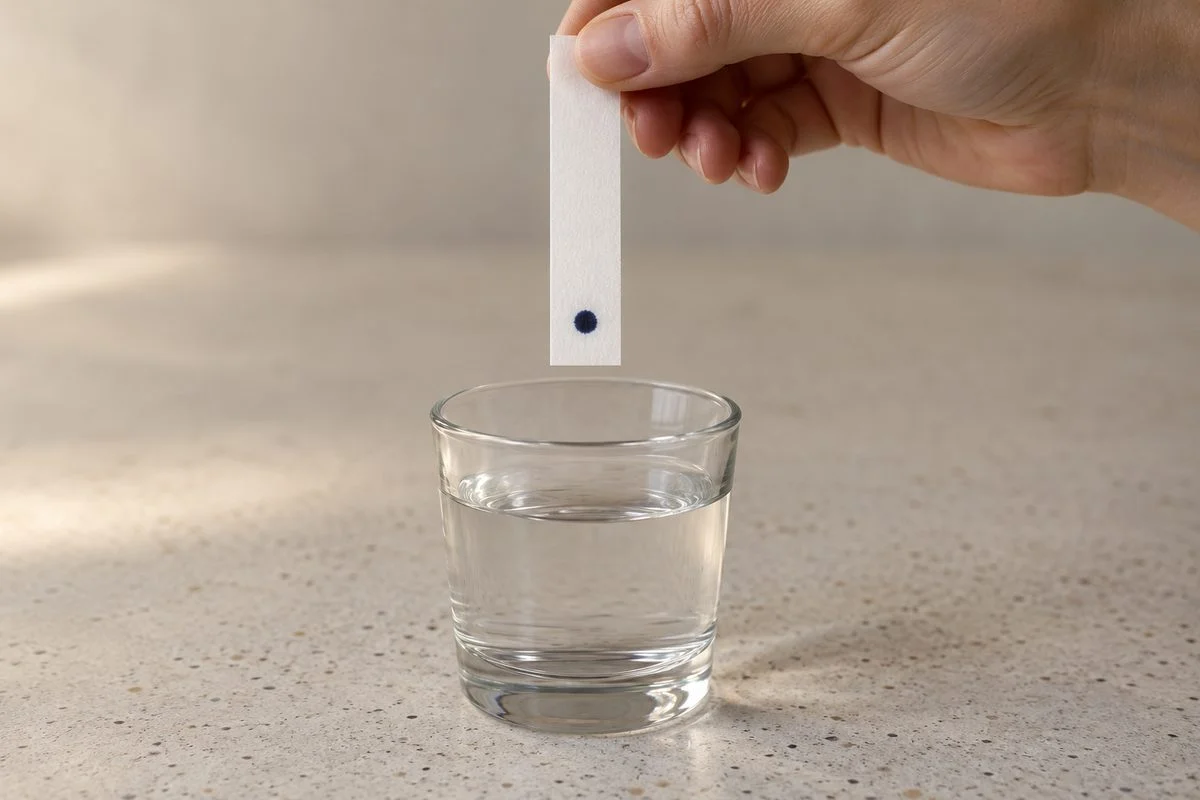
Where must the ink spot sit so rising water can carry its colours up paper?
Above the water surface. A submerged spot washes into water instead of travelling up the paper.