One per step. The answer and the reason are given.
-
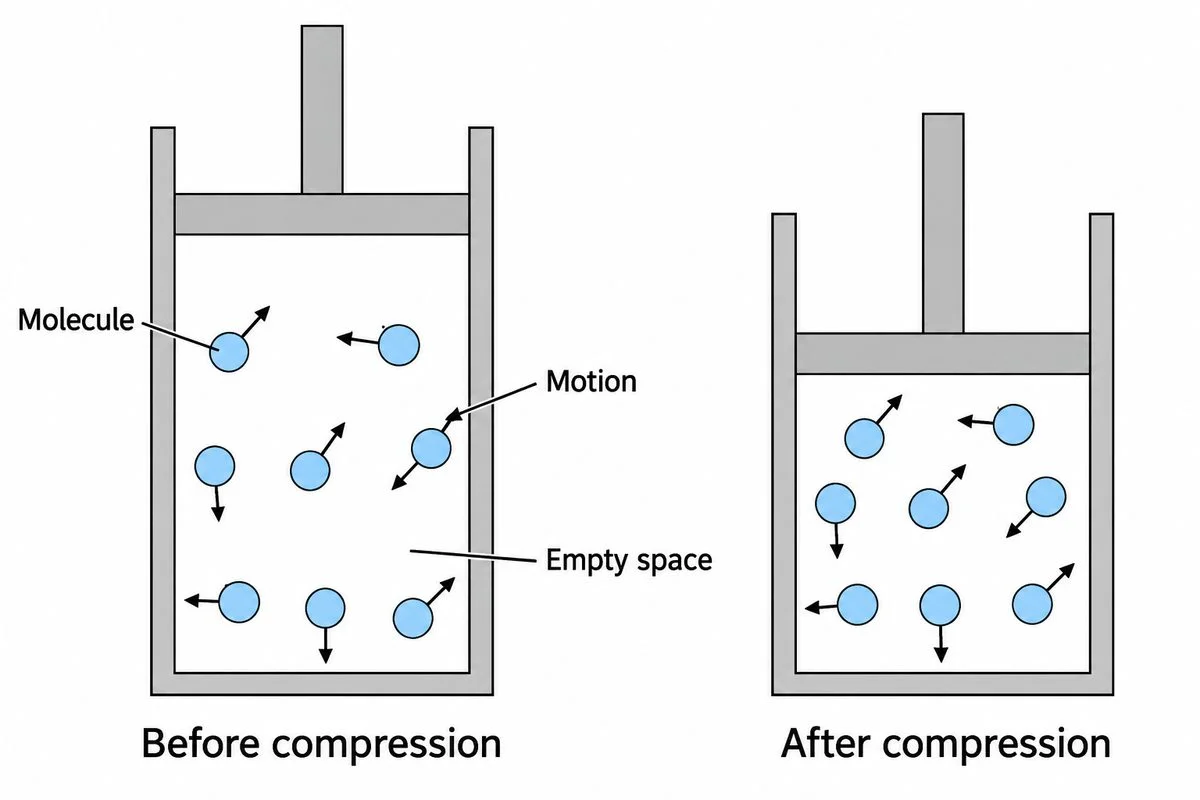
What occupies most of a dilute gas's volume?
Empty space between molecules. The container's volume includes gaps, not just the molecules themselves.
-
Hydrogen and oxygen share a vessel and temperature. Hydrogen has more molecules but less total mass. Which gas contributes more pressure?
Hydrogen. At the same volume and temperature, pressure follows molecule count, not total mass.
-
Away from condensation, which pressure favours ideal behaviour: lower or higher?
Lower pressure. A more dilute gas reduces the effects of molecular size and interactions.
-
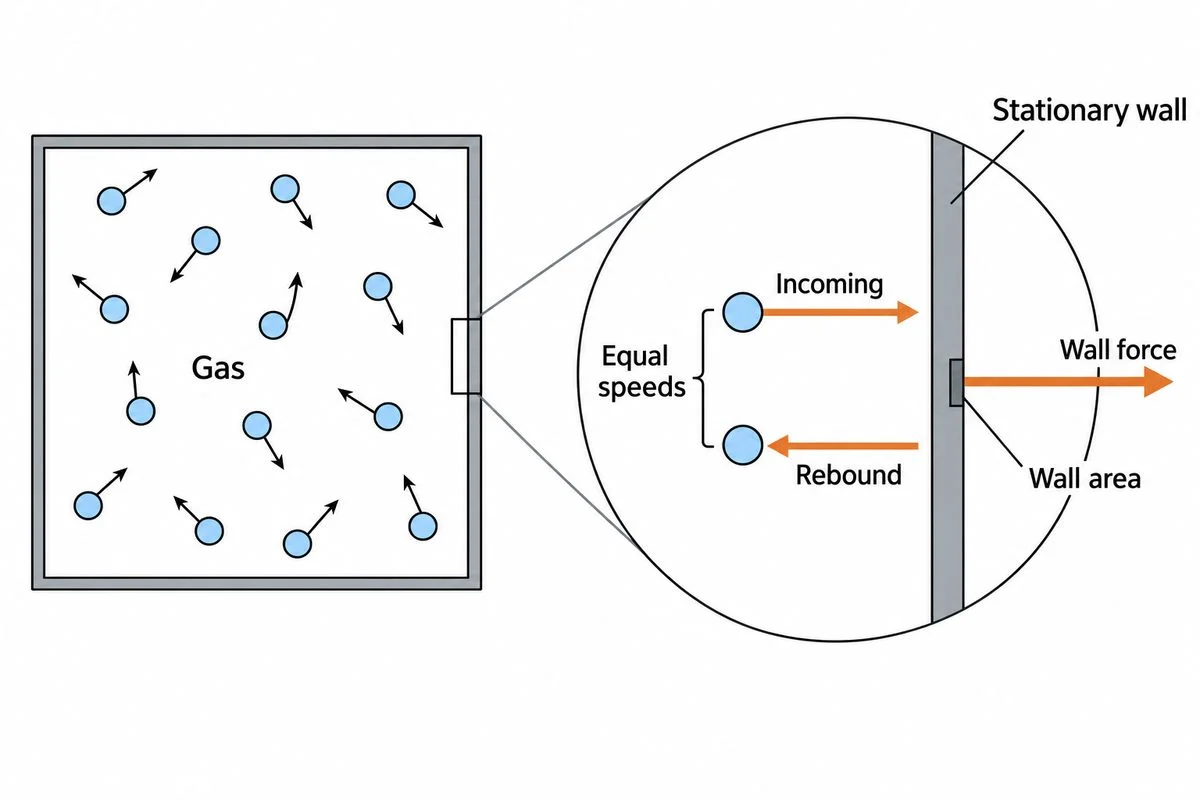
A molecule rebounds elastically, straight back from a stationary wall. How much momentum reaches the wall?
Twice its incoming momentum. The perpendicular momentum reverses, so its change includes both incoming and outgoing motion.
-
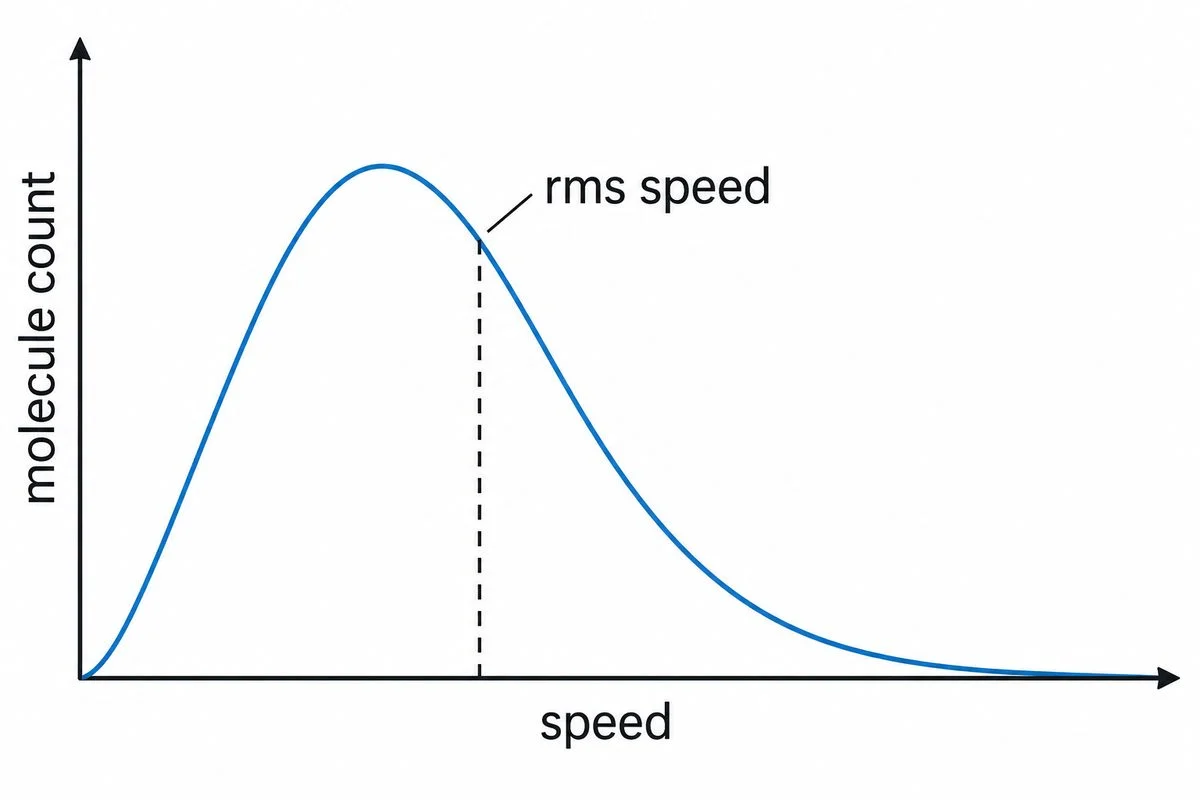
At equal temperature, how does helium's rms speed compare with argon's?
Helium's is higher. Helium's lighter molecules need higher speeds for the same average translational energy.
-
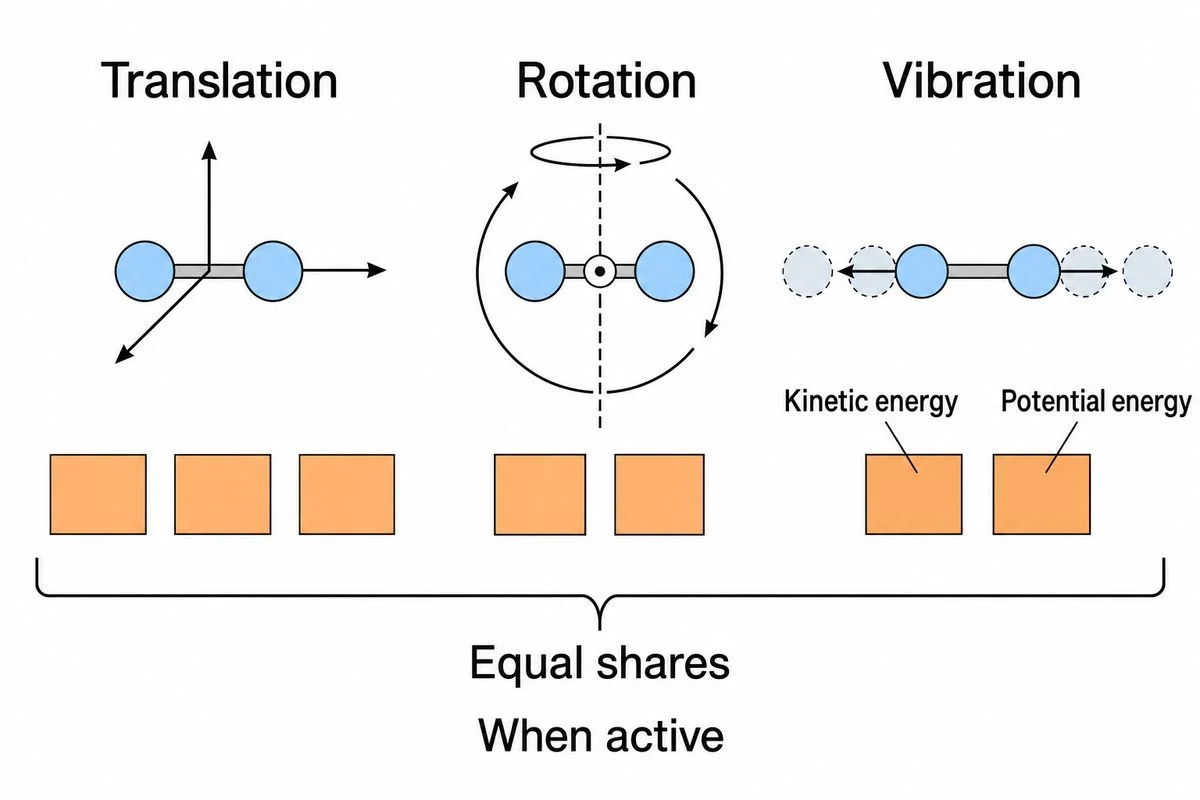
What average energy belongs to one fully active molecular vibration?
Boltzmann's constant times kelvin temperature. Movement and stretching each account for half this average energy.
-
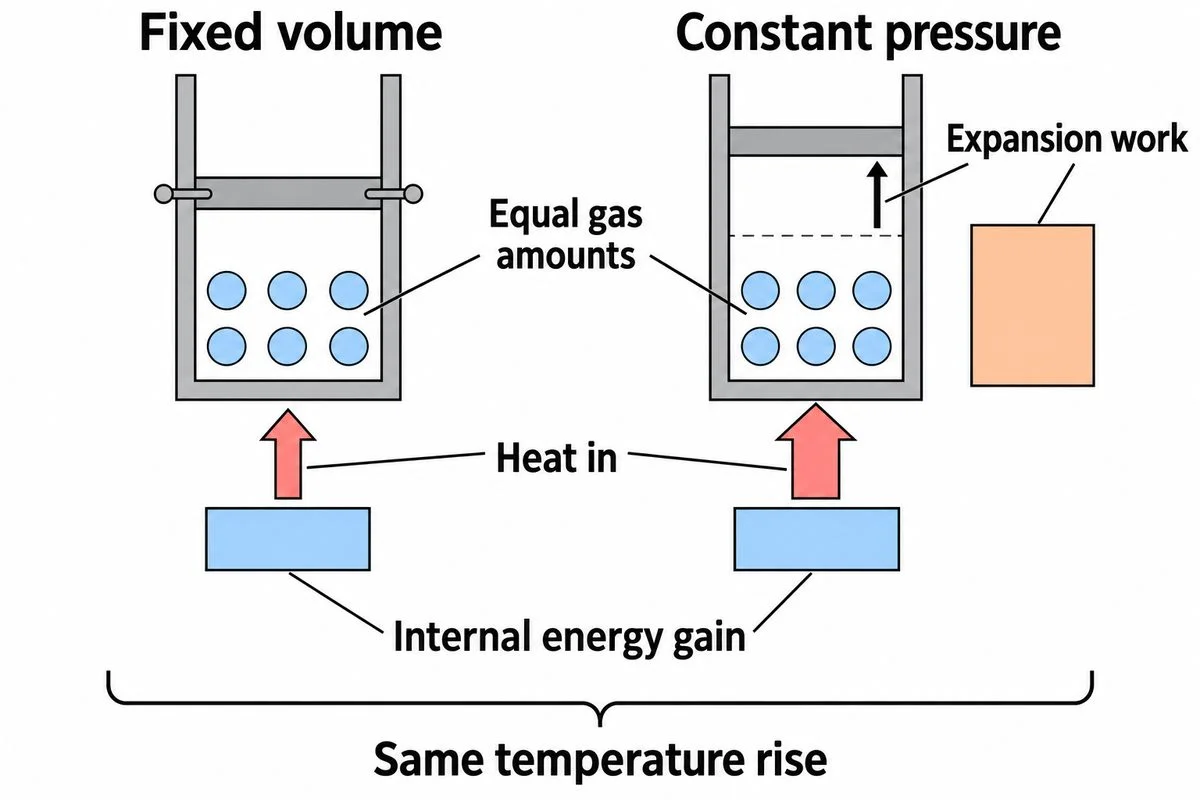
Equal helium samples undergo the same temperature rise. One stays at constant volume; the other stays at constant pressure. Which needs more heat?
The constant-pressure sample. It also does expansion work.
-
At unchanged molecular speed, what happens to flight time when mean free path doubles?
It doubles. Covering twice the distance at unchanged speed takes twice the time.