One per step. The answer and the reason are given.
-
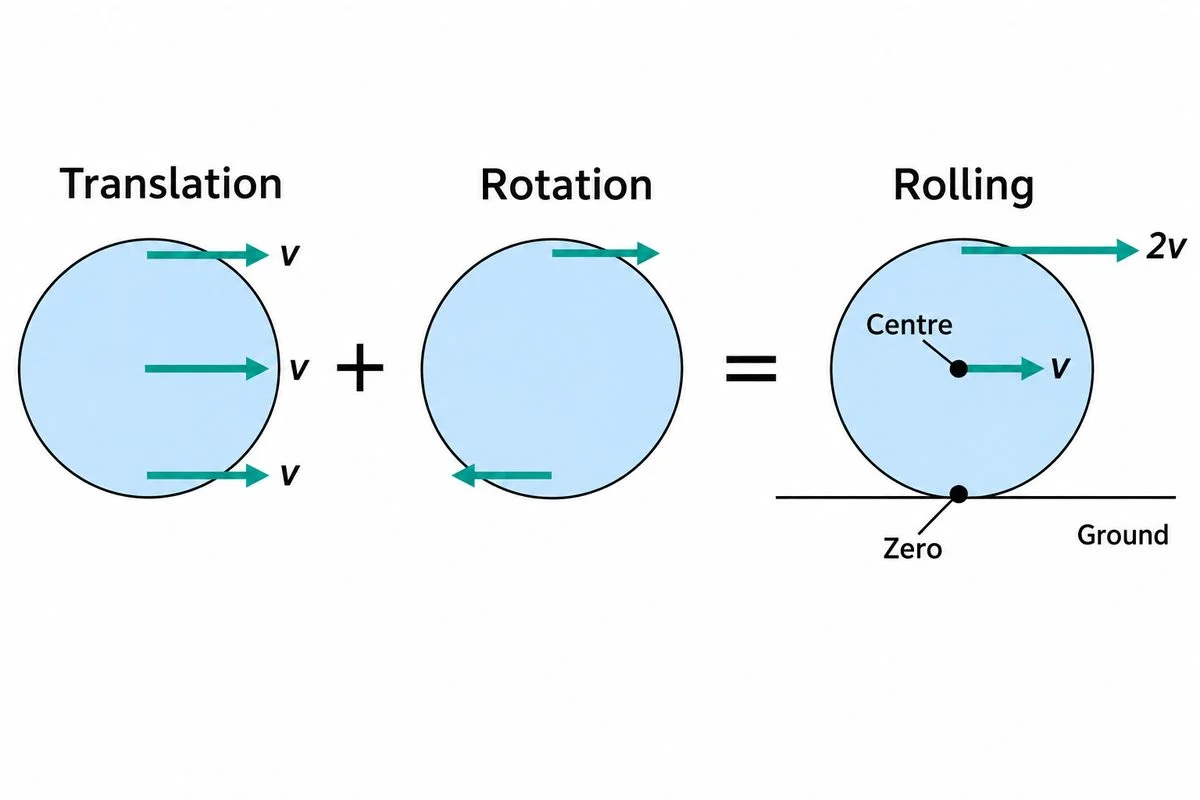
Which point of a wheel rolling without slipping is momentarily stationary against the ground?
The point touching the ground. Forward motion and rotation cancel there.
-
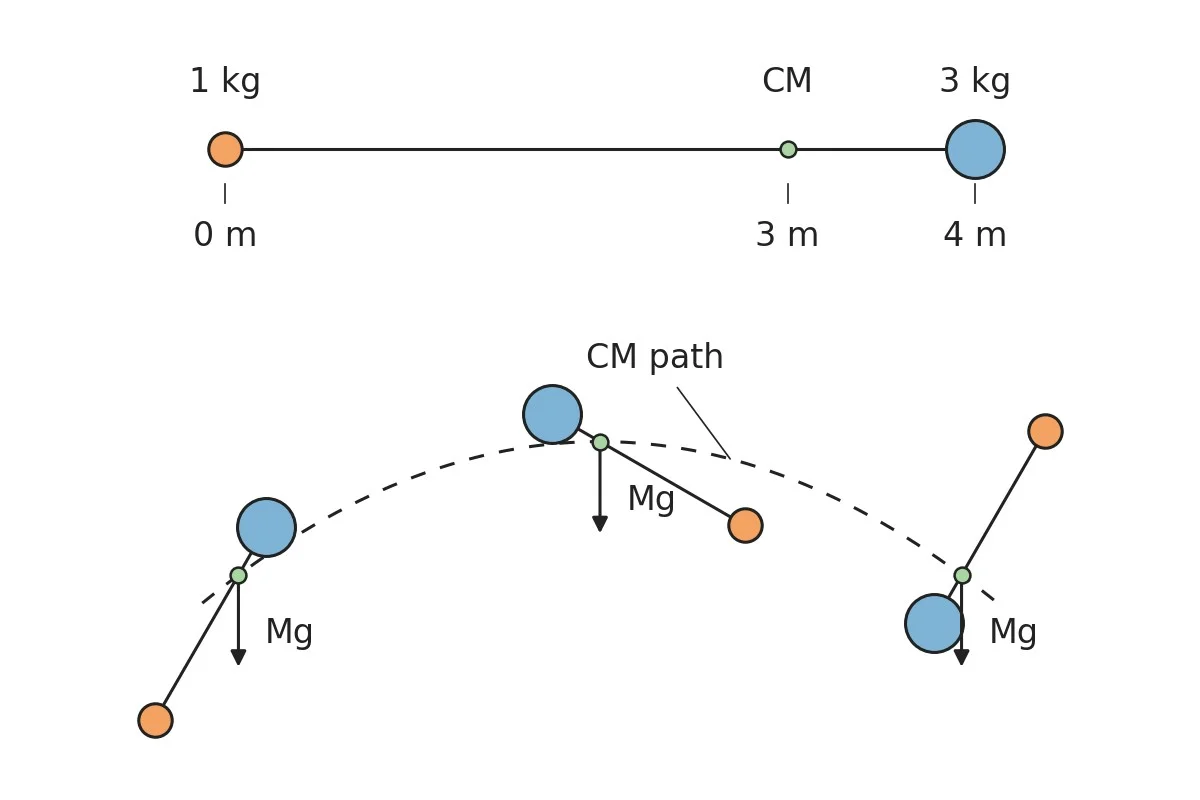
Where between two unequal masses does their centre of mass lie?
Nearer the heavier mass. The heavier mass contributes more to the average position.
-
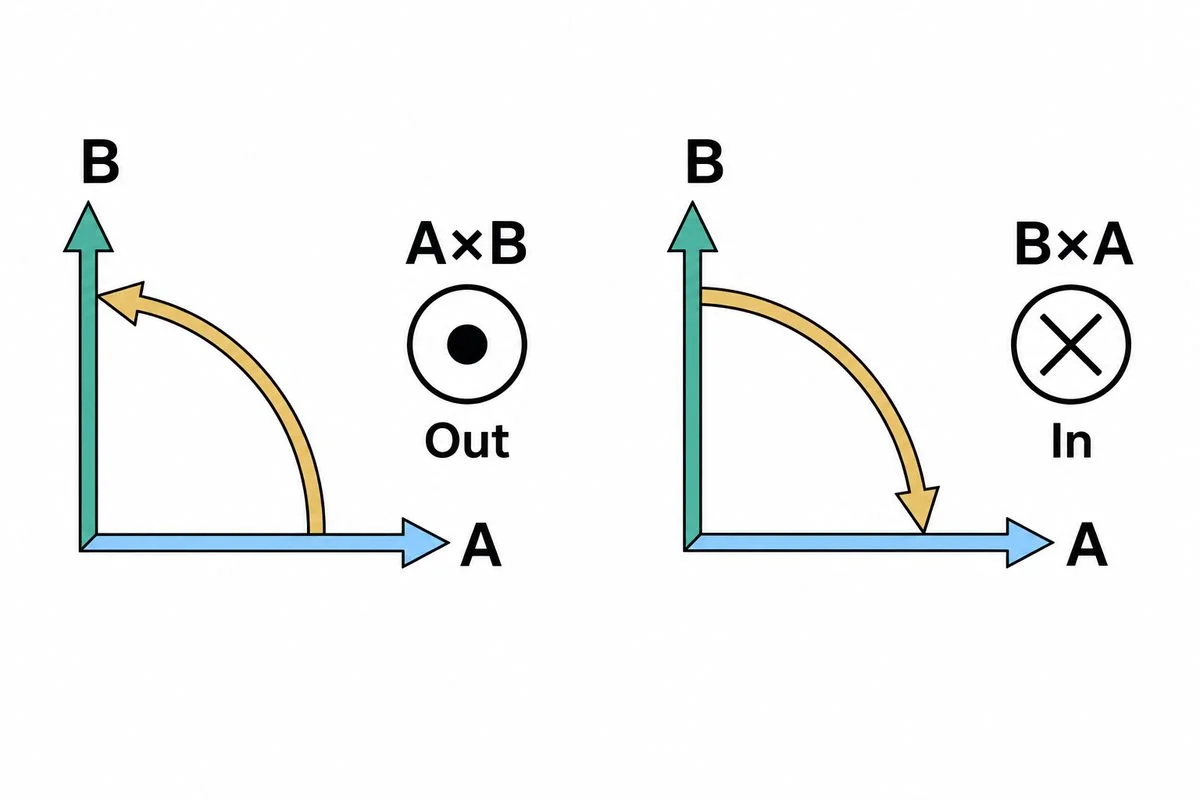
If a × b points upward, where does b × a point?
Downward. Reversing the order reverses direction without changing magnitude.
-
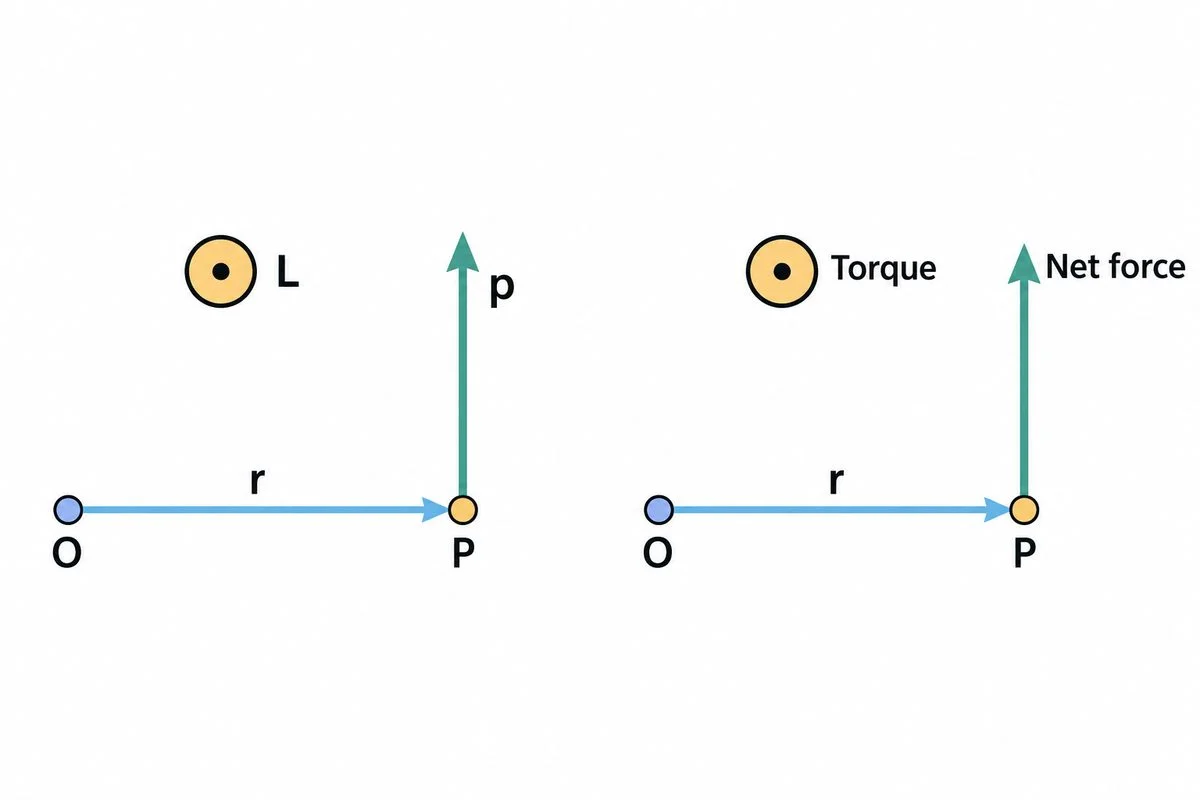
What happens to this particle’s angular momentum about O under the upward net force?
Its outward component increases. The net torque points outward, increasing angular momentum in that direction.
-
A spoon’s weight and support force are equal and opposite, but their vertical lines differ. Will it remain balanced?
No. The forces cancel, but their turning effects do not.
-
How does each particle’s contribution change when its distance from the axis doubles?
It becomes four times larger. Distance is squared, while the particle’s mass stays unchanged.
-
Two doors have different moments of inertia. Equal nonzero net torques act about their hinges. Which has the greater angular acceleration magnitude?
The door with lower inertia. The same torque causes greater angular acceleration when moment of inertia is smaller.
-
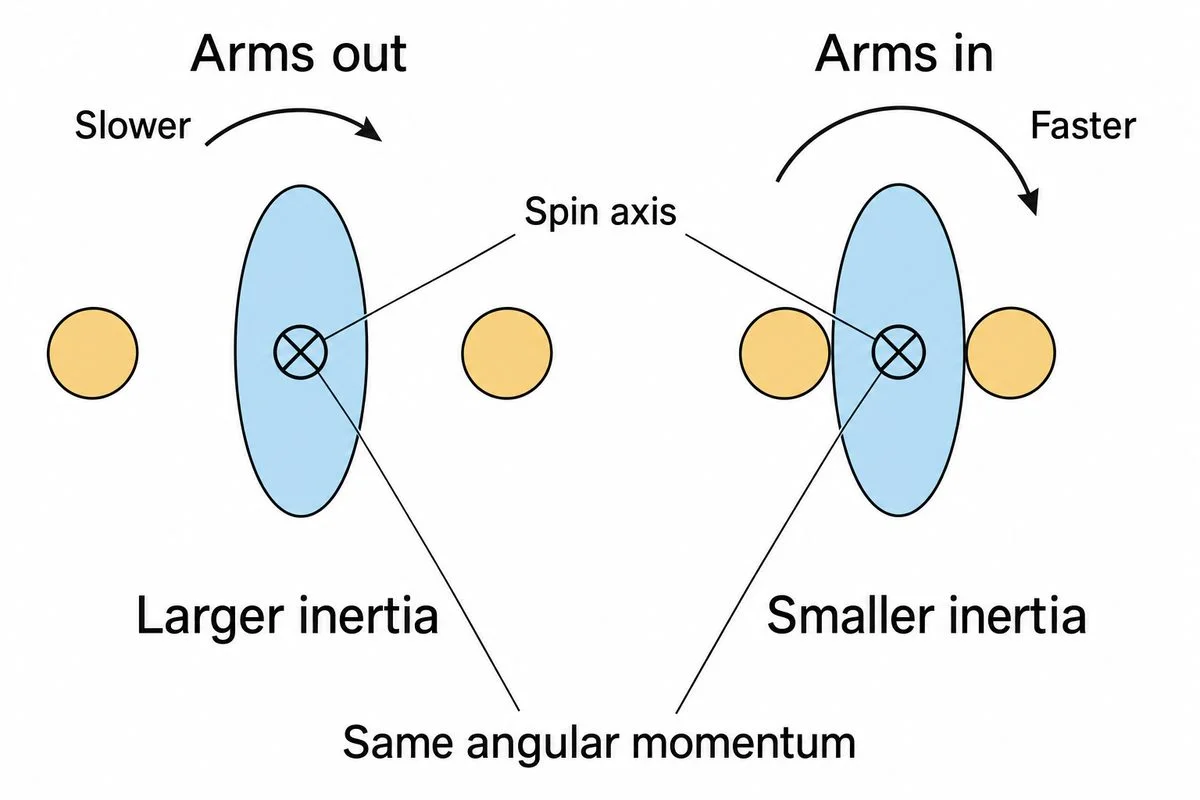
With negligible outside torque, what happens to spin speed when the skater pulls inward?
It increases. Smaller moment of inertia requires faster spin to conserve angular momentum.