One per step. The answer and the reason are given.
-
While a load moves horizontally, what work does a purely upward supporting force do?
Zero work. Perpendicular support does zero work, even though holding the load takes effort.
-
A push does 100 J; friction does −40 J. All other forces do zero work. What kinetic energy is gained?
60 J. Counting both forces gives 60 J instead of the push’s 100 J.
-
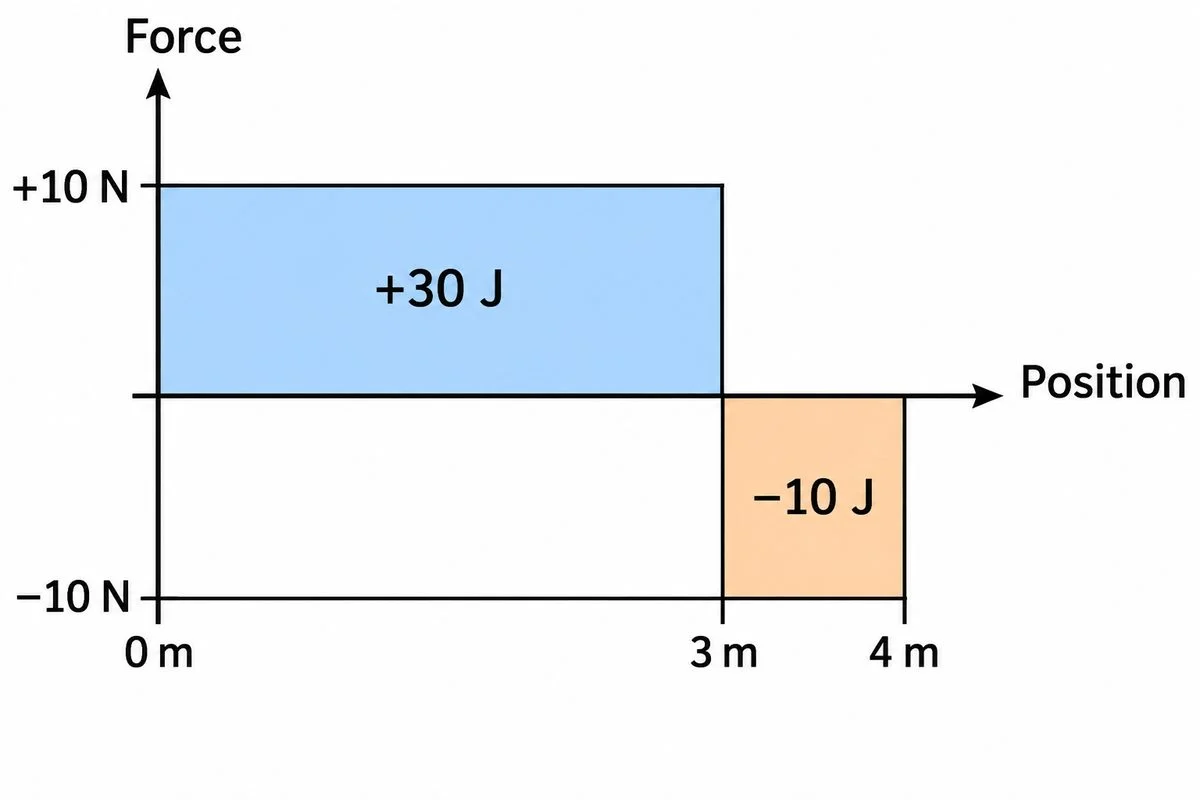
A force–position graph lies entirely below the axis, and position increases. What sign does the work have?
Negative. Below-axis force opposes displacement, so its area contributes negative work, not positive work.
-
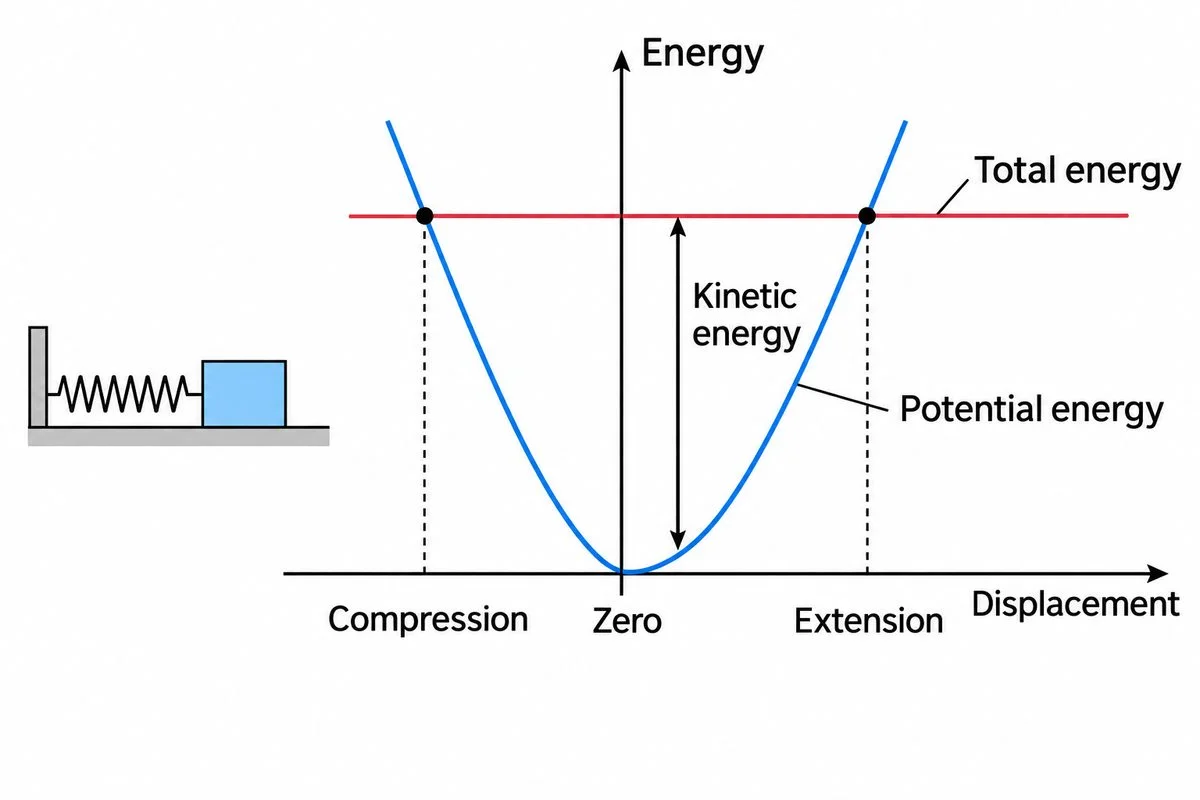
With relaxed spring energy set to zero, what sign does its energy have when compressed?
Positive. Compression stores energy that the spring can release while returning to its relaxed shape.
-
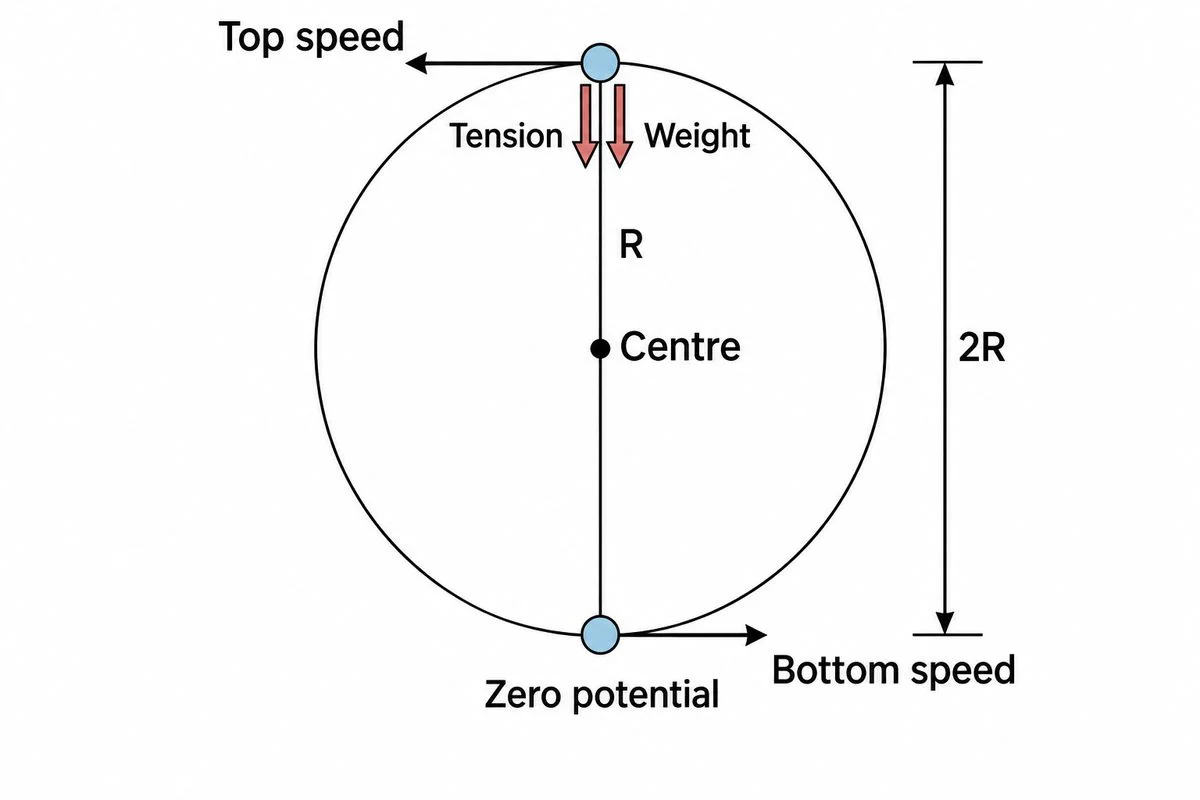
At the top, what happens to the string if the mass reaches zero speed?
It goes slack. The string cannot push outward to balance gravity and hold the mass there.
-
A pump delivers 600 W usefully at 60% efficiency. What input power does it need?
1000 W. Dividing gives 1000 W, while multiplying gives 360 W, less than useful output.
-
An isolated moving cart sticks to an identical stationary cart. What fraction of their initial kinetic energy remains?
Half. Their combined mass doubles and speed halves, leaving half their initial kinetic energy.
-
Sand leaves at a moving trolley’s horizontal speed, with no horizontal thrust or external horizontal force. What happens to the momentum magnitude of the trolley plus its remaining sand?
It decreases. The departing sand carries momentum away while the remaining trolley keeps its speed.