One per step. The answer and the reason are given.
-
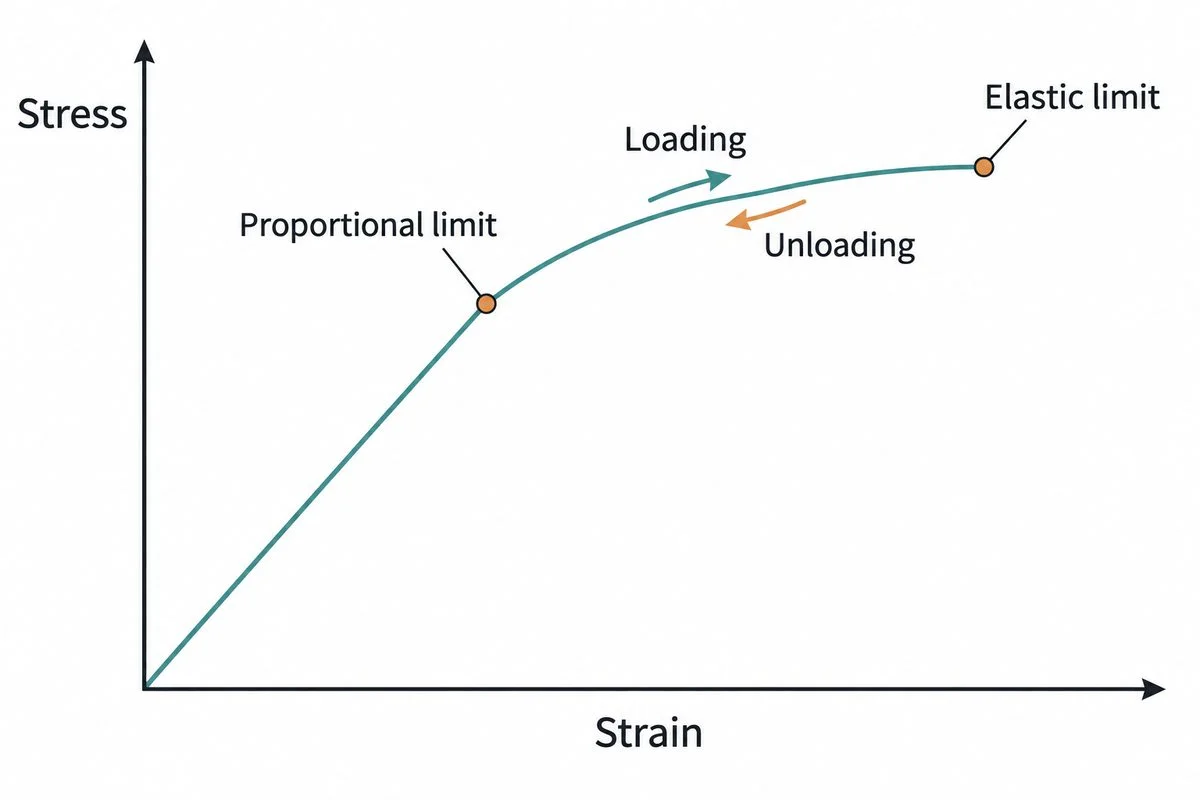
A sample’s stress–strain graph curves. Must some deformation remain after unloading?
No. Recovery determines elasticity; a straight graph is required only for Hooke’s law.
-
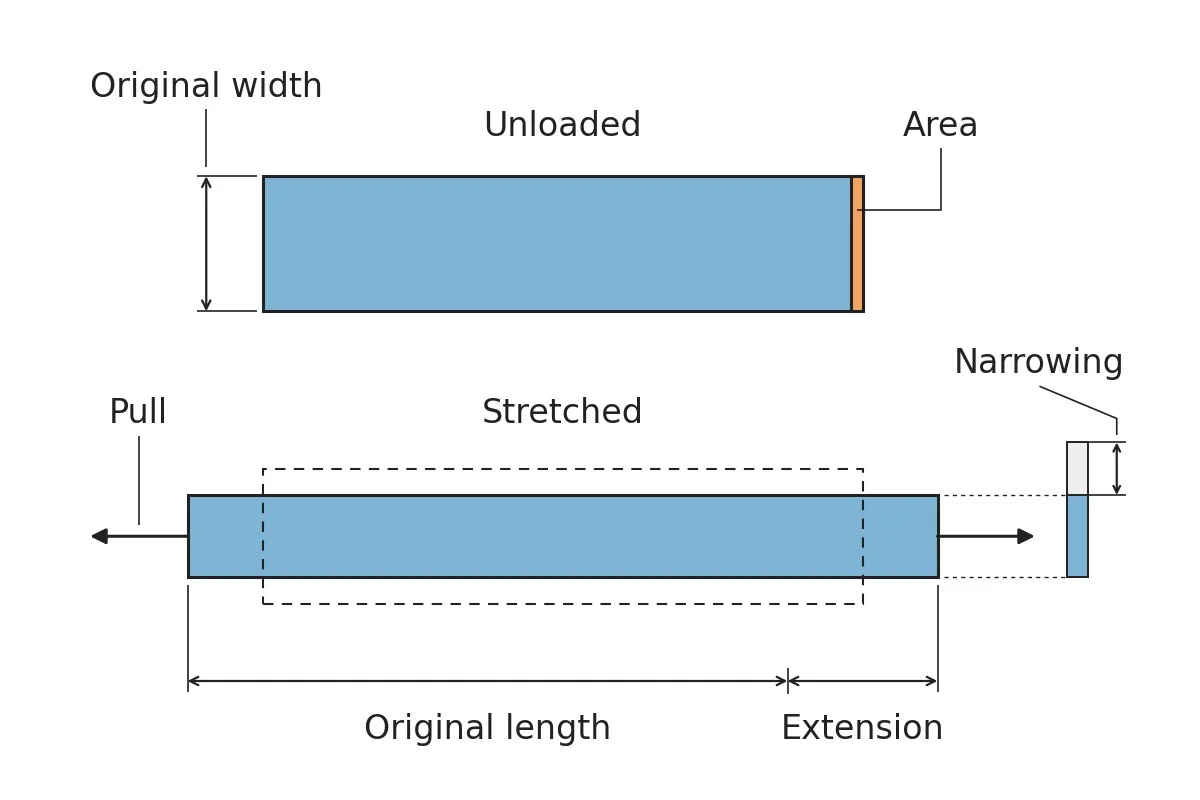
What must divide the diameter decrease before you compare the two strains?
The original diameter. Poisson’s ratio compares fractional changes, so raw changes alone cannot give it.
-
Two identical wires share a load equally. What fraction belongs in each wire’s extension calculation?
Half. Each wire’s extension depends on its own share of the total load.
-
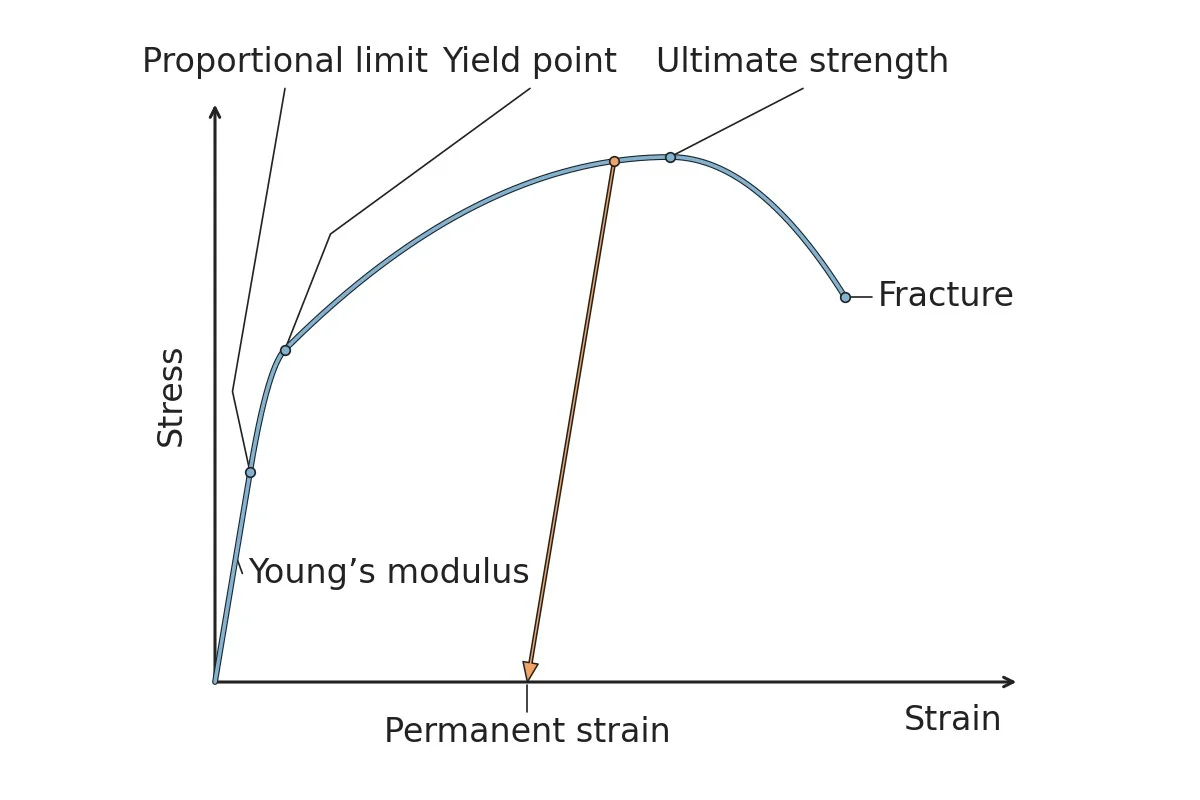
On matching axes, A starts steeper. B reaches higher stress. Which has greater ultimate strength?
B. Ultimate strength comes from peak stress, while the initial slope measures stiffness.
-
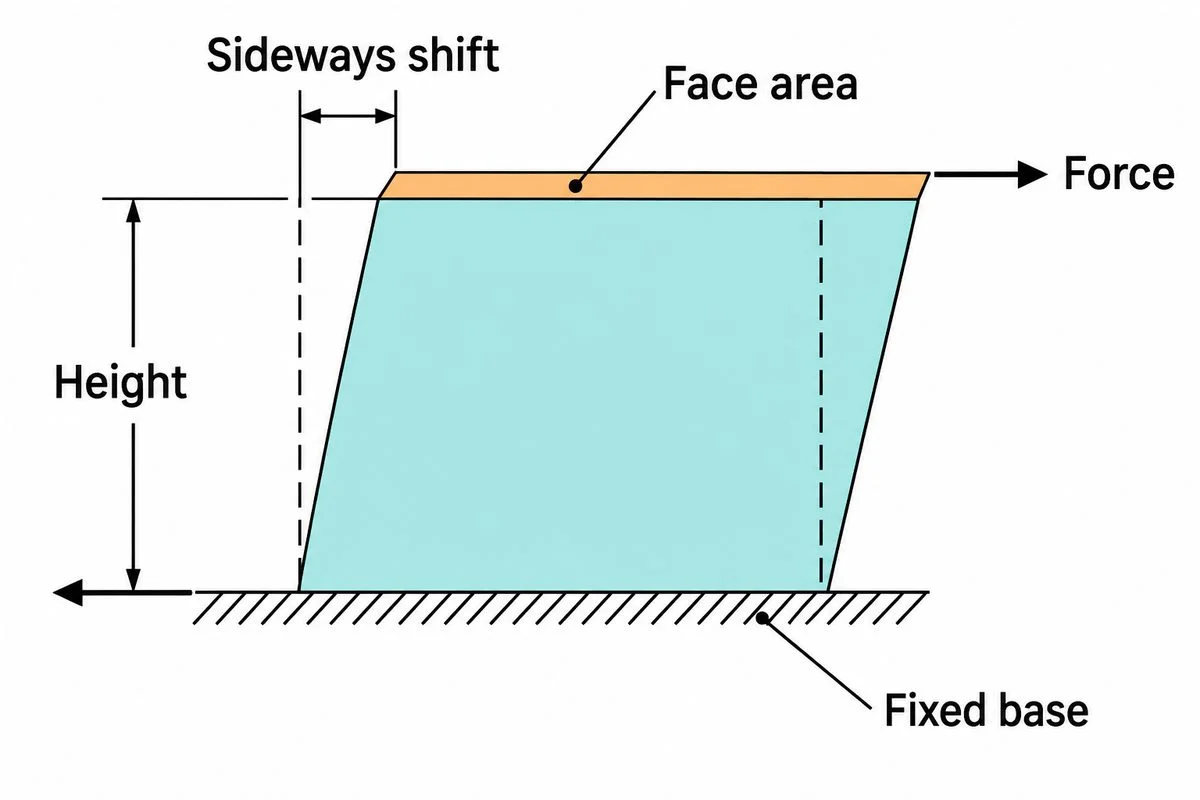
A block’s bottom stays fixed while its top shifts sideways. Which modulus describes its resistance?
Shear modulus G. The displacement distorts the block sideways rather than stretching it along its length.
-
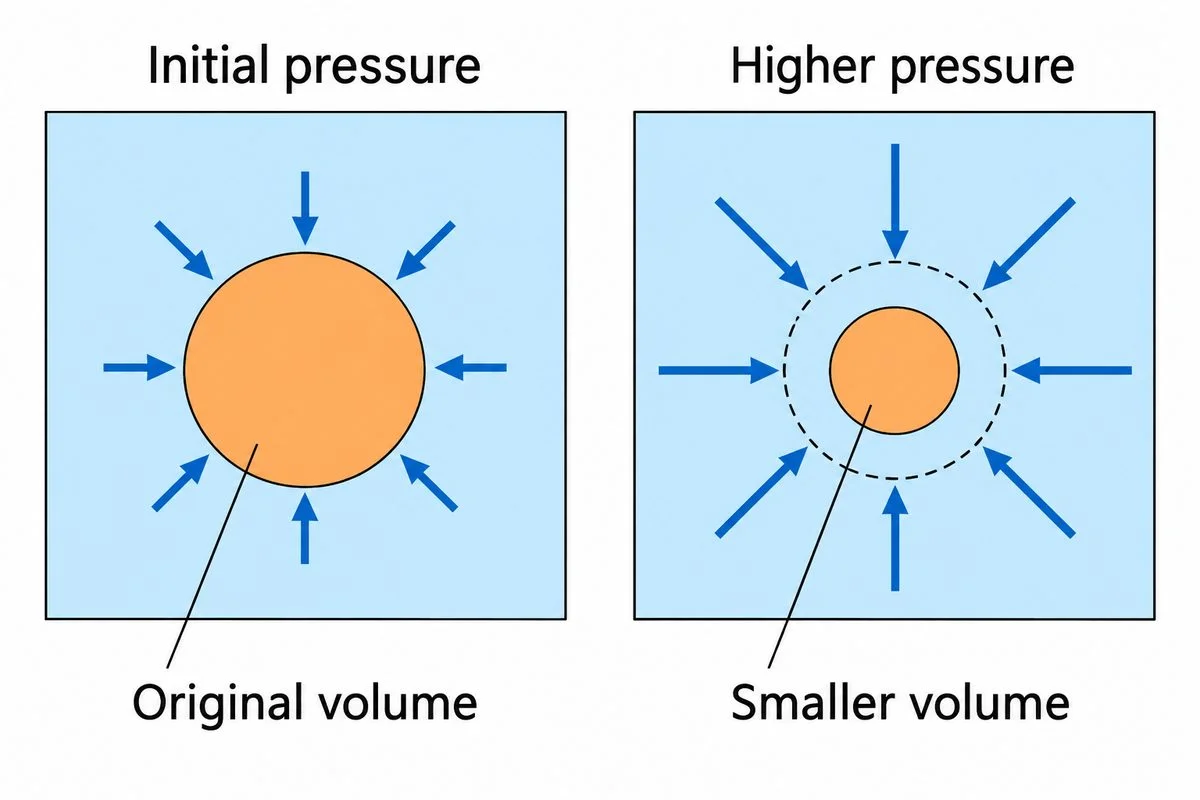
At fixed temperature, two materials receive equal small pressure increases. Which loses the smaller volume fraction?
Whichever has larger bulk modulus. Fractional compression equals the pressure increase divided by bulk modulus.
-
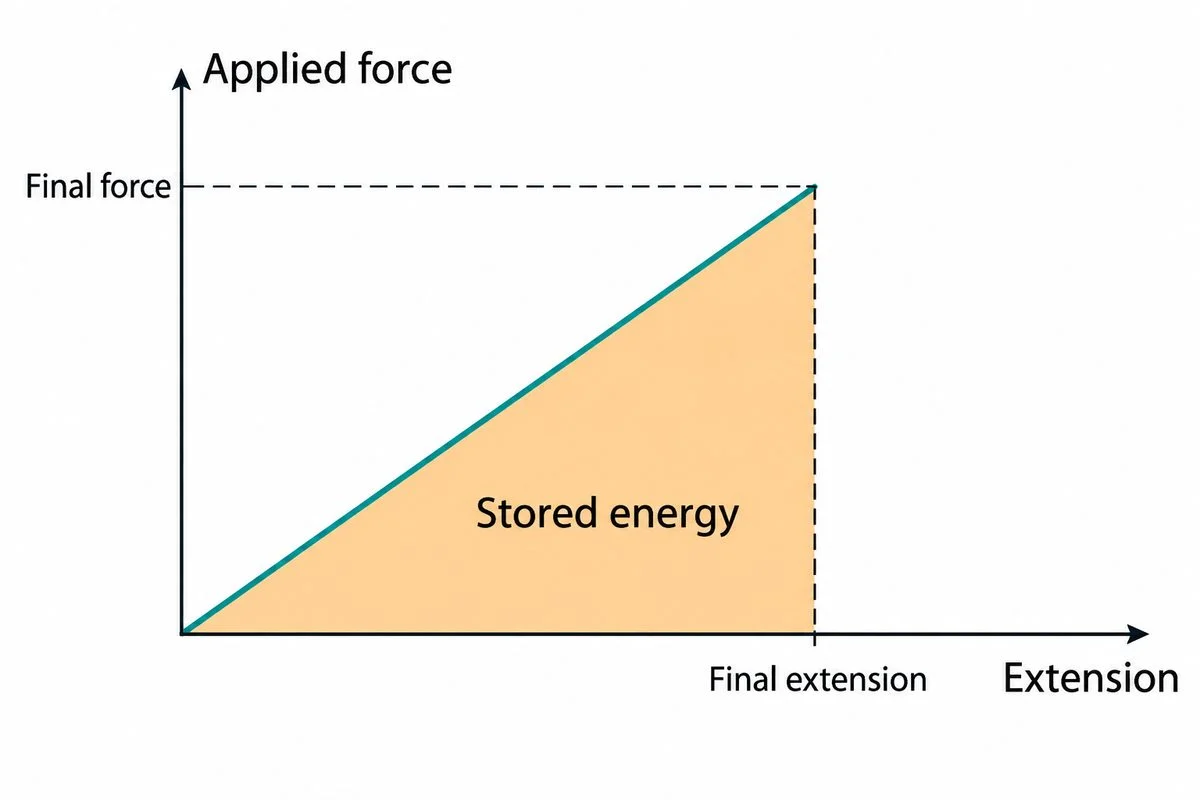
An initially unstretched wire obeys Hooke’s law. Gradual loading to 100 N produces 2 mm extension. How much energy is stored?
0.1 J. The average force is 50 N, acting through an extension of 0.002 m.
-
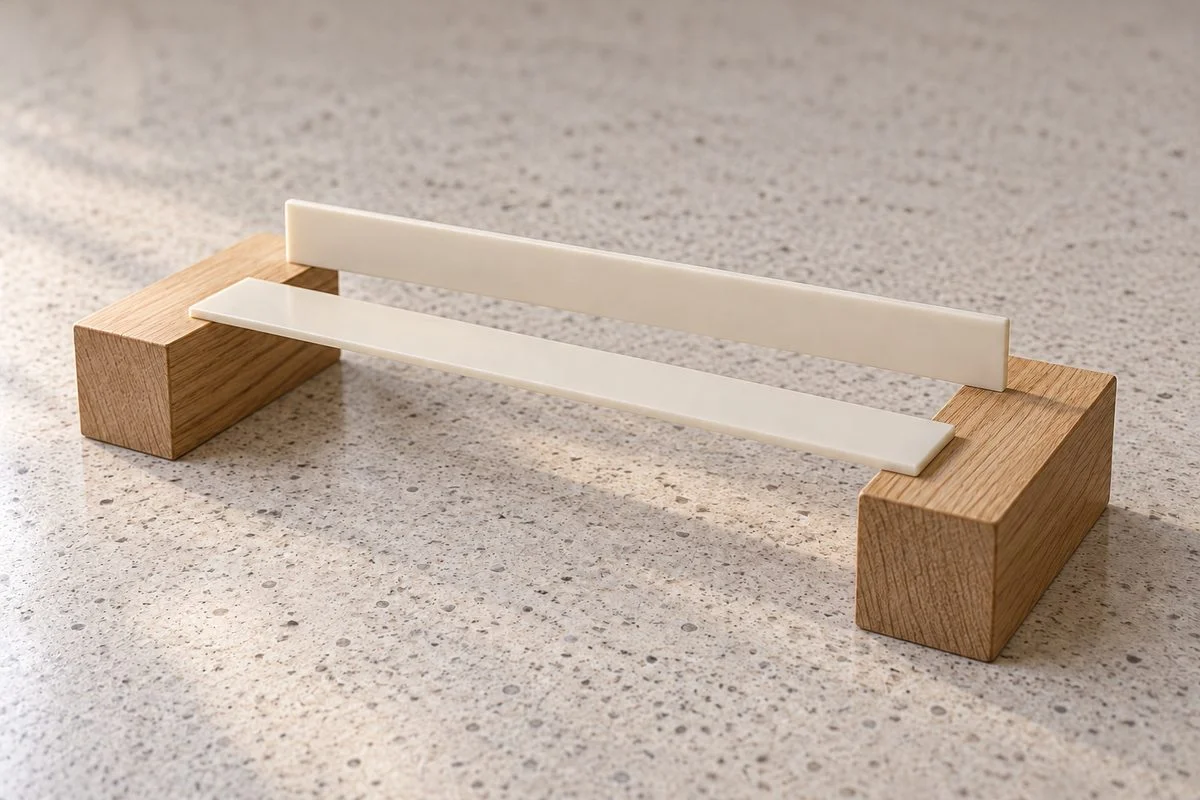
A centre-loaded rectangular beam doubles in depth. Load, span, breadth and material stay fixed. What sag remains?
One-eighth of the original. Doubling depth multiplies depth cubed by eight, reducing sag by that factor.