One per step. The answer and the reason are given.
-
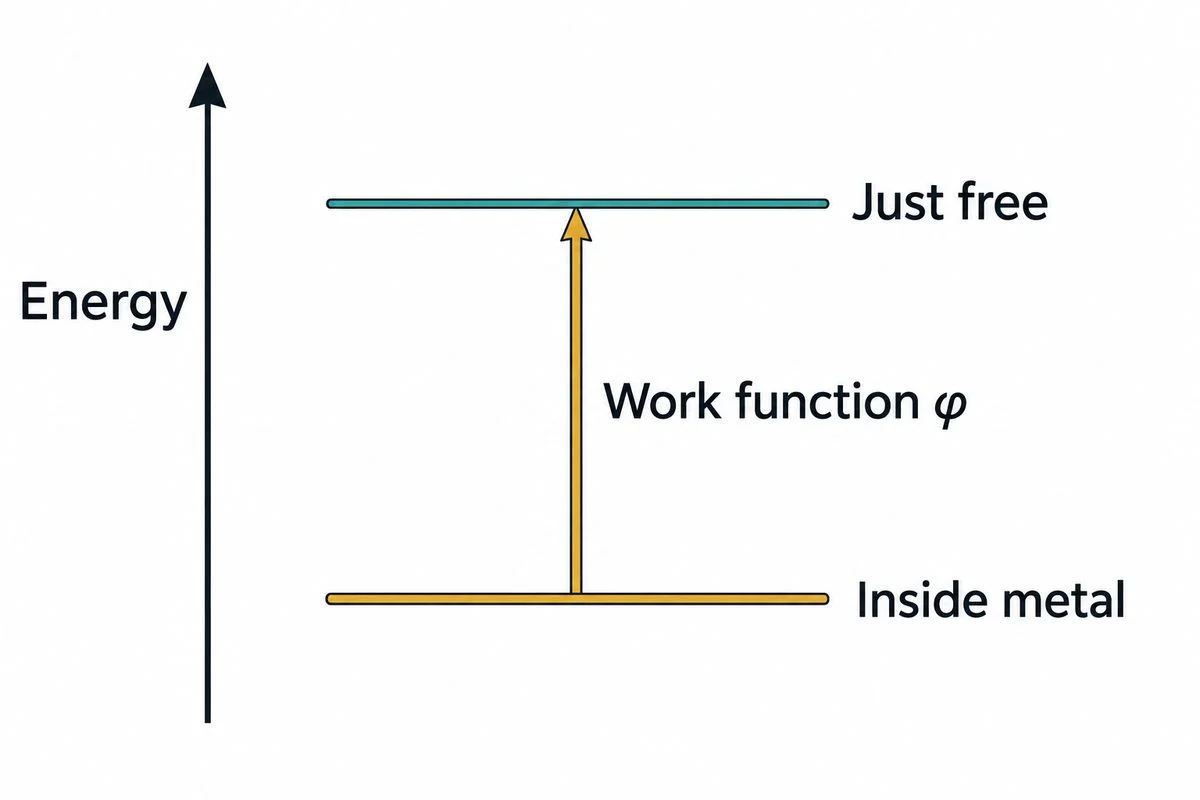
A metal requires 2 eV for escape. What happens when a 1 eV photon arrives?
No electron escapes. The photon supplies less energy than escape requires.
-
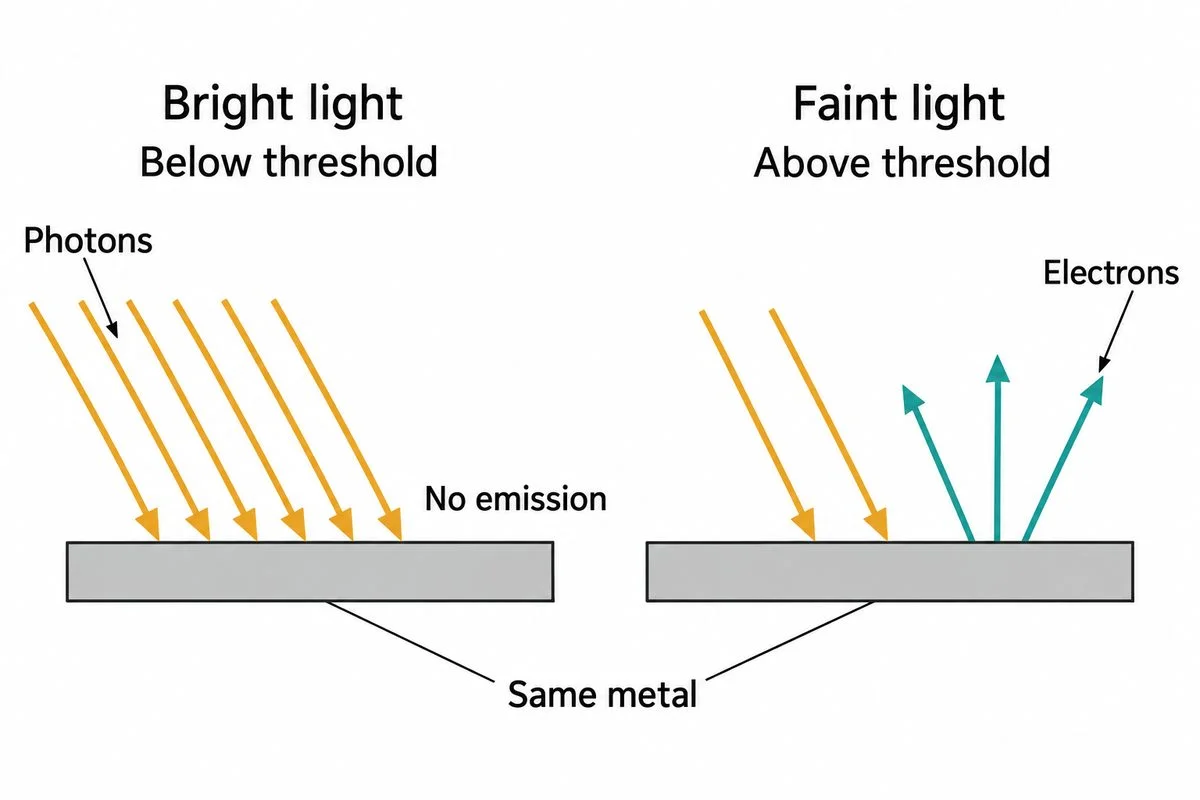
Each photon supplies less than the escape energy. What happens if the beam becomes brighter?
No electrons escape. Each photon still carries too little energy for escape.
-
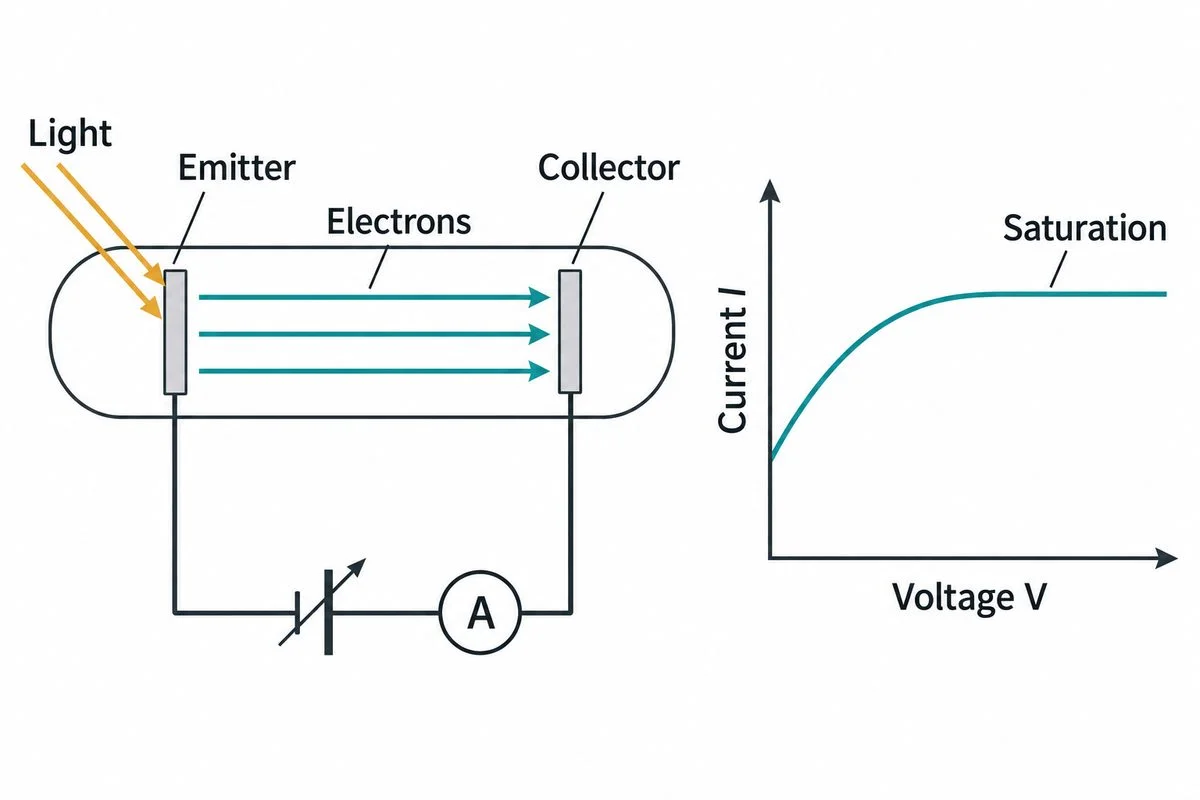
All emitted electrons reach the collector. With emission unchanged, how does extra collector voltage affect photocurrent?
Current stays unchanged. Complete collection leaves no additional emitted electrons to gather.
-
A photon supplies 5 eV and escape costs 2 eV. What is the maximum kinetic energy?
3 eV. Subtract the escape cost from the photon’s energy.
-
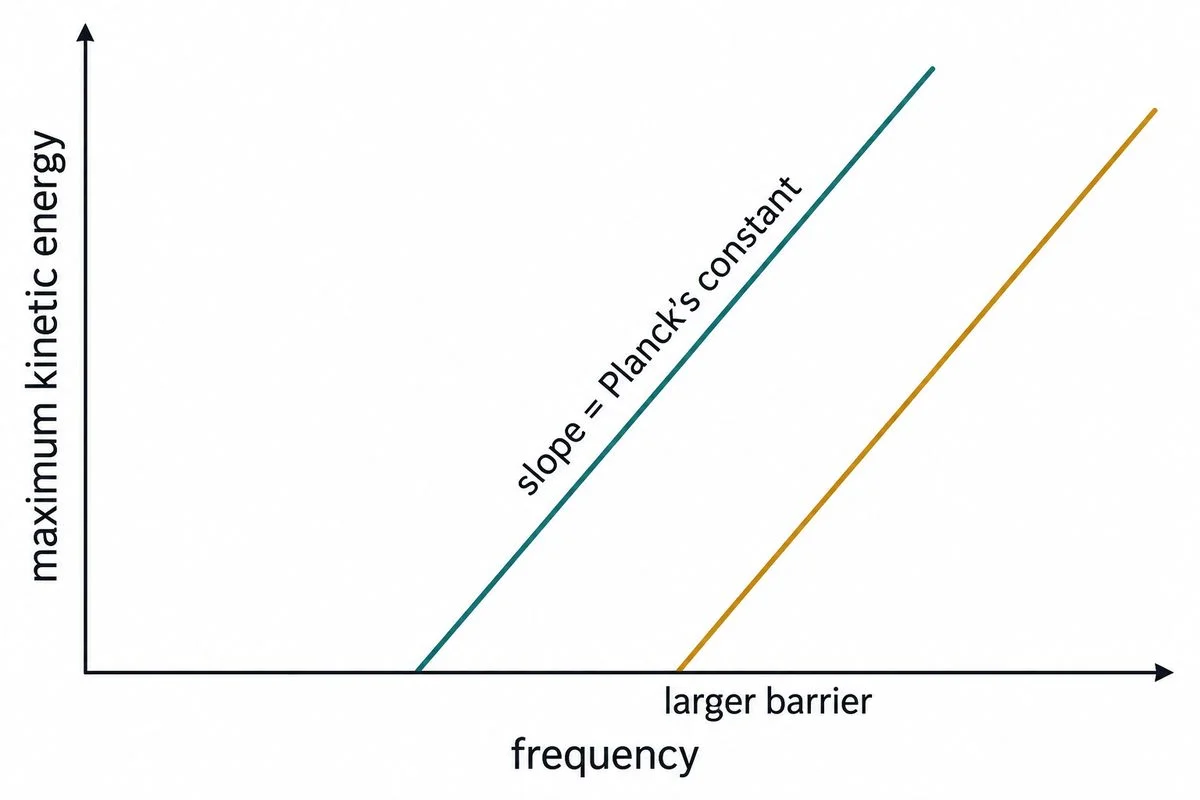
A metal’s work function triples. What happens to its threshold frequency?
It triples. The minimum photon energy must rise by the same factor.
-
Power stays unchanged while wavelength halves. What happens to the number of photons emitted each second?
It halves. Each photon now carries twice the energy, leaving half as many per second.
-
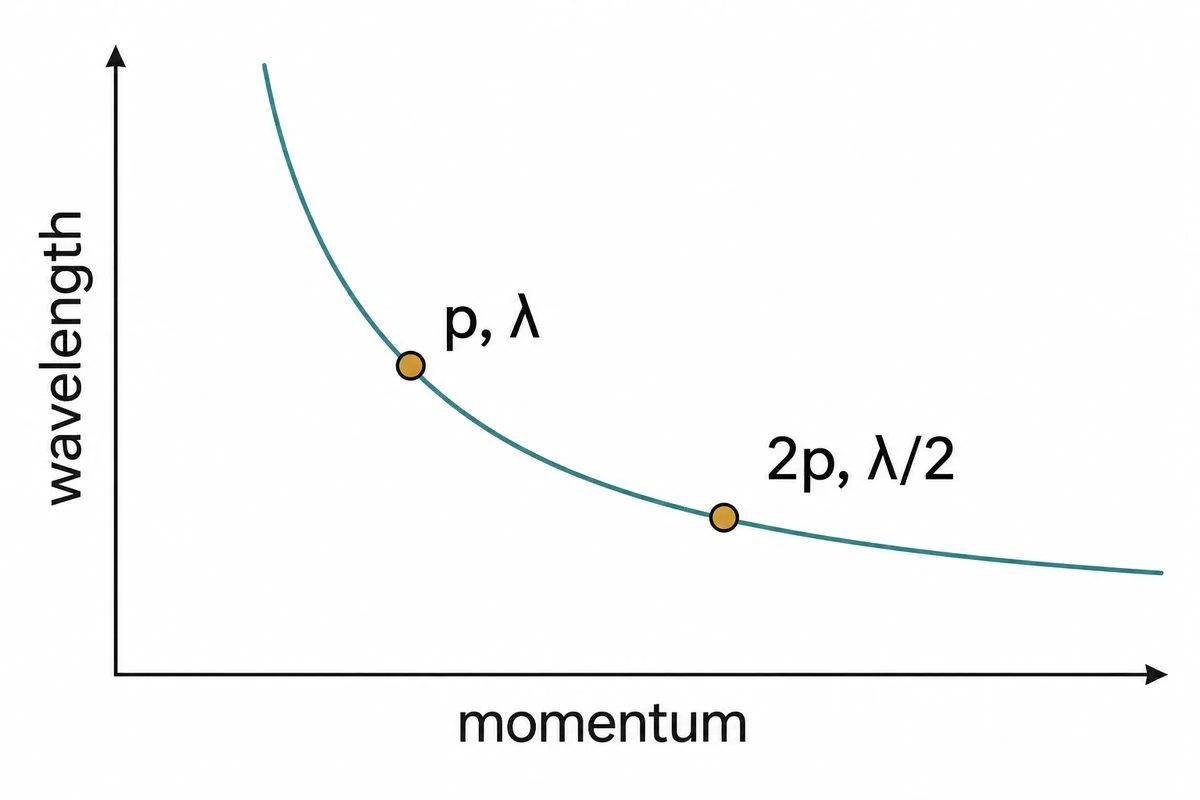
An electron starts from rest and stays well below light speed. What voltage multiplier halves its wavelength?
Four. Four times the voltage doubles momentum, which halves wavelength.
-
What wavelength does the momentum relation assign to a moving ball?
Tiny, but not zero. Its large momentum makes the wavelength extremely small.