One per step. The answer and the reason are given.
-
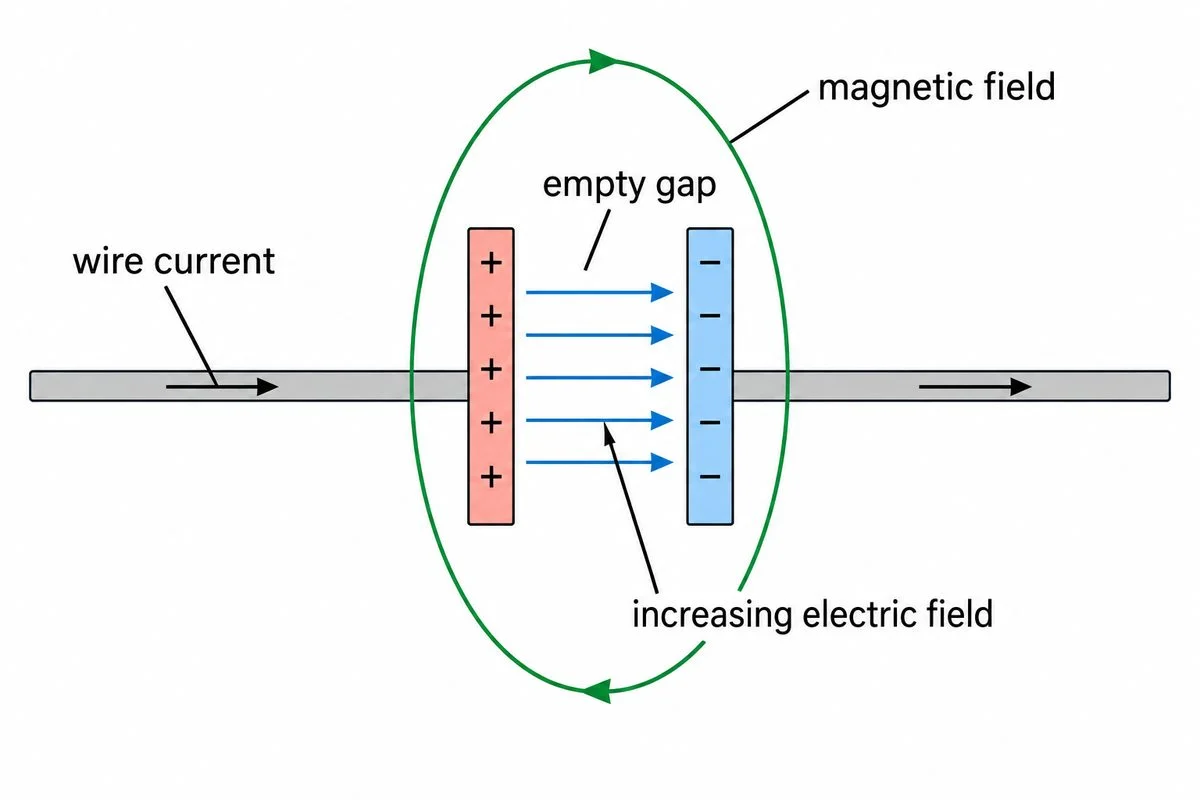
A charging capacitor’s wire carries current i. What total current does the Ampere–Maxwell law use around this wire?
i. The two surfaces give equal currents, which must not be added.
-
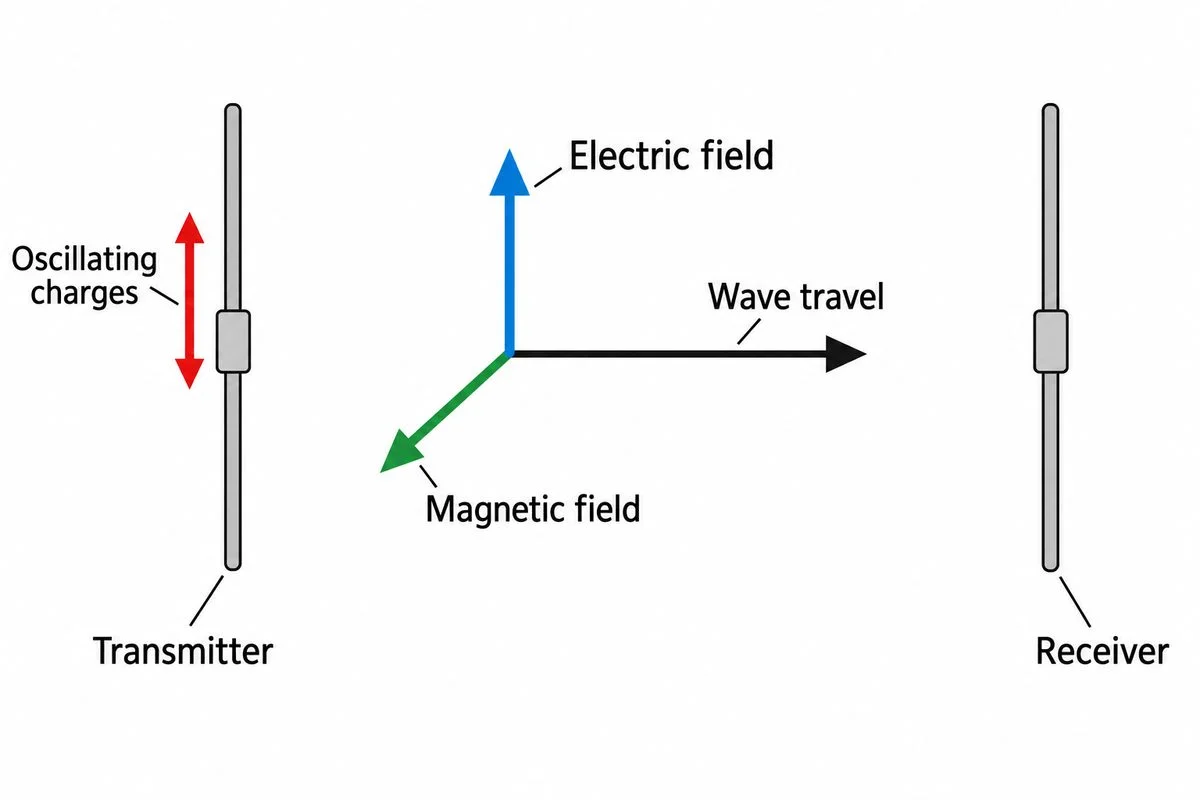
Which radiates: a circling charge or one moving straight at constant velocity?
The circling charge. Its changing direction means acceleration, even at constant speed.
-
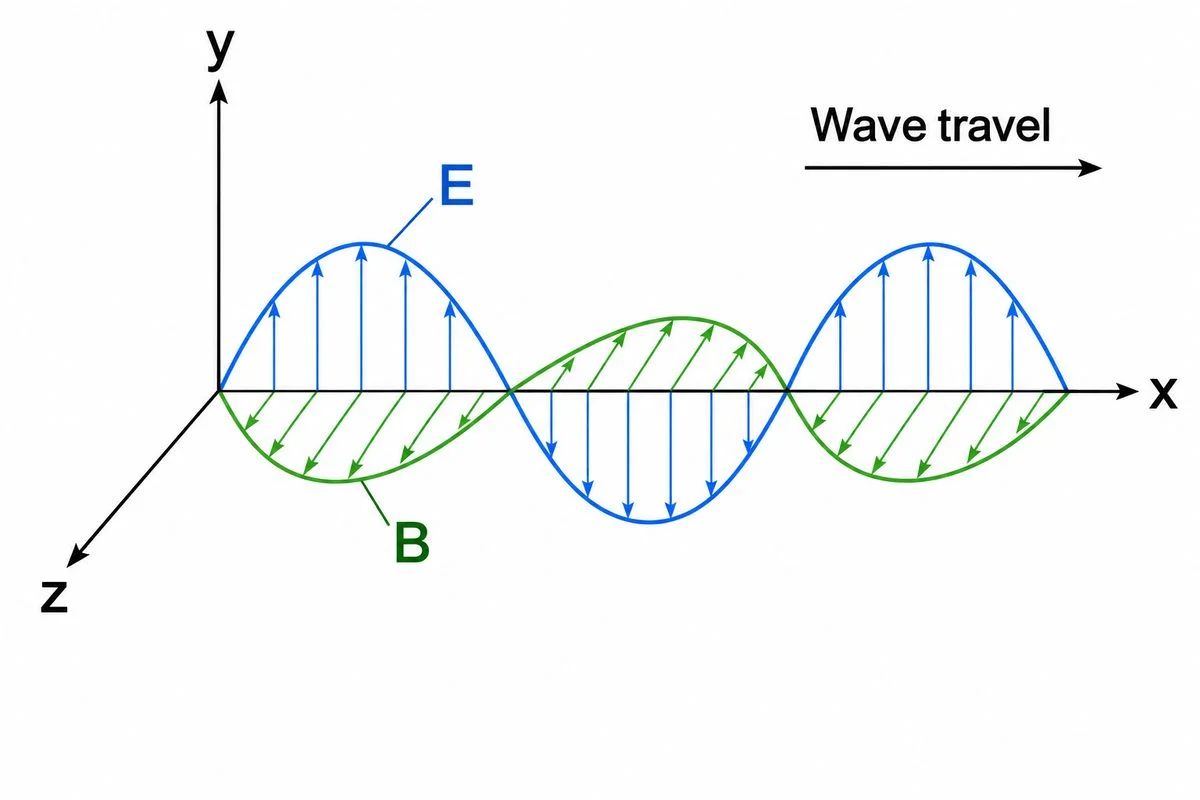
Electric field points along positive y; magnetic field points along positive z. Which direction carries energy?
Positive x. The right-hand rule takes the electric field first, then the magnetic field.
-
In vacuum, electric amplitude is 120 V/m. What is the magnetic amplitude?
T. Divide electric amplitude by the vacuum speed, rather than multiplying.
-
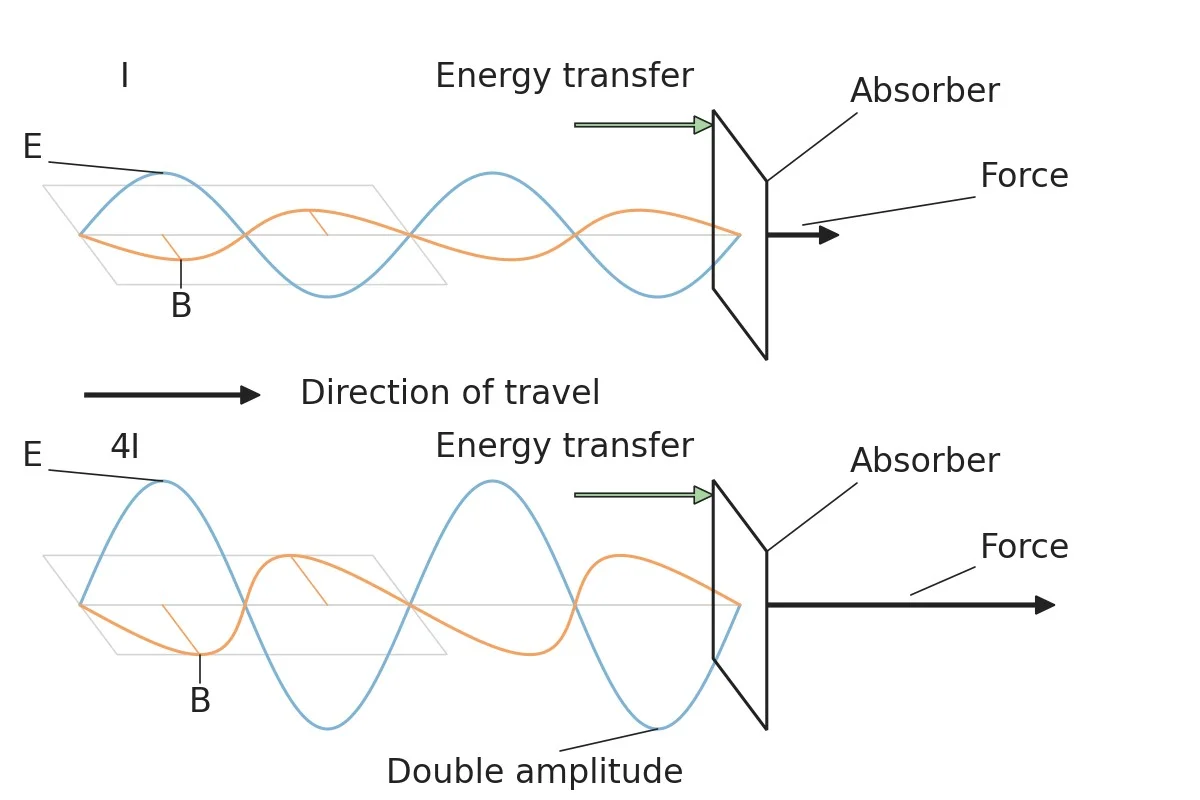
In the same medium, field amplitude triples. By what factor does intensity increase?
Nine. Intensity depends on amplitude squared, so the factor is three squared.
-
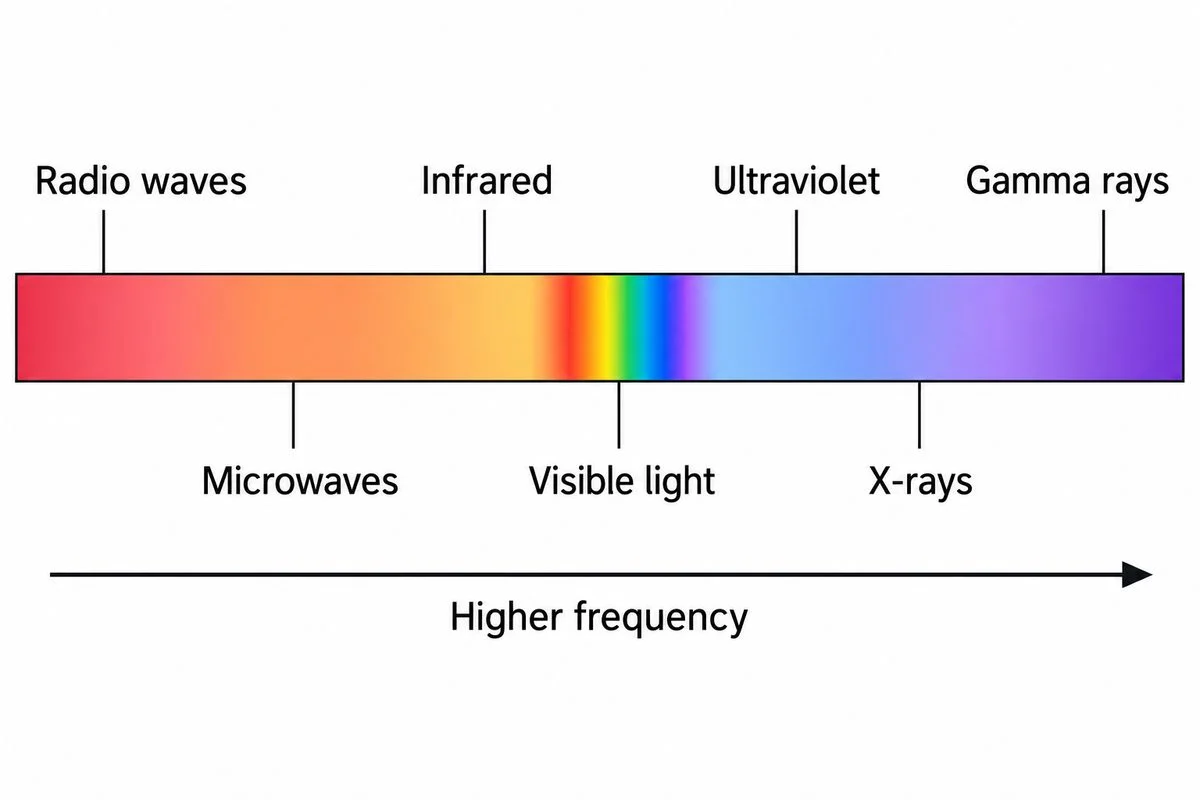
One photon has twice another’s wavelength. How does its energy compare?
Half as much. Energy per photon varies inversely with wavelength.
-
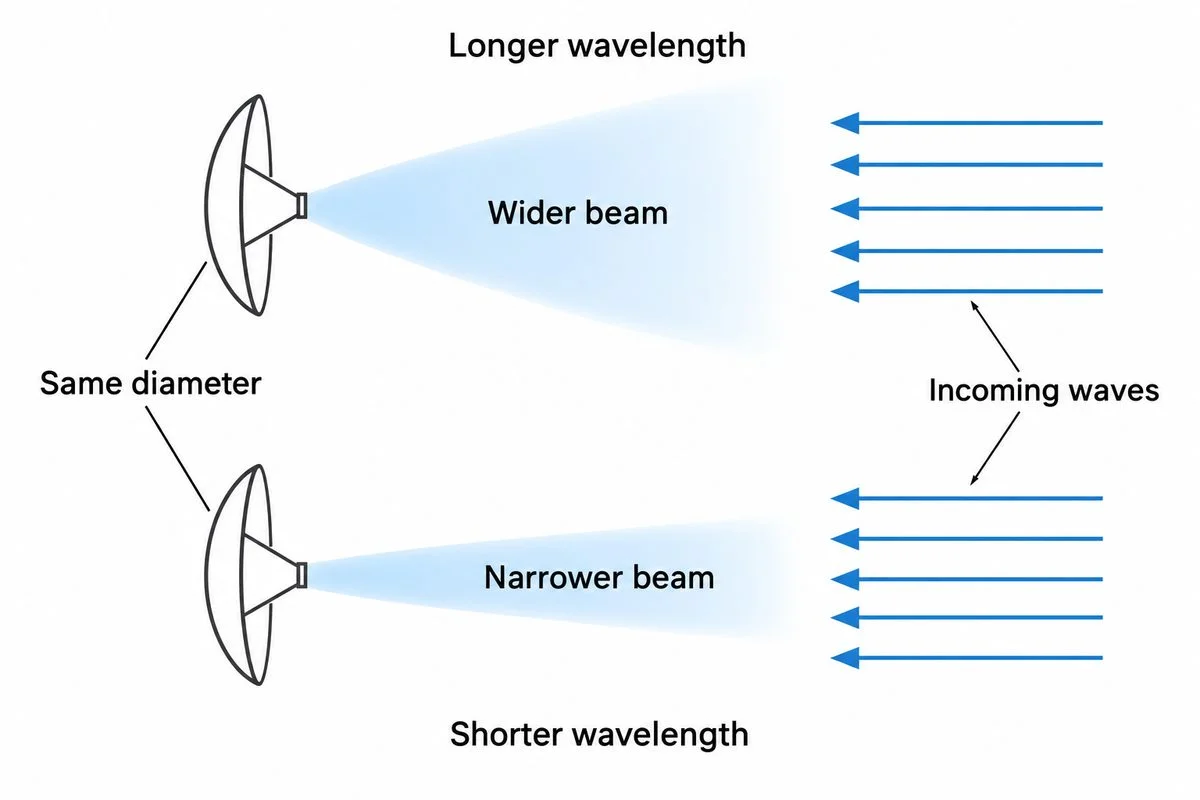
For a narrower radar beam, how should wavelength change if antenna width stays fixed?
It should decrease. Shorter wavelengths produce less diffraction spreading for the same antenna.
-
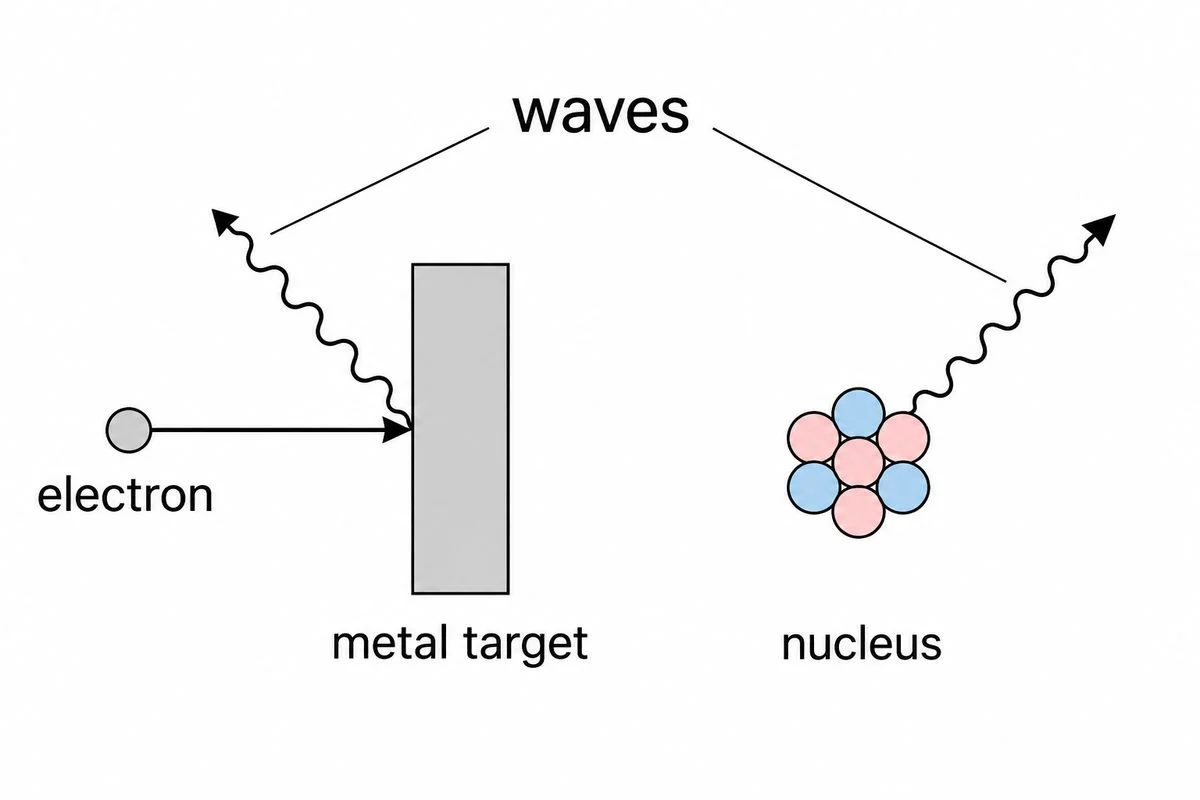
Which radiation comes from a nucleus dropping to a lower energy level?
Gamma rays. The emitting transition occurs inside the nucleus.