Skip to content

Teach A Peek Beyond the Point in eight steps.

For each idea: show it, ask before you tell, then say one line.

Gather paper, ruler, pencil, string, pen, measuring tape and a battery clock.

Common misconceptions & worked visual for this chapter · 15 practice questions with answers

How to teach it

Parts and places

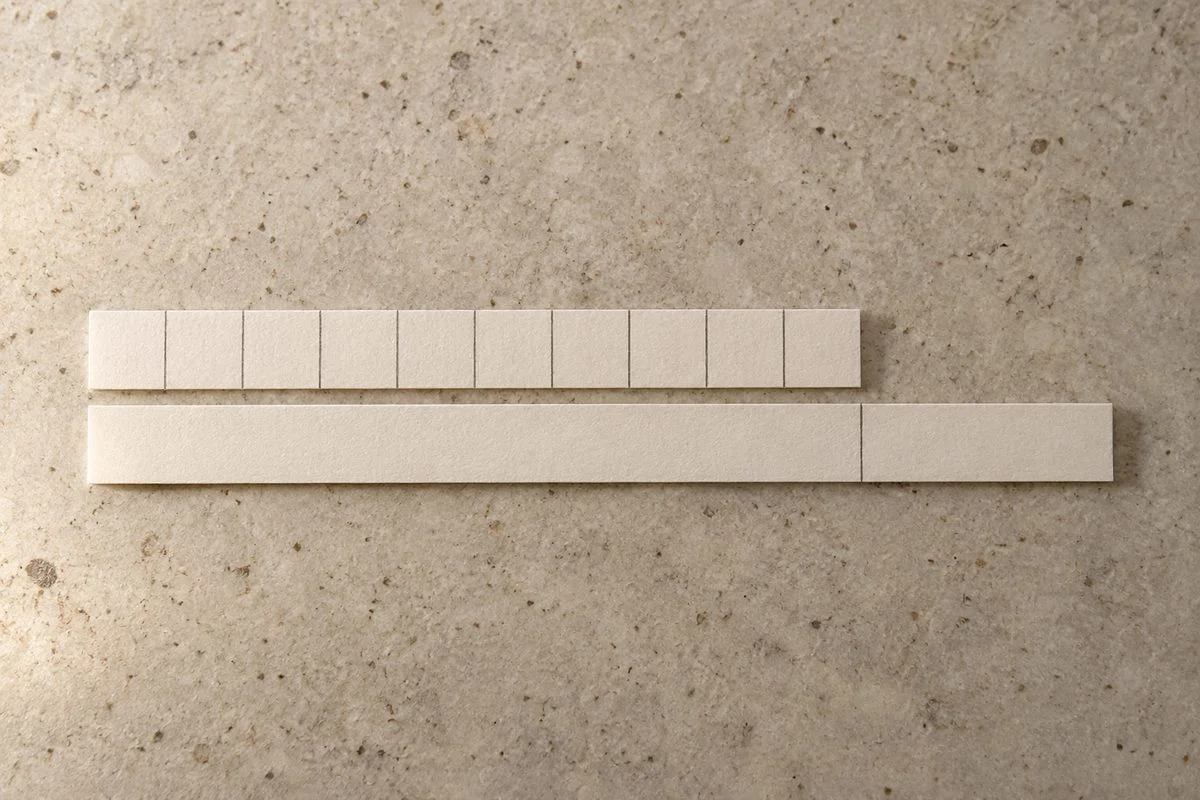
Two aligned paper strips, with ten equal sections marked on the shorter strip.

1. A Tenth Part

Ten equal parts together make one whole.

Show
Mark a 20 cm paper strip into ten equal sections. Call its length one unit. Align a 26 cm strip beside it. Mark where the shorter strip ends.
Ask
How many tenths will cover the longer strip?
Say
Count along: thirteen tenths make one unit and three tenths.
Used in
Cloth measurements include tenths of metres so pieces can fit more closely.
If your child says…“I only count the three tenths left over.”
Ask
How many tenths cover the length before your leftover part?
What’s true
The complete unit contributes another ten tenths.
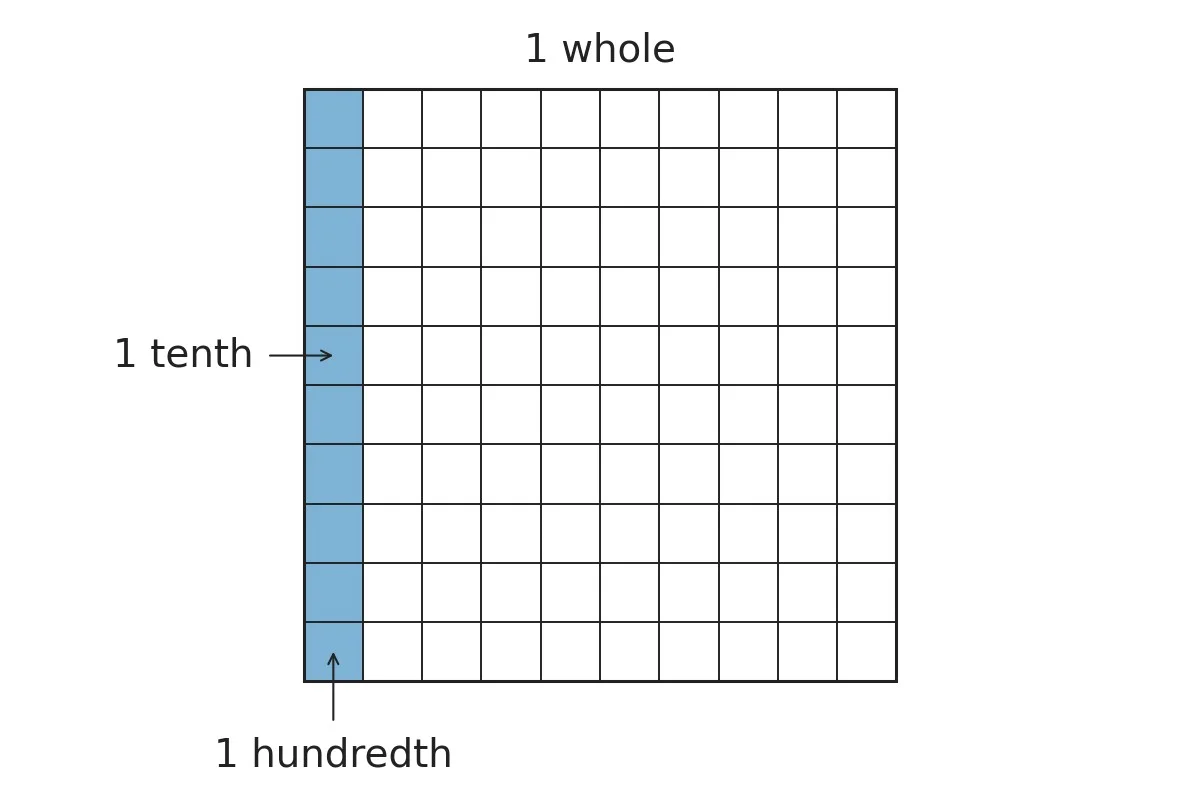
Labelled square grid showing one whole, one shaded tenth and one hundredth.

2. A Hundredth Part

Ten equal pieces of a tenth are hundredths.

Show
Look at the shaded column in the diagram. Find the ten small squares inside that tenth.
Ask
Looking at the shaded tenth, how many small squares will fill the whole?
Say
A hundred equal squares fill the whole, so each square is one hundredth.
Used in
Prices use hundredths of a rupee to include paise.
If your child says…“Hundredths are bigger because a hundred is bigger than ten.”
Ask
How many little squares fit inside the shaded tenth?
What’s true
Dividing the same whole into more equal pieces makes each piece smaller.
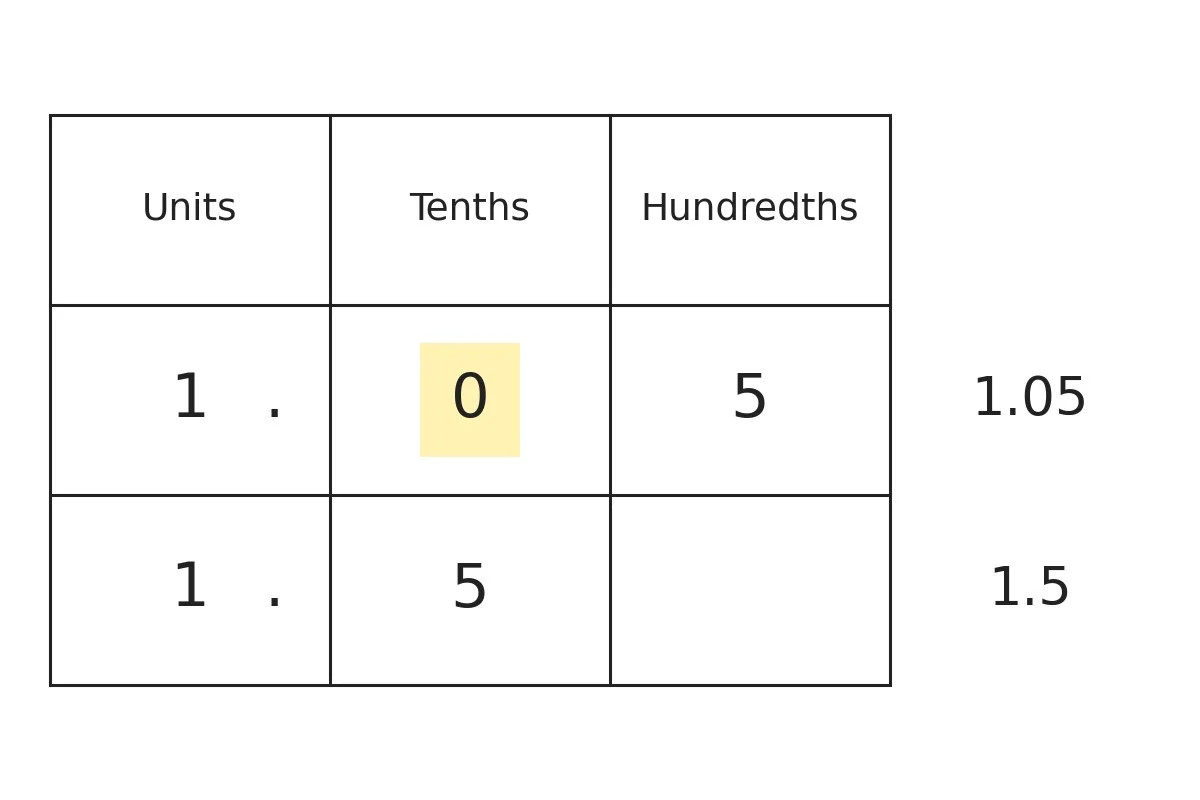
Place-value chart comparing the positions of five in 1.05 and 1.5.

3. Decimal Place Value

A digit’s place tells how much it contributes.

Show
Look at the diagram. Find the units, tenths and hundredths headings. Compare five’s column in the two number rows.
Ask
How can we write one whole and five hundredths without making the five count tenths?
Say
Write one whole and five hundredths as 1.05. The zero holds the tenths place. In 1.5, five counts tenths instead.
Used in
Weighing scales use decimal places to show small differences in weight.
If your child says…“I can leave out the zero and write 1.5.”
Ask
Without the zero, which heading would the five sit under?
What’s true
Removing this zero moves five from hundredths into tenths.

1210=1010+210\frac{12}{10}=\frac{10}{10}+\frac{2}{10}

1210=1+210\frac{12}{10}=1+\frac{2}{10}

1210=1+0.2\frac{12}{10}=1+0.2

4. Decimal Place Value

Regroup counted parts into wholes before writing the decimal.

Show
Write this line, saying “Ten tenths make one whole, leaving two tenths.”
Ask
Which decimal should finish the next line?
Say
Twelve tenths make one whole and two tenths: 1.2.
Used in
Combining short fabric lengths gives the total available for sewing.
If your child says…“Twelve tenths is 0.12.”
Ask
After ten tenths fill a whole, how many tenths remain?
What’s true
Twelve tenths exceed a whole, so the whole-number part cannot be zero.

Measure, compare and calculate

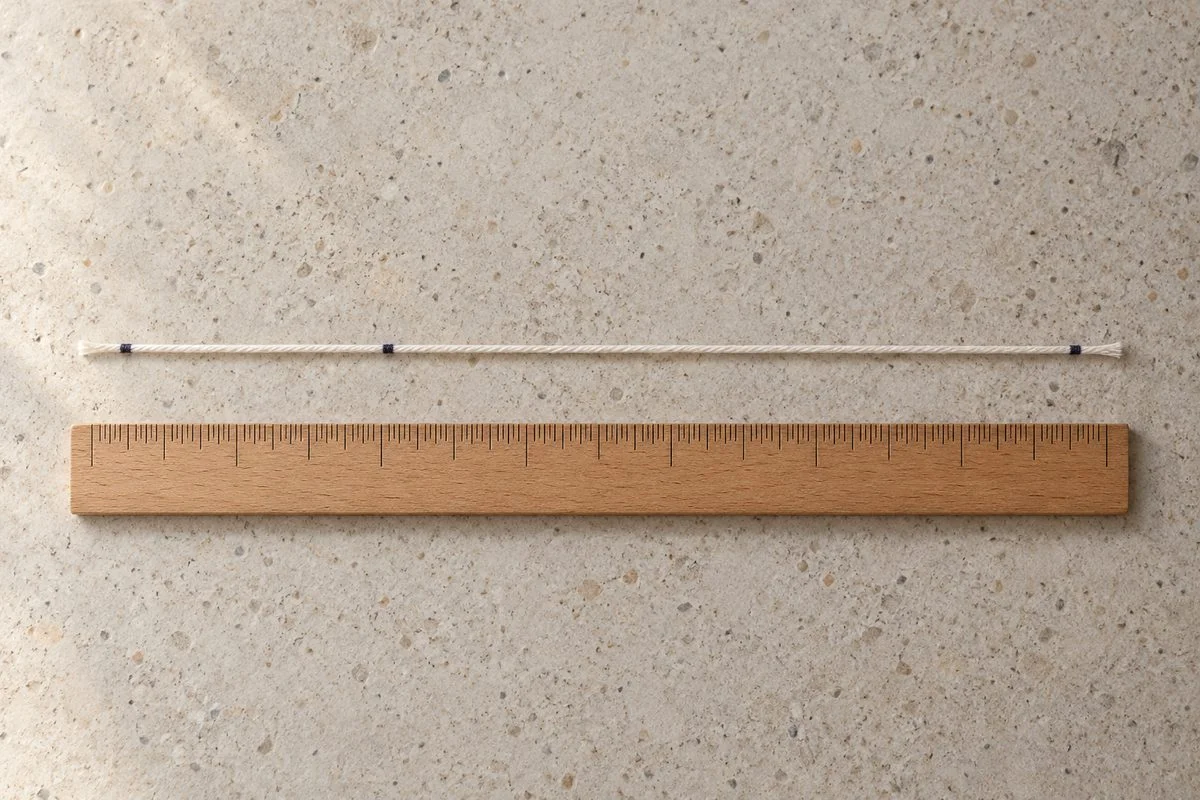
Straight string marked at its start, quarter-length and end, beside a ruler.

5. Units of Measurement

The same amount has different numbers in different units.

Show
Straighten some string. Measure and mark 100 cm from its start. Mark 25 cm from the same start.
Ask
How would you write the shorter marked length in metres?
Say
Each centimetre is a hundredth of this metre, so the marked length is 0.25 metre.
Used in
Converting recipe weights into matching units makes ingredient amounts easier to compare.
If your child says…“Every unit change moves the point one place.”
Ask
How many centimetres fill this whole metre?
What’s true
The conversion depends on how many smaller units fill the larger unit.
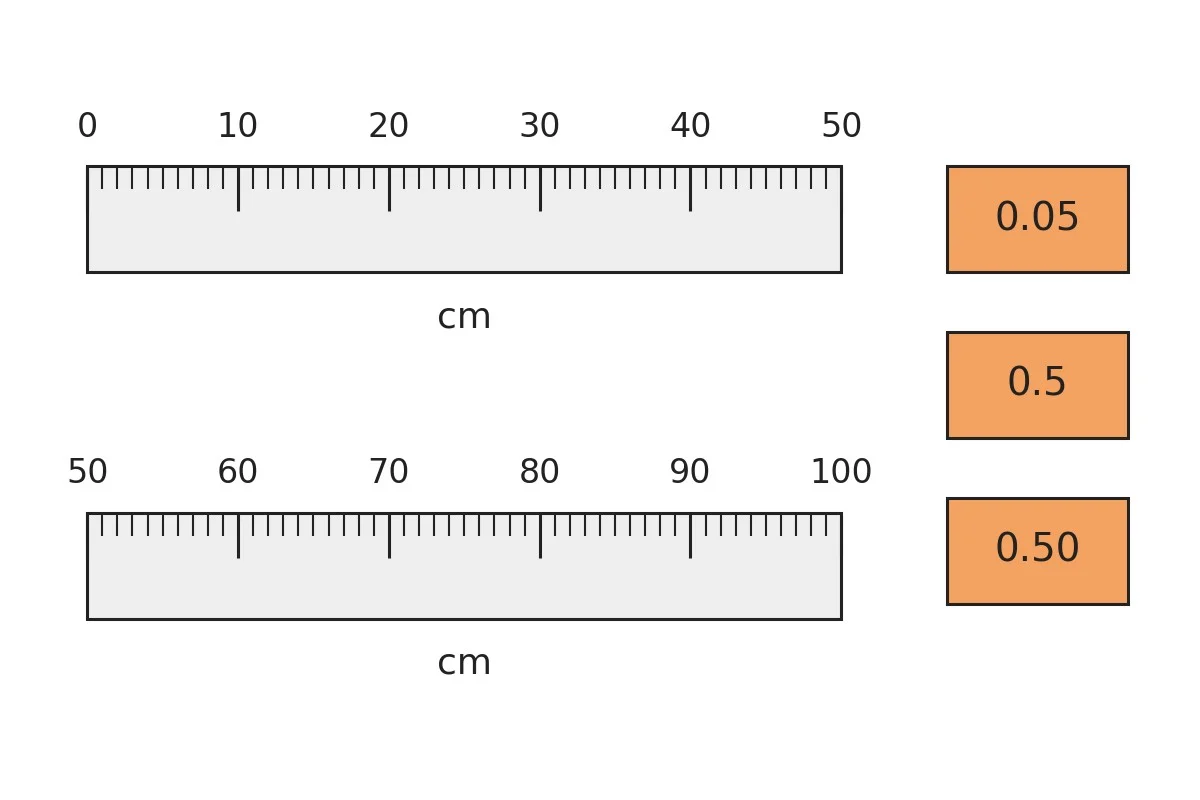
A one-metre tape marked every centimetre and numbered every ten, with scraps reading 0.05, 0.5 and 0.50.

6. Locating and Comparing Decimals — There is Zero Dilemma!

Compare positions; different decimal writings can share one position.

Show
Lay out one metre of measuring tape. Identify 10 cm as a tenth and 1 cm as a hundredth. Write 0.05, 0.5 and 0.50 on separate scraps.
Ask
How many different positions will these labels need?
Say
Place 0.5 and 0.50 together, with 0.05 farther left. The final zero adds nothing, but the zero before five changes its place.
Used in
Comparing decimal package weights shows which package contains more.
If your child says…“0.50 must be different because it has another digit.”
Ask
Where do five tenths and fifty hundredths land on the tape?
What’s true
The five still counts tenths, and the final zero adds no hundredths.

2.7+3.5=(2+3)+7+5102.7+3.5=(2+3)+\frac{7+5}{10}

2.7+3.5=5+12102.7+3.5=5+\frac{12}{10}

2.7+3.5=6+2102.7+3.5=6+\frac{2}{10}

7. Addition and Subtraction of Decimals

Match places, then add or subtract and regroup.

Show
Write 2.7 above 3.5 with their points aligned. Write this line, saying “Adding gives five wholes and twelve tenths. Exchange ten tenths for another whole.”
Ask
Which decimal completes the next line?
Say
Twelve tenths supply another whole, giving 6.2.
Used in
Decimal arithmetic gives bill totals and the change owed.
If your child says…“Five wholes and twelve tenths make 5.12.”
Ask
How many of those twelve tenths can become another whole?
What’s true
Twelve tenths contain another whole and two remaining tenths.

Read the point carefully

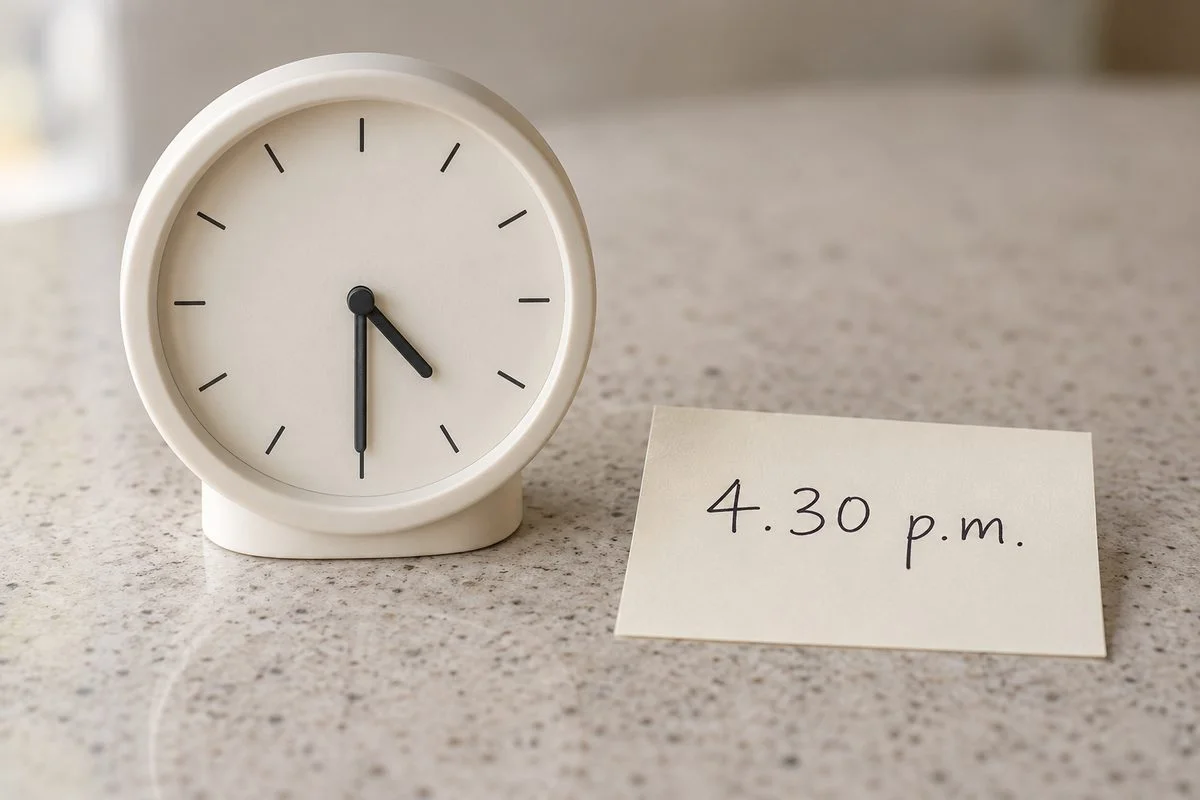
A clock with its minute hand down and hour hand halfway between four and five.

8. Deceptive Decimal Notation

A written point does not always mark decimal places.

Show
Set a battery clock to four using its setting knob. Advance the minute hand half a turn, counting thirty minutes. Write “4.30 p.m.”
Ask
How many hours after noon is this, written as a decimal?
Say
Thirty minutes is half an hour, so this is 4.5 hours after noon. Here, “4.30 p.m.” separates hours from minutes, not wholes from tenths.
Used in
Reading timetable hours and minutes correctly helps travellers catch the right bus.
If your child says…“4.5 hours after noon means five minutes past four.”
Ask
How many minutes did the half-turn cover?
What’s true
Five tenths of an hour is half an hour, which contains thirty minutes.

A real problem

Decimal money made everyday calculations easier.

Britain introduced decimal currency in February 1971.

Money calculations became quicker, simpler and less likely to contain errors.

Decimal Day brought an immediate, widespread switch to decimal trading.

Royal Mint MuseumBank of England

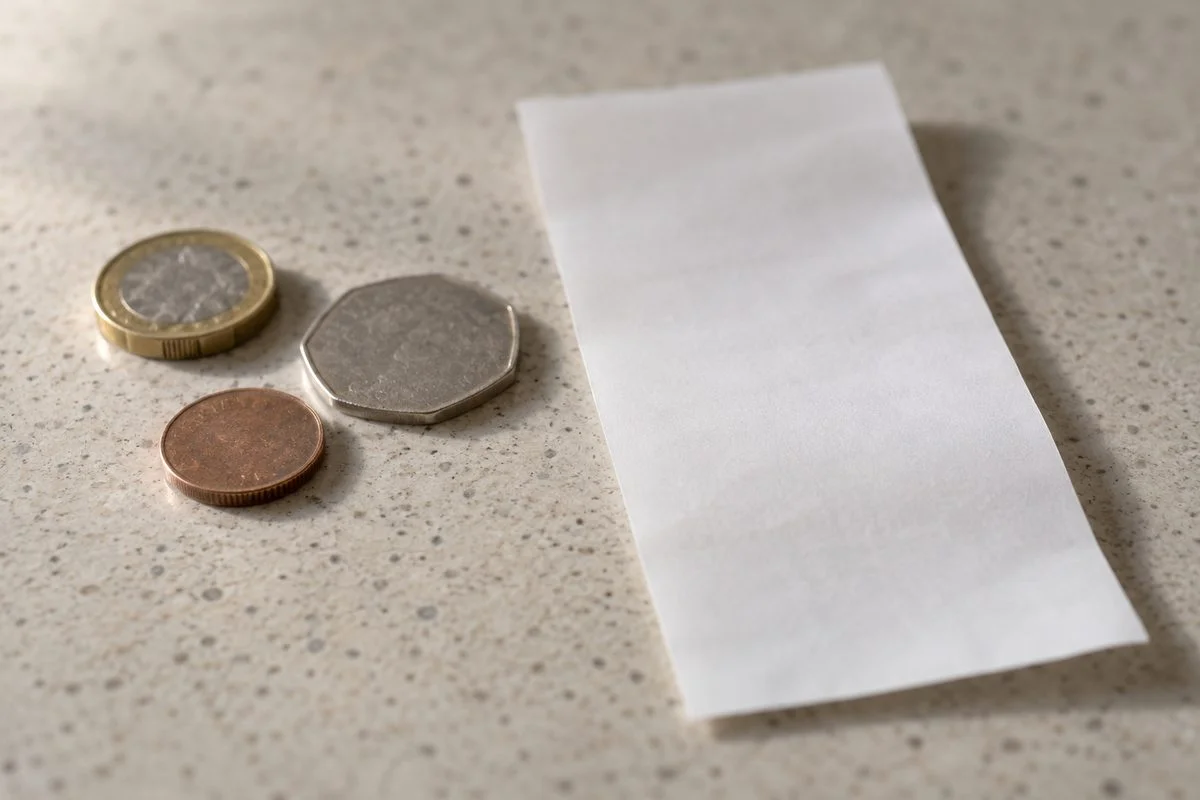
British coins beside a face-down receipt on a shop counter.

Concept Lab · Common misconception

The tempting mistake in A Peek Beyond the Point

Open standalone misconception page →

Which decimal is larger?

Wrong

0.35 is greater than 0.4 because 35 is greater than 4.

Why it feels right. I compare the digits after the point as whole numbers.

Right

Compare tenths with tenths and hundredths with hundredths.

Worked example

0.35 · 35 squares
0.4 = 0.40 · 40 squares
Both grids have 100 equal squares. The grid for 0.40 has five more shaded squares than the grid for 0.35.
  1. Write 0.4 as 0.40.
  2. On a hundred-square, 40 squares cover more than 35 squares.

Ask your child eight quick questions.

One per step. The answer and the reason are given.

  1. How many tenths are in three whole units and four tenths?

    34 tenths. Each whole contributes ten tenths.

  2. Which is longer: three hundredths or three tenths of the same metre?

    Three tenths. With equal piece counts, tenths cover more length than hundredths.

  3. What does the five contribute in 7.05?

    Five hundredths. The zero holds tenths, leaving five in the hundredths place.

  4. What is 234 hundredths as a decimal?

    2.34. Two hundred hundredths make two wholes, leaving thirty-four hundredths.

  5. What is 4 cm in metres?

    0.04 metre. A centimetre is one hundredth of a metre.

  6. Which is smaller: 0.05 or 0.50?

    0.05. Five hundredths lie left of five tenths on the number line.

  7. What is 2.7 plus 3.5?

    6.2. Regrouping twelve tenths adds one whole and leaves two tenths.

  8. How many minutes are in 0.5 hour?

    30 minutes. Five tenths is half, and half an hour contains thirty minutes.

15 more questions with answers, 2 with pictures