Skip to content

Teach Expressions Using Letter-numbers in eight steps.

For each idea: show it, ask before you tell, then say one line.

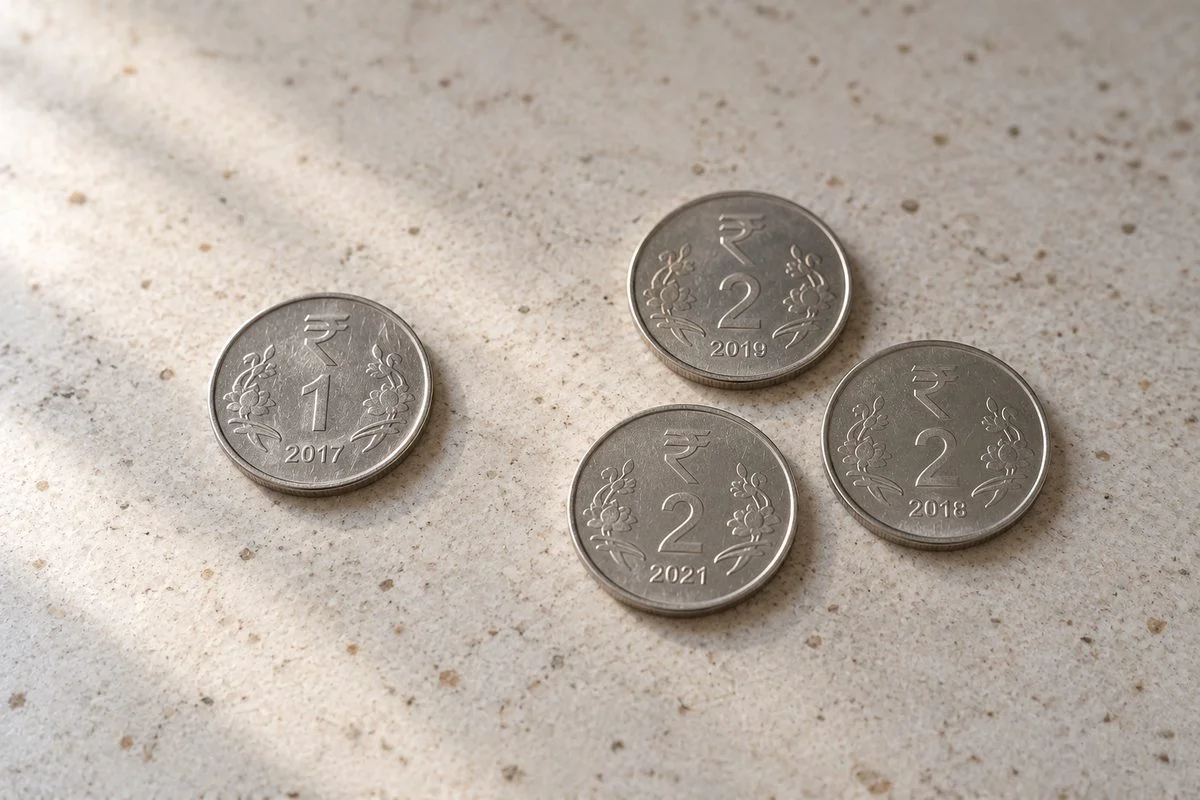
Gather one ₹1 coin, three ₹2 coins, a paper calendar, paper, pencil and ten unlit matchsticks.

Common misconceptions & worked visual for this chapter · 15 practice questions with answers

How to teach it

Write and read expressions

One ₹1 coin beside three ₹2 coins.

1. The Notion of Letter-Numbers

Letters record quantities; expressions describe what happens to them.

Show
Count one ₹1 coin and two ₹2 coins. Add another ₹2 coin and recount. Write n for the ₹2 coin count.
Ask
What expression gives the total rupees using n?
Say
Each ₹2 coin contributes two rupees. The ₹1 coin adds one rupee once: 2×n+12\times n+1.
Used in
Shopping expressions calculate costs when quantities change.
If your child says…“n must always mean the same number.”
Ask
When another ₹2 coin joined, did its coin count stay unchanged?
What’s true
Here, n changes when the coin count changes.
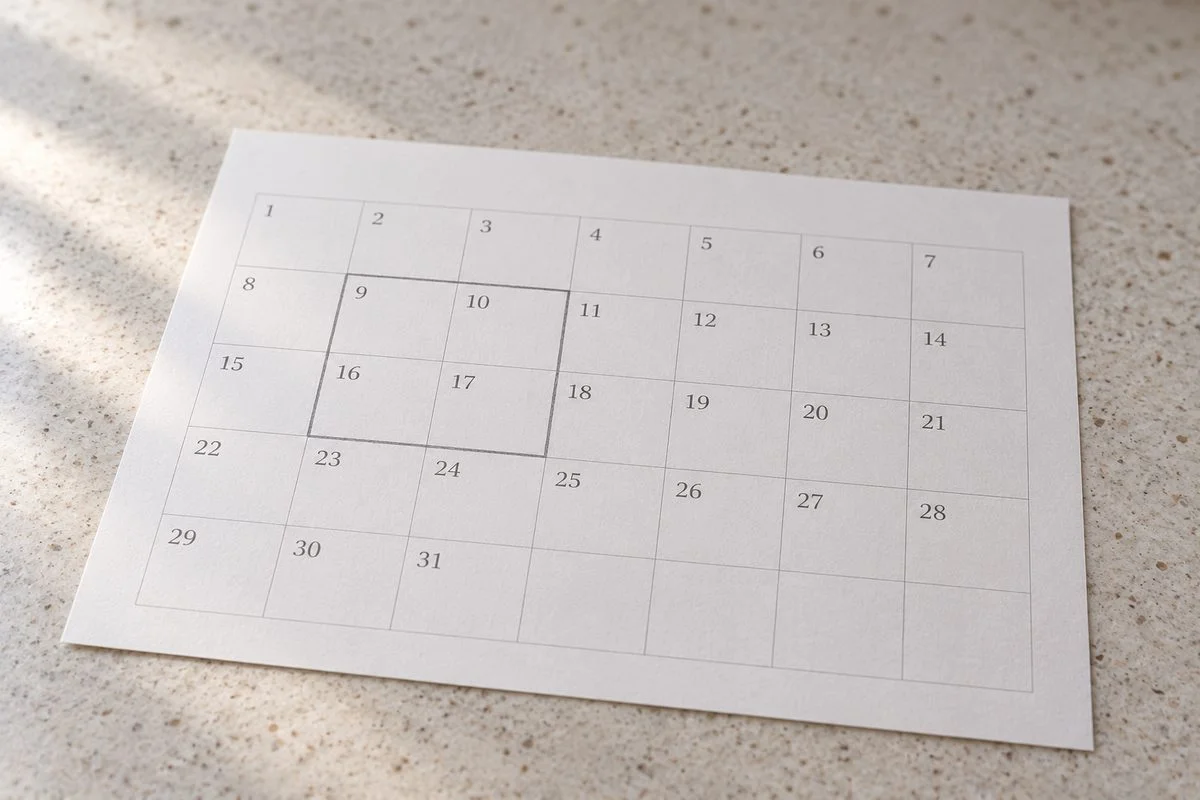
Paper calendar with a two-by-two block of dates outlined.

2. Expressions Using Letter-Numbers

Grid positions tell us how numbers differ.

Show
Find a complete two-by-two date block on a paper calendar. Call its top-left date w. Follow the dates rightwards and downwards.
Ask
How would you write the bottom-right date using w?
Say
Moving down adds seven days and moving right adds one, giving w+8w+8.
Used in
Calendar columns help families find the same weekday in later weeks.
If your child says…“The date underneath is one more.”
Ask
How many days pass before the same weekday returns?
What’s true
The date directly underneath comes seven days later.

a=2a=2

7−2×a=7−2×27-2\times a=7-2\times2

7−2×a=7−47-2\times a=7-4

3. Finding the Value of an Expression

Replace letters with their given numbers, then calculate.

Show
Write these lines. Say, “a is two. Multiply before subtracting.”
Ask
What equation comes next?
Say
Subtract the product to finish: 7−2×a=37-2\times a=3.
Used in
Putting measurements into area formulas helps estimate flooring.
If your child says…“I leave out the minus when I replace a letter.”
Ask
Do −4 and 4 mark the same place on a number line?
What’s true
A replacement includes the number's sign.

2n+1=2×n+12n+1=2\times n+1

2n+1=2×3+12n+1=2\times3+1

2n+1=6+12n+1=6+1

4. Omission of the Multiplication Symbol in Algebraic Expressions

A number beside a letter means multiplication.

Show
Write these lines. Say, “n is three, and the coefficient two means two times n.”
Ask
What equation finishes these lines?
Say
Multiply before adding the separate one: 2n+1=72n+1=7.
Used in
Short formulas make repeated price calculations easier to write.
If your child says…“The two multiplies n and the extra one.”
Ask
Which operation joins the final one to the product?
What’s true
The coefficient multiplies its attached letter; the separate one is added afterwards.

Rewrite without changing the value

2x+3y+x=2x+x+3y2x+3y+x=2x+x+3y

2x+3y+x=(2+1)x+3y2x+3y+x=(2+1)x+3y

5. Like Terms and Unlike Terms

Add coefficients of matching terms, keeping their letter parts unchanged.

Show
Write these lines. Say, “x and y stand for numbers that may differ. Count the copies of x.”
Ask
Without knowing x and y, what shorter expression can we write next?
Say
Combine the three copies of x. Keep three times y separate because y can differ from x: 2x+3y+x=3x+3y2x+3y+x=3x+3y.
Used in
Combining repeated fabric lengths helps calculate how much cloth to buy.
If your child says…“An x without a number contributes nothing.”
Ask
How many copies did the lone x add to the first line?
What’s true
A lone letter contributes one copy of its value.

2(x+1)=(x+1)+(x+1)2(x+1)=(x+1)+(x+1)

2(x+1)=x+x+1+12(x+1)=x+x+1+1

2(x+1)=2x+1+12(x+1)=2x+1+1

6. Distributive Property

An outside multiplier acts on every term inside brackets.

Show
Write these lines. Say, “Each bracket contains the number x plus one. Take the whole bracket twice.”
Ask
What equation comes next when you add the ones?
Say
Both parts occur twice: 2(x+1)=2x+22(x+1)=2x+2.
Used in
Bundle calculations include every item's cost when several identical bundles are bought.
If your child says…“Only x gets doubled.”
Ask
How many ones appear when you write both copies?
What’s true
Each complete copy contains both x and one.

2(x+1)+x=2x+2+x2(x+1)+x=2x+2+x

2(x+1)+x=(2+1)x+22(x+1)+x=(2+1)x+2

7. Simplification of Algebraic Expressions

Remove brackets and combine matching terms while preserving every value.

Show
Write these lines. Say, “x stands for a number. Open the bracket, then gather matching terms.”
Ask
What final equation has no like terms left to combine?
Say
Combine the remaining copies of x: 2(x+1)+x=3x+22(x+1)+x=3x+2.
Used in
Simplifying pricing rules reveals when different-looking offers calculate the same cost.
If your child says…“Once the bracket is gone, I am finished.”
Ask
Which terms in the first line still have matching letter-parts?
What’s true
Matching terms still need combining after brackets are removed.

Describe a growing pattern

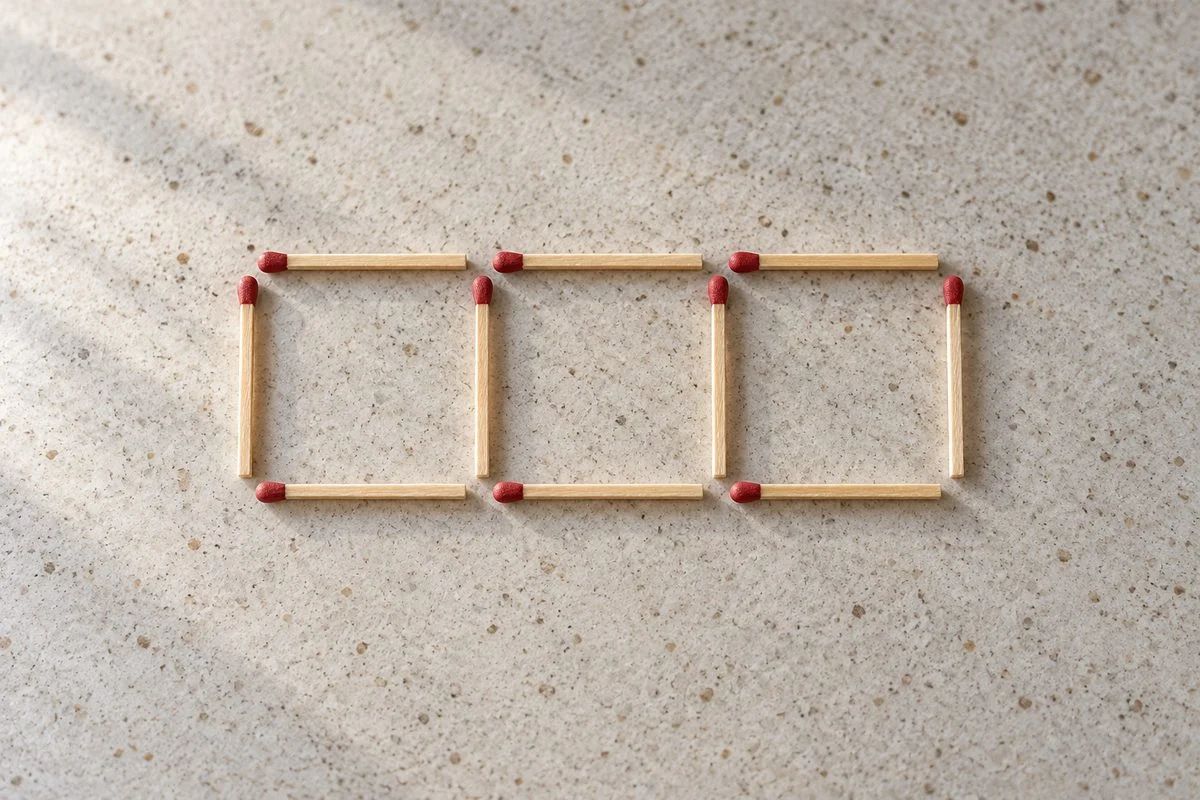
Three joined matchstick squares sharing sides.

8. Algebraic Expressions to Describe Patterns

Count each repeated addition and include what was there first.

Show
Lay one unlit matchstick vertically. Add three sticks to complete a square. Extend twice in a straight row, sharing a side and adding three sticks each time. Call the square count n.
Ask
How many sticks will n joined squares need?
Say
Each square adds three sticks beyond the starting stick: 3n+13n+1.
Used in
Border patterns help predict material needs before laying a long row.
If your child says…“Three sticks per square gives three times n.”
Ask
Which stick was there before you added the first three?
What’s true
The starting stick must also be counted.

A real problem

A machine calculated expression values through repeated addition.

Charles Babbage designed Difference Engine No. 2 to calculate values and print the results automatically.

Its repeated additions found values of certain algebraic expressions.

The reconstructed calculating section was completed in 1991.

The completed machine worked as Babbage intended.

Science Museum GroupComputer History MuseumComputer History Museum

Open mathematical table book beside a pencil.

Concept Lab · Common misconception

The tempting mistake in Expressions Using Letter-numbers

Open standalone misconception page →

Do like terms multiply when you add them?

Wrong

3x + 2x = 5x²

Why it feels right. I combined the numbers and counted two x symbols.

Right

Adding like terms combines their counts.

Worked example

Start
xxx
xx
Combine
xxxxx
Combining x-tiles counts tiles of the same kind. The tile itself stays x.
  1. Three x tiles plus two x tiles make five x tiles.
  2. At x = 2, the sum is 10, which is 5x.

Ask your child eight quick questions.

One per step. The answer and the reason are given.

  1. What happens to n when another ₹2 coin joins?

    It increases by one. n records the number of ₹2 coins, which has increased.

  2. How much later is the date directly below w?

    Seven days. Moving down reaches the same weekday in the following week.

  3. When a is −4, what is 7−2×a7-2\times a?

    15. Keep the negative sign and multiply before subtracting.

  4. In these lines, what does the coefficient two multiply?

    Only n. The extra one is outside that multiplication.

  5. What coefficient belongs to the lone x?

    One. Writing x alone means one copy of x.

  6. What happens to the one inside the bracket?

    It is doubled. The multiplier repeats the whole bracket.

  7. After opening the bracket, which terms still combine?

    2x2x and xx. Both count copies of the same number.

  8. What must be added to three times the square count?

    One starting stick. The repeated additions do not include the stick placed first.

15 more questions with answers, 4 with pictures