Skip to content

Teach Working with Fractions in eight steps.

For each idea: show it, ask before you tell, then say one line.

Gather six 1-rupee coins, paper, a pencil, a cool roti, two plates and twelve peanuts.

Common misconceptions & worked visual for this chapter · 15 practice questions with answers

How to teach it

Multiply fractions

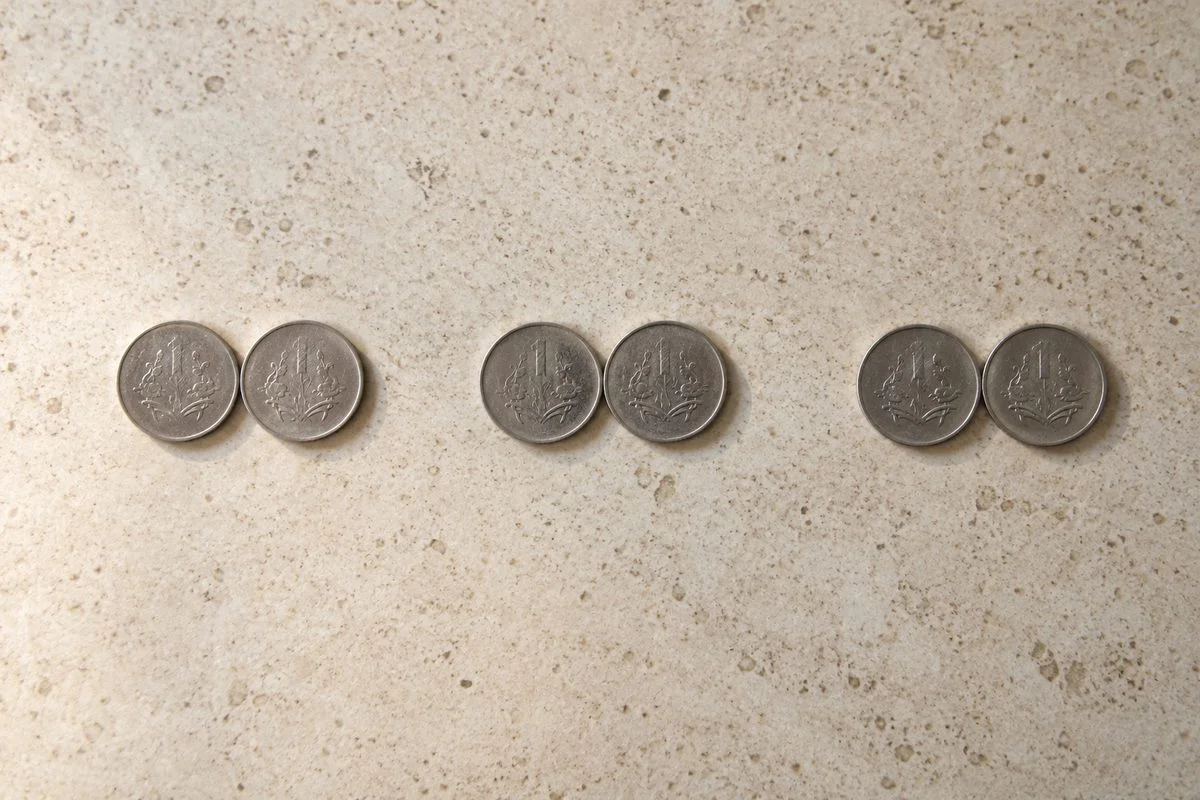
Six coins arranged in three equal pairs.

1. Multiplying a Fraction and a Whole Number

Divide an amount into equal shares, then take the shares needed.

Show
Put out six 1-rupee coins. Arrange three equal groups. After the prediction, take two groups.
Ask
How much money is two thirds of these 6 rupees?
Say
Divide 6 by 3, then take twice that amount. Two thirds of 6 rupees is 4 rupees.
Used in
Finding a fraction of savings sets an amount available to spend.
If your child says…“I multiply both the top and bottom by 6.”
Ask
Does taking more thirds turn them into smaller parts?
What’s true
Multiplying adds more thirds without changing their size.
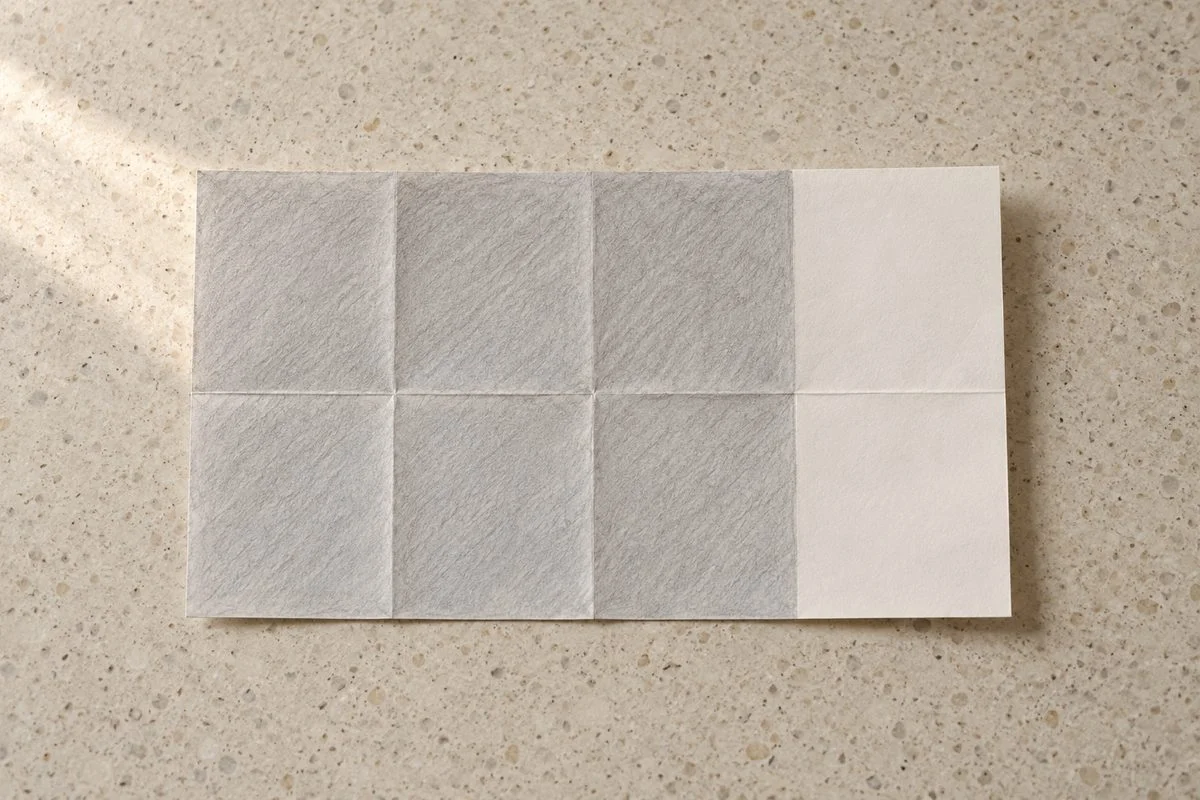
Creased paper with three columns lightly shaded and no cells darkened.

2. Multiplying Two Fractions

Taking part of a fraction splits the whole into smaller parts.

Show
Fold paper into four equal columns, then halve across them. Open it. Lightly shade three columns.
Ask
What fraction of the sheet will half of the shaded area cover?
Say
Darken its top half: three of eight cells gives three eighths.
Used in
Finding part of a fabric piece helps measure material for a patch.
If your child says…“I add the top numbers and add the bottom numbers.”
Ask
Do two rows of four cells give six cells or eight?
What’s true
Multiply selected rows by selected columns, and total rows by total columns.

23×14=23×4\frac{2}{3}\times\frac{1}{4}=\frac{2}{3\times4}

23×4=23×2×2\frac{2}{3\times4}=\frac{2}{3\times2\times2}

23×2×2=13×2\frac{2}{3\times2\times2}=\frac{1}{3\times2}

3. Cancelling Common Factors

Remove shared factors above and below without changing the value.

Show
Write these lines. Say, “Divide the top and bottom by their shared factor, 2.”
Ask
What fraction comes next?
Say
The answer is one sixth.
Used in
Simplifying measurements makes quantities easier to compare while keeping their sizes unchanged.
If your child says…“I can cancel only numbers that match.”
Ask
Can both 2 and 4 be divided by 2?
What’s true
Unequal numbers can share a factor.
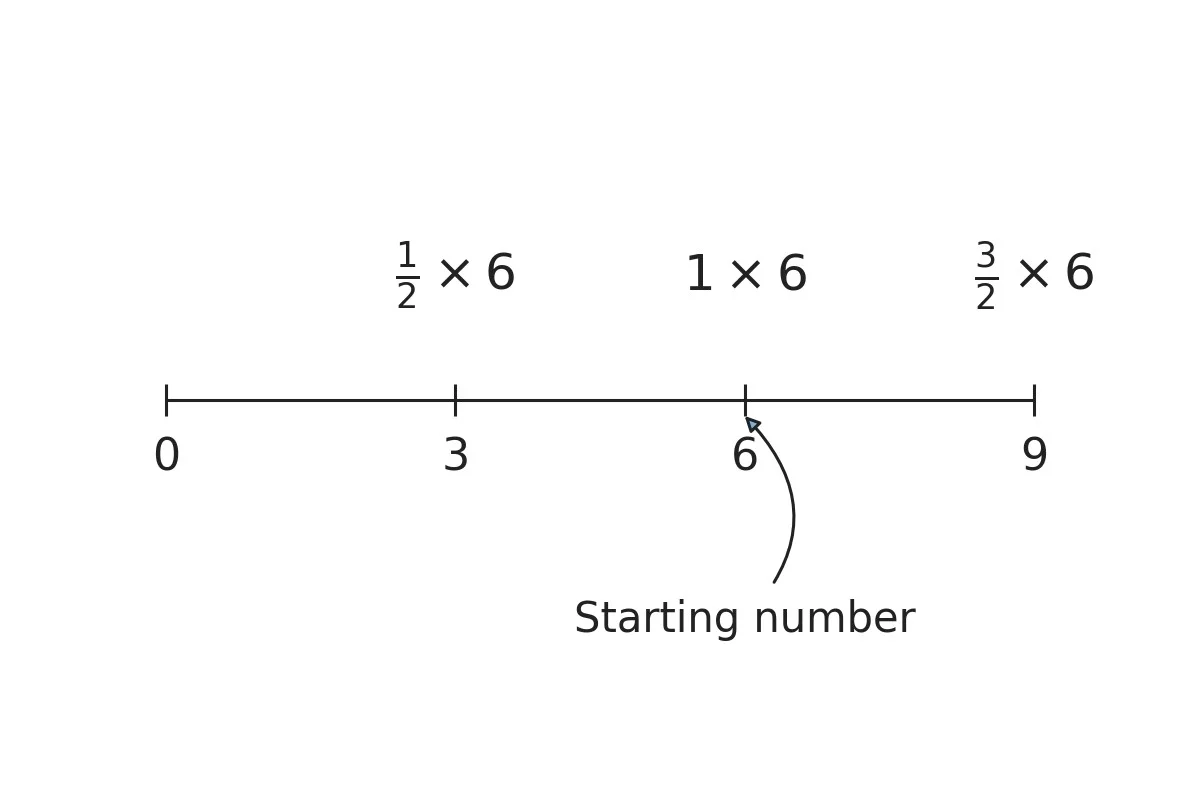
Number line comparing half, one and three halves of 6.

4. Comparing the Product with the Numbers Multiplied

The number of copies decides whether a positive amount grows.

Show
Look at the diagram. Cover the numbered line with paper. Read half, one and three halves above it.
Ask
Which multiplications make 6 smaller, leave it unchanged or make it larger?
Say
Half of 6 is 3 because half takes only part. One copy keeps 6 unchanged. Three halves gives 9 because it takes more than one copy.
Used in
Scaling a recipe changes ingredient amounts to suit the portions needed.
If your child says…“Multiplying by a fraction always makes things smaller.”
Ask
Is three halves more than one copy of 6?
What’s true
A positive amount shrinks below one copy, stays at one, and grows above one.

Divide fractions

23x=12\frac{2}{3}x=\frac{1}{2}

(32×23)x=32×12(\frac{3}{2}\times\frac{2}{3})x=\frac{3}{2}\times\frac{1}{2}

x=12×32x=\frac{1}{2}\times\frac{3}{2}

5. Division of Fractions: Reciprocal and Brahmagupta’s Formula

Multiply by the divisor’s reciprocal to find the missing factor.

Show
Write these lines. Call the missing number x. Say that two thirds times x makes one half. Call three halves the reciprocal. It multiplies two thirds to make 1.
Ask
What is the missing number?
Say
The answer is three quarters: 12÷23=34\frac{1}{2}\div\frac{2}{3}=\frac{3}{4}. The brackets become 1, leaving the missing number alone.
Used in
Dividing available flour by flour per batch tells how much of a recipe can be made.
If your child says…“I turn both fractions upside down.”
Ask
Did one half need turning over to remove the two-thirds multiplier?
What’s true
Only the divisor turns over when division becomes multiplication.
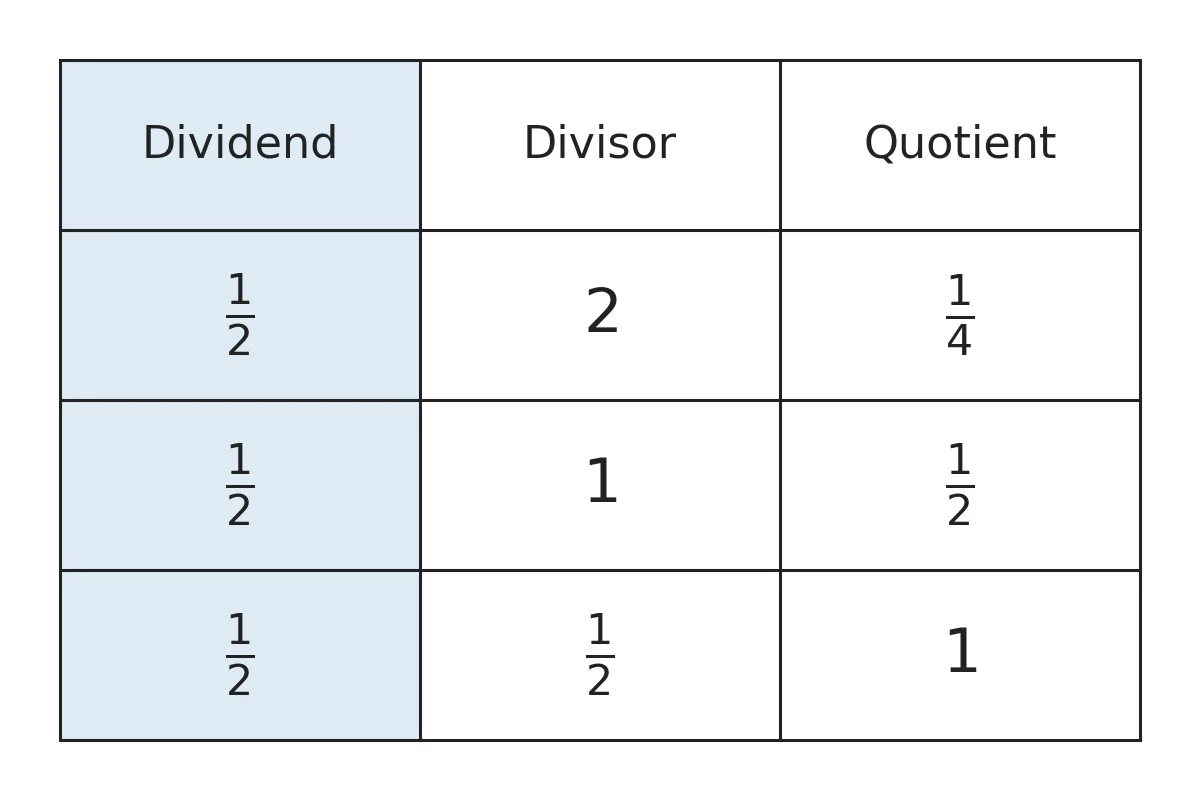
Table showing how different divisors change the quotient when the dividend stays one half.

6. Dividend, Divisor and the Quotient

For positive numbers, the divisor controls the answer’s size.

Show
In the diagram, point down the dividend column. Cover the quotients. Read the divisors.
Ask
Which divisor makes the starting half smaller, unchanged or larger?
Say
Dividing by 2 halves it. Dividing by 1 keeps it unchanged. Dividing by one half doubles it.
Used in
Smaller containers need more fills to hold the same water, helping plan storage.
If your child says…“Starting with a small fraction must give a smaller answer.”
Ask
Does starting with one half prevent an answer of 1?
What’s true
For positive numbers, divisors below 1 enlarge answers, above 1 shrink them, and 1 preserves them.
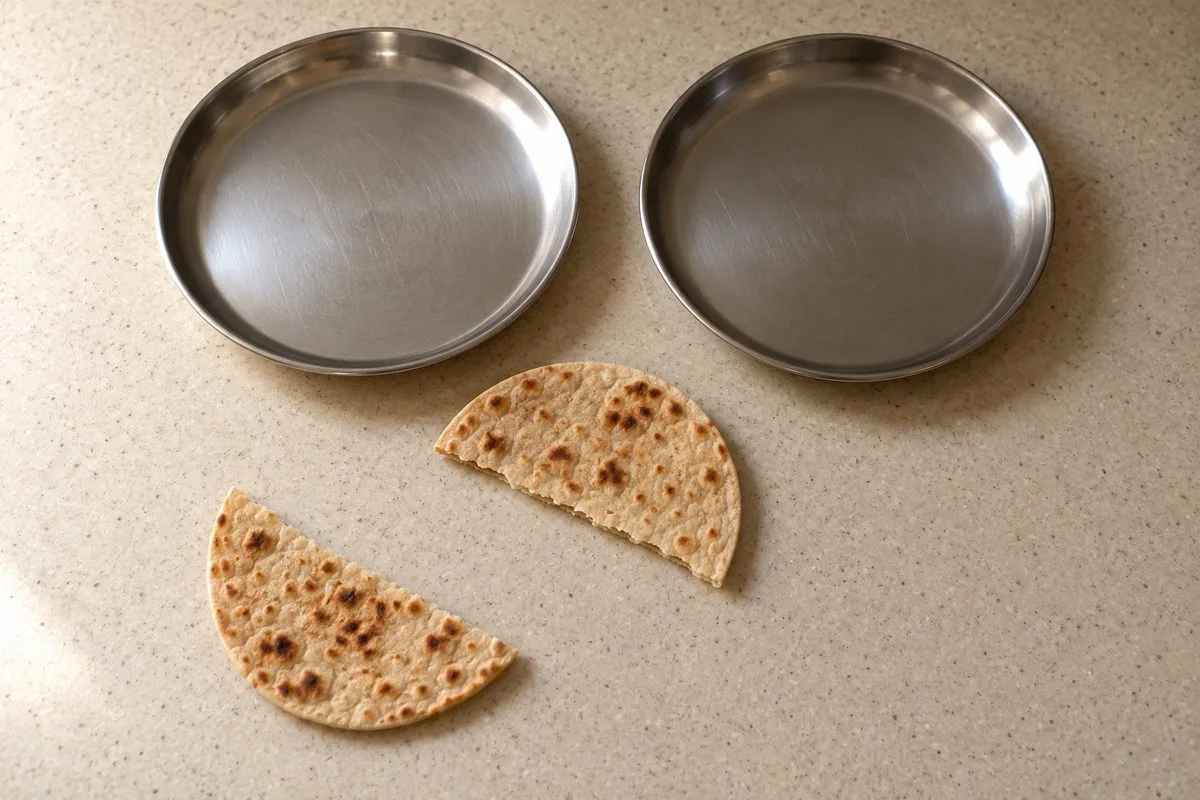
Two roti halves beside two empty steel plates.

7. Some Problems Involving Fractions

The question decides whether to find a total, count or share.

Show
Tear a cool roti in half. Set one half aside. Place the other beside two empty plates.
Ask
How much roti will each plate receive when we share this half equally?
Say
Share it equally: half divided by 2 gives one quarter each. The half contains two quarters.
Used in
Sharing ribbon equally gives matching lengths for decorations.
If your child says…“The bigger number must come first in division.”
Ask
Are we sharing two rotis or half a roti?
What’s true
The amount being shared comes first, even when it is smaller.

Work with what remains

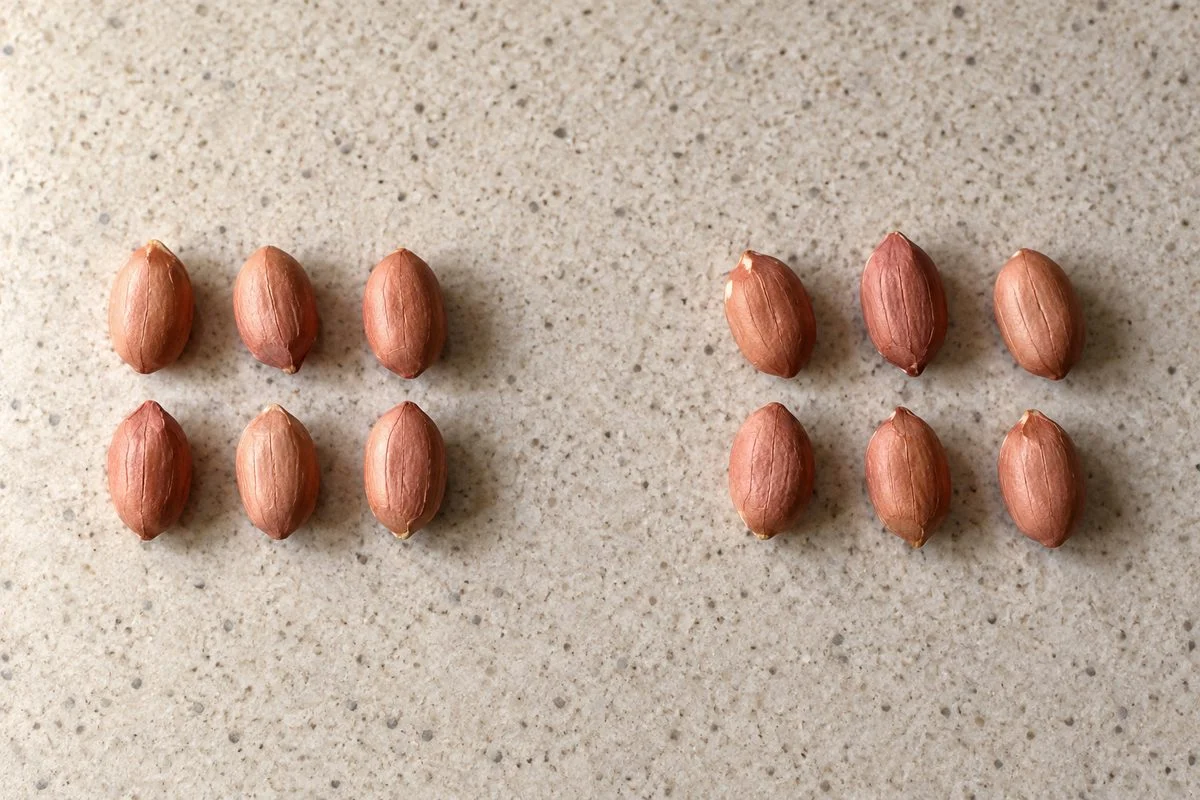
Twelve peanuts separated into two groups of six.

8. Fractional Relations

Use the remainder when asked for a share of what remains.

Show
Count twelve peanuts. Move half aside for a snack. Keep the remaining six together.
Ask
After setting aside one third of six, what fraction of twelve stays in this group?
Say
Move two aside: four remain, one third of twelve. Multiply the fractions kept: 12×23=13\frac{1}{2}\times\frac{2}{3}=\frac{1}{3}.
Used in
Using part of leftover cloth leaves the rest available for another repair.
If your child says…“One third for later means one third of twelve.”
Ask
Which peanuts are still available after the snack portion leaves?
What’s true
The later share comes from the six remaining peanuts.

A real problem

Eratosthenes’ measurement of Earth

Around 240 BCE, Eratosthenes estimated the distance around Earth.

He wanted to make a map of the whole world.

A measured distance and its fraction of Earth’s circumference let him estimate the whole.

American Physical SocietyBucknell University

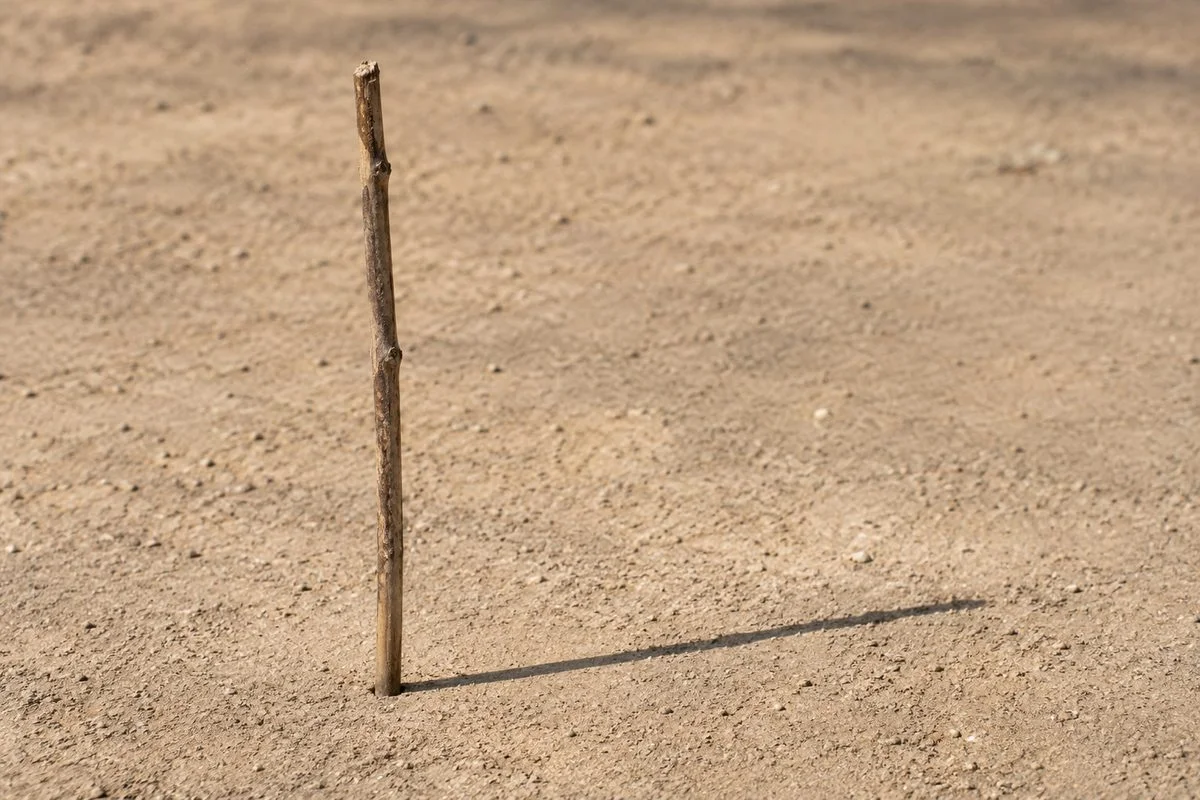
An upright stick casts a shadow on level ground.

Concept Lab · Common misconception

The tempting mistake in Working with Fractions

Open standalone misconception page →

Must multiplication make a fraction larger?

Wrong

½ × ⅔ must be bigger than ⅔.

Why it feels right. Multiplying by whole numbers above 1 makes quantities grow.

Right

Multiplying a positive amount by ½ takes half of it.

Worked example

The full strip has six equal pieces. Two thirds covers four. Half of those four covers two, or one third of the whole.
  1. Shade two thirds of a strip.
  2. Take half of that shaded area.
  3. One third remains selected.

Ask your child eight quick questions.

One per step. The answer and the reason are given.

  1. What is two thirds multiplied by 6?

    4. Twelve thirds make four wholes.

  2. What fraction is half of three quarters?

    Three eighths. Three selected cells occupy three of the eight equal parts.

  3. Which factor greater than 1 can you cancel from both 2 and 4?

    2. Both contain a factor of 2, even though they are unequal.

  4. Why does multiplying 6 by three halves make it larger?

    Three halves exceeds 1. Three halves takes a whole amount and another half.

  5. Which fraction turns over in one half divided by two thirds?

    Two thirds. Its reciprocal removes the multiplier, while the starting half stays unchanged.

  6. Which divisor in the table makes the quotient larger than the starting half?

    One half. Dividing by one half multiplies by 2, so the answer grows.

  7. What comes first when dividing half a roti between two plates?

    Half a roti. The total being shared comes first, regardless of which number is larger.

  8. Does the later share use one third of six or twelve?

    Six. The first removal leaves six, so the next share comes from those six.

15 more questions with answers