Skip to content

Teach Biological Classification in six steps.

For each idea: show it, ask before you tell, then say one line.

Gather black and white paper, pencil, mature cooking mushroom with exposed gills, clear bowl, and cooled milk with starter curd in a lidded container.

Common misconceptions & worked visual for this chapter · 15 practice questions with answers

How to teach it

Sorting living things

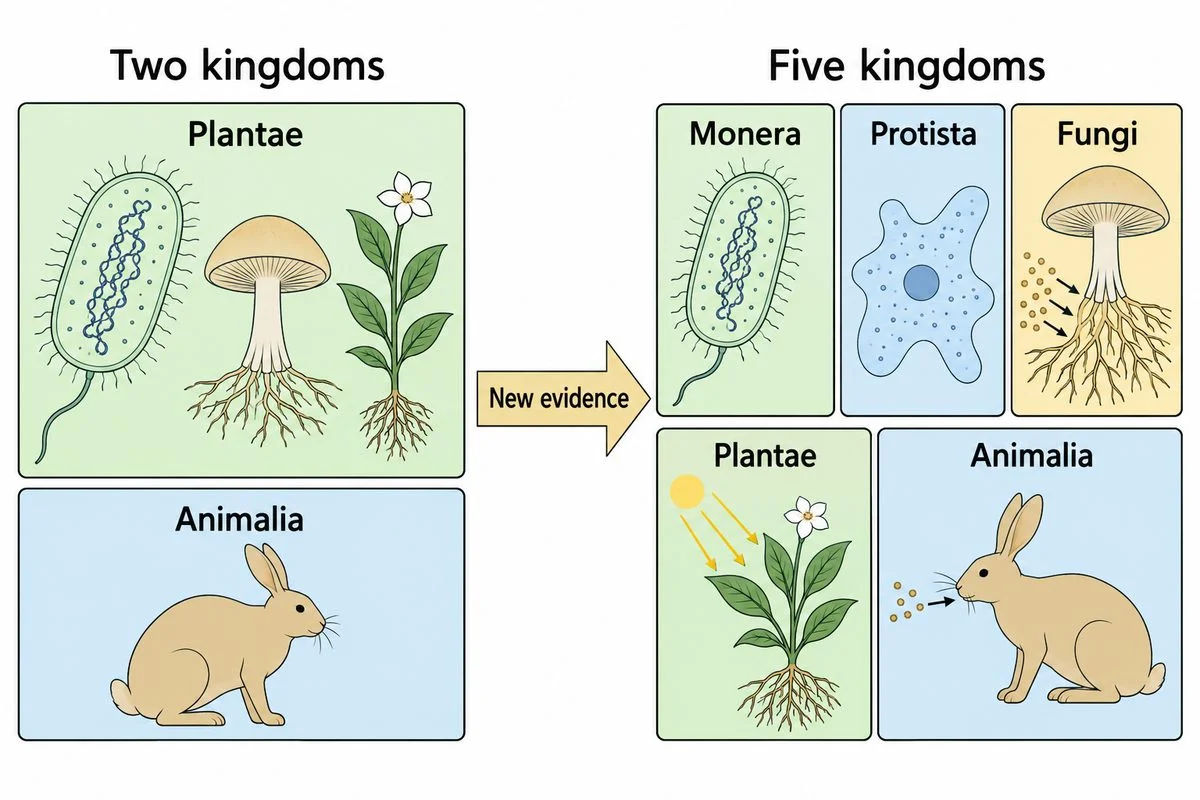
Two kingdoms become five groups, comparing cell structures and ways of obtaining food.

1. Five Kingdom Classification

Groups change when evidence reveals differences and relationships.

Show
Look at the diagram's two groups, then its five groups. Compare the bacterium's interior with Amoeba's nucleus. Compare how the fungus, plant and animal obtain food.
Ask
Which organisms grouped together here might separate when we consider cells and feeding?
Say
Bacteria lack a membrane-bound nucleus, while protists have one. Fungi absorb food, plants mostly photosynthesise, and animals eat food.
Used in
Identifying an organism's group helps growers understand its needs.
If your child says…“Once we name a group, it cannot change.”
Ask
Which grouping uses the new information about cells and feeding?
What’s true
New evidence can change where an organism belongs.
The five kingdoms

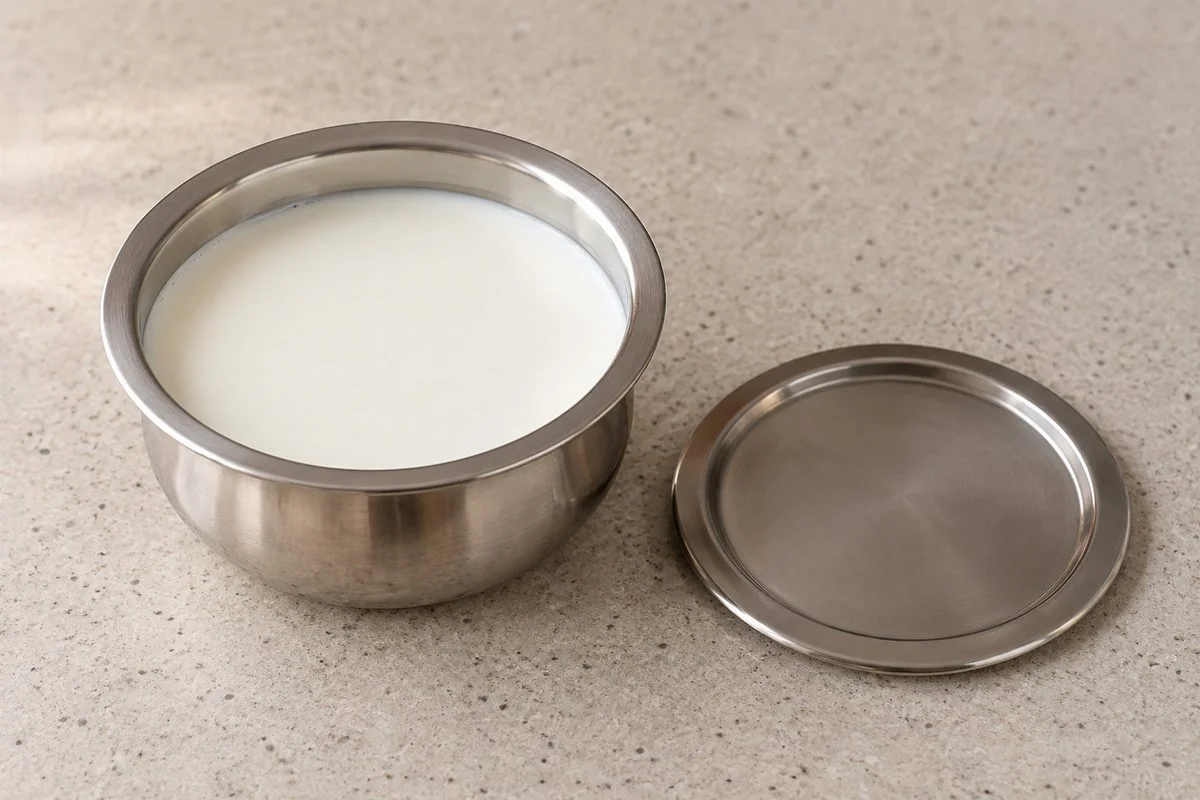
Liquid milk in a steel bowl, with its lid beside it.

2. Kingdom Monera

Single cells without a nucleus, with varied ways of feeding.

Show
Observe cooled milk with starter curd added in the household's usual clean container. Make a prediction, then revisit after it sets.
Ask
What useful change might these bacteria produce?
Say
Curd-making bacteria turn milk sugar into acid, helping the milk set.
Used in
Nitrogen-fixing bacteria help supply plants with nitrogen for growth.
If your child says…“All bacteria cause disease.”
Ask
How does making curd fit your claim about all bacteria?
What’s true
Many bacteria are useful, and only some cause disease.
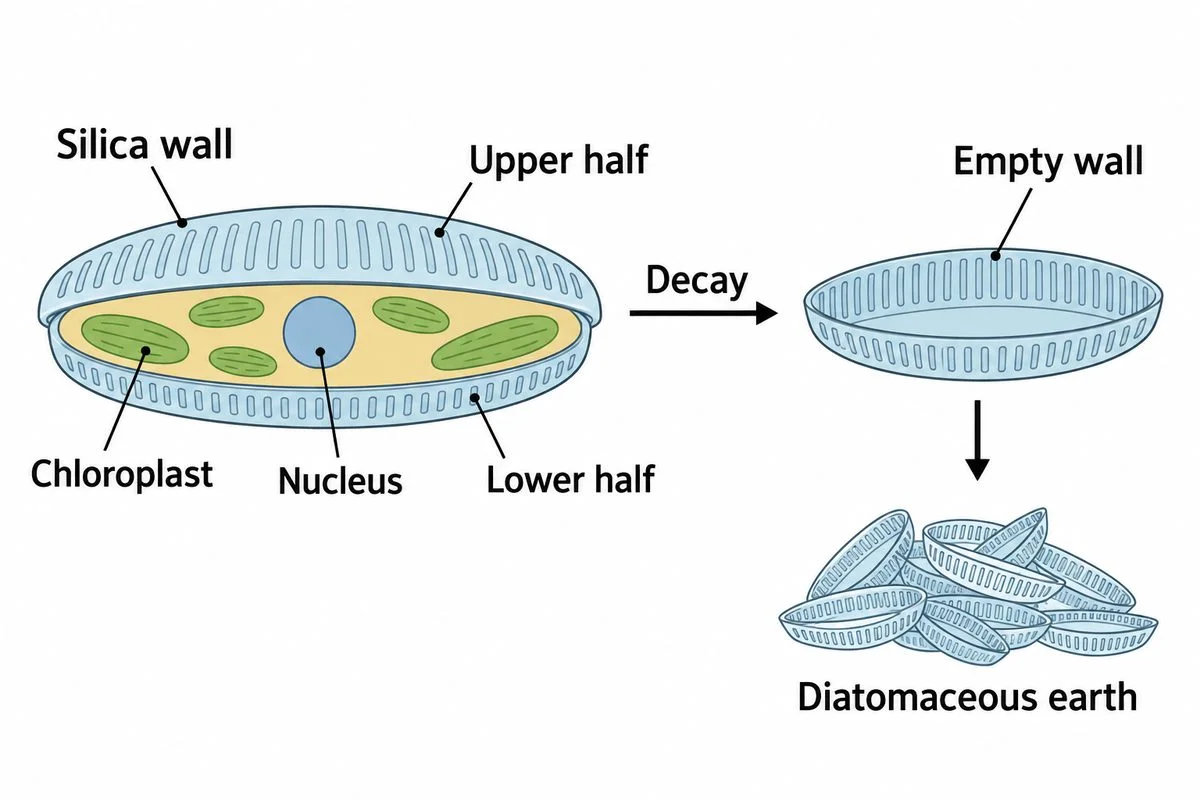
Living diatom beside an empty silica wall and accumulated diatomaceous earth.

3. Kingdom Protista

Single-celled organisms with nuclei and varied coverings and feeding methods.

Show
Look at the diatom diagram. Find its nucleus and chloroplasts inside the overlapping wall halves. Follow the arrows to the empty walls.
Ask
Which part of this diatom could leave a lasting deposit after it dies?
Say
Its silica wall can remain after the cell contents decay. Many empty walls accumulate as diatomaceous earth.
Used in
Accumulated diatom walls provide material for filtering liquids.
If your child says…“Diatom deposits are piles of living cell contents.”
Ask
Which part is hard enough to remain after the soft contents decay?
What’s true
Diatomaceous earth comes from lasting silica walls after the cells die.
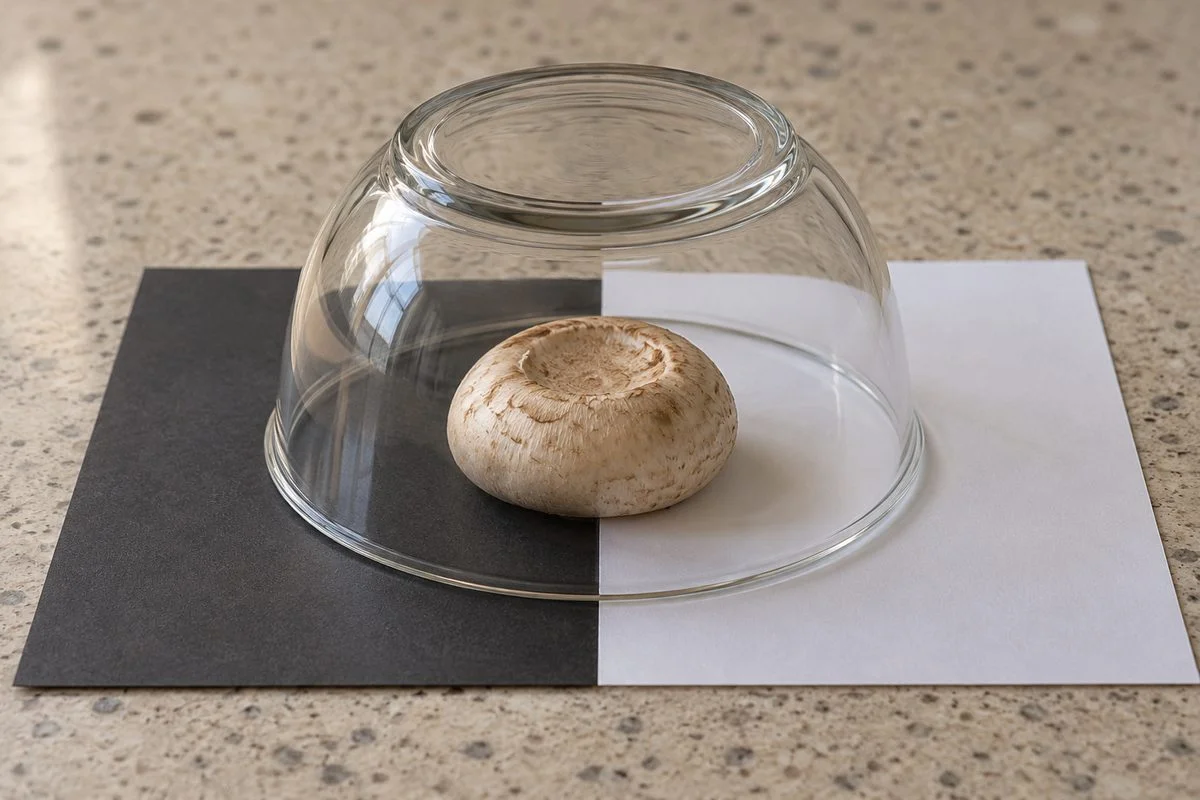
Mushroom cap across black and white paper beneath a clear bowl.

4. Kingdom Fungi

Usually, feeding threads called hyphae form a mycelium that absorbs food.

Show
Gently detach a mature cooking mushroom's stalk. Place its cap gills-down across adjoining black and white paper, under a clear bowl. Predict before leaving it overnight. Then remove the bowl and gently lift the cap to reveal any spore print.
Ask
What might collect beneath the cap without pressing it?
Say
The print contains spores.
Used in
Yeast helps dough rise, making bread lighter.
If your child says…“Cell contents and nuclei always fuse together.”
Ask
If nuclei remain separate after cell contents join, has nuclear fusion happened?
What’s true
Plasmogamy joins cell contents, while karyogamy joins nuclei.
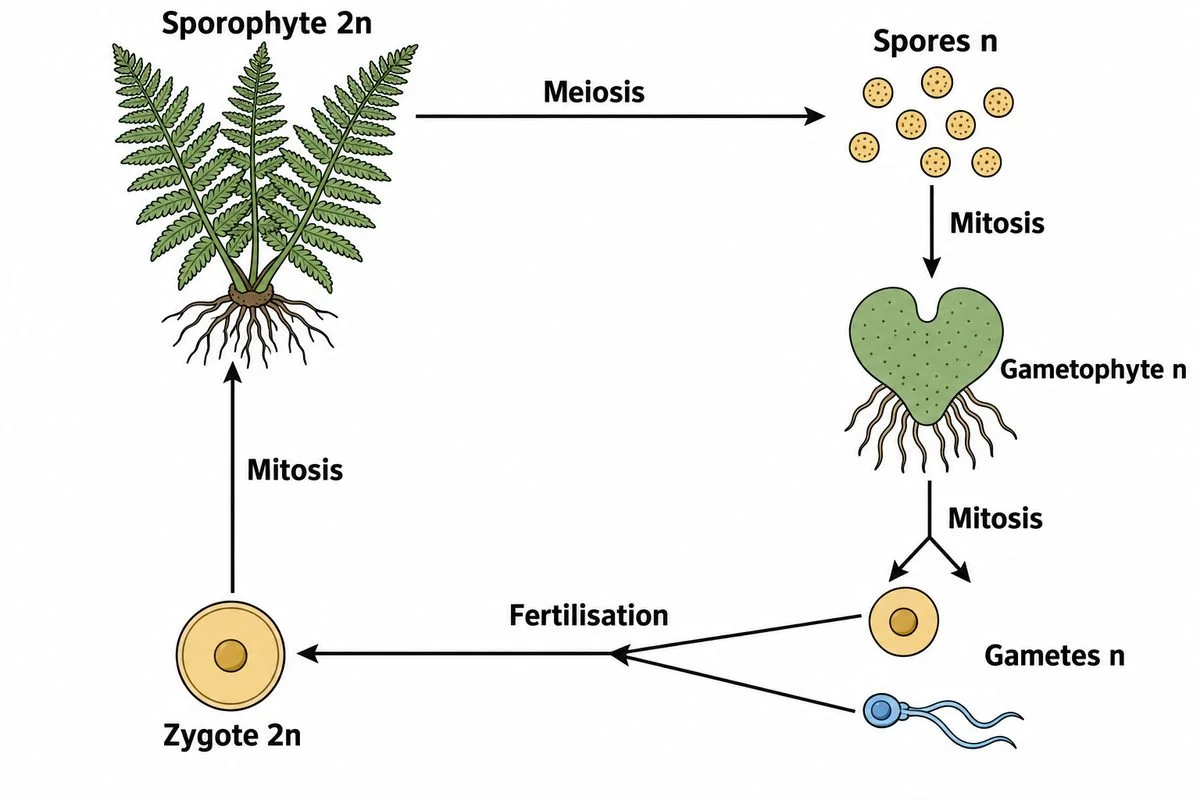
Fern life cycle showing two generations and where chromosome sets change.

5. Kingdom Plantae, Kingdom Animalia and Alternation of Generations

Plant generations alternate through reproduction, rather than seasonal changes.

Show
Follow the diagram's arrows from spores through the heart-shaped gametophyte to the leafy fern.
Ask
What grows from these spores?
Say
A gametophyte grows.
Used in
Recognising spore-bearing fern fronds helps growers collect spores to raise new plants.
If your child says…“The generations mean summer and winter forms.”
Ask
Does changing the season itself join gametes or halve chromosome sets?
What’s true
Gametophytes produce gametes and sporophytes produce spores, regardless of the season.

Infectious agents and living partnerships

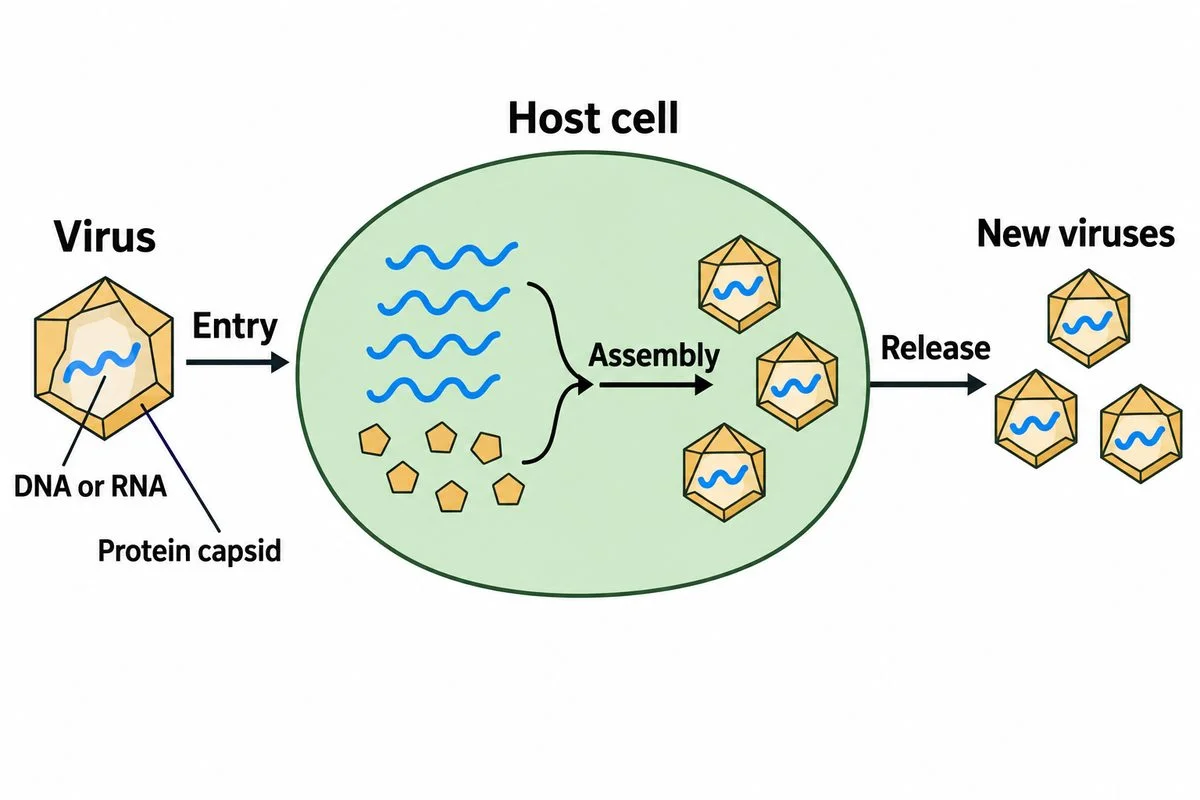
Virus structure and the assembly of new particles inside a host cell.

6. Viruses, Viroids, Prions and Lichens

Viruses need host cells, while lichens unite algae and fungi.

Show
Find the virus's coat and genetic material in the diagram. Follow entry, assembly and release.
Ask
Could this virus multiply outside the cell?
Say
It needs living cell machinery. Its coat encloses DNA or RNA. New particles assemble from components.
Used in
Algae feed lichen fungi, which supply water, minerals and shelter, helping both partners survive.
If your child says…“Viruses can multiply by themselves.”
Ask
Where does the diagram show new particles being assembled?
What’s true
Viruses depend on a living host cell's machinery for reproduction.

A real problem

A fungus supplied penicillin for treating bacterial infections.

Alexander Fleming discovered penicillin in 1928.

Florey's team extracted penicillin from cultures of the fungus Penicillium.

Penicillin helped patients recover from infections that had appeared fatal.

American Chemical SocietyOxford History of Science Museum

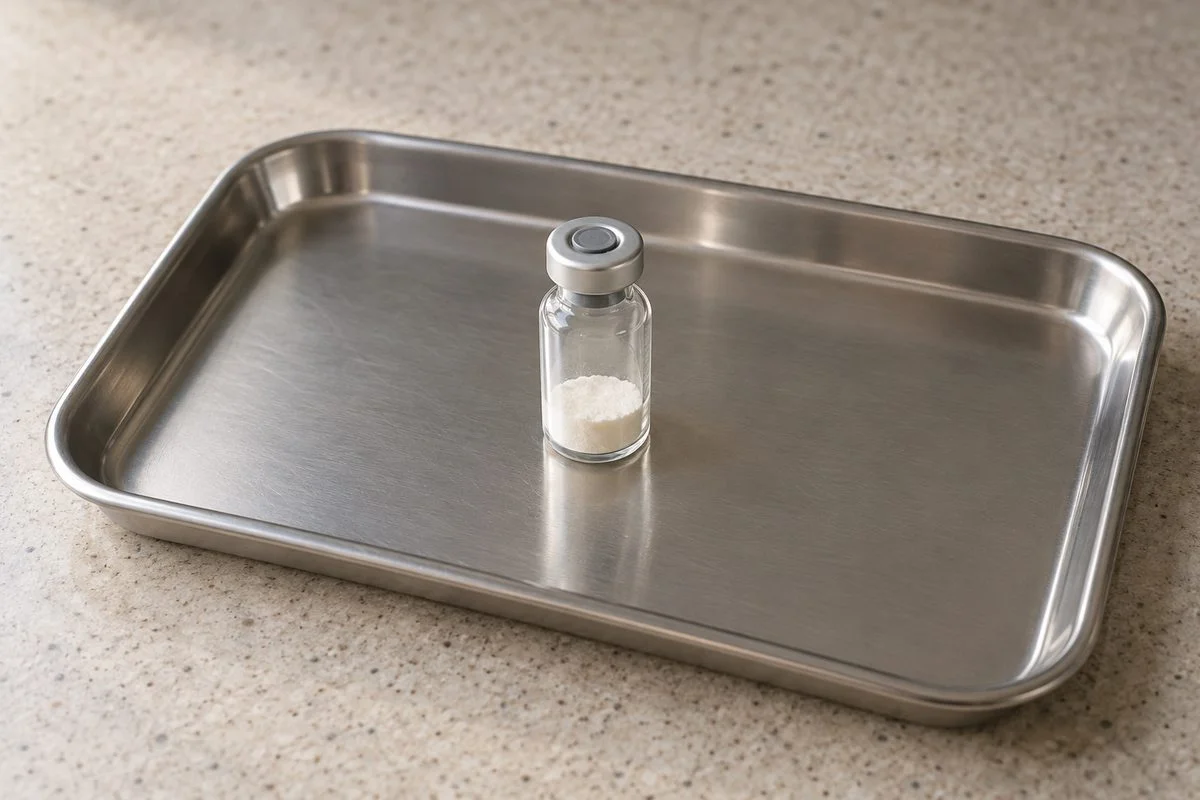
An unbranded antibiotic vial on a steel medicine tray.

Concept Lab · Common misconception

The tempting mistake in Biological Classification

Open standalone misconception page →

Can a virus multiply on nutrient medium by itself?

Wrong

A virus grows on nutrient agar like bacteria.

Why it feels right. Both are microscopic infectious agents.

Right

A virus uses a suitable host cell to produce new virus particles.

Worked example

Bacterium
Suitable nutrient agar→Colony
Virus
Suitable living cell→Uses host machinery→New virus particles
Nutrient agar supports many bacteria. A virus needs a suitable living cell to reproduce.
  1. Compare a bacterial colony on agar with a virus grown in suitable living cells.
  2. The latter relies on the cell’s machinery.

Ask your child six quick questions.

One per step. The answer and the reason are given.

  1. What should happen when new evidence shows an organism was grouped incorrectly?

    Change its group. Classification follows evidence, so the first grouping need not be permanent.

  2. Which food is this milk becoming after we add starter curd?

    Curd. Useful bacteria produce acid, showing that bacteria do more than cause disease.

  3. Which part of dead diatoms builds up into diatomaceous earth?

    Their silica walls. The hard walls persist after the living contents decay.

  4. Cell contents have joined, but two nuclei remain separate. Which fusion has yet to happen?

    Karyogamy. The nuclei have not yet fused.

  5. What restores two chromosome sets in the fern life cycle?

    Fertilisation. Gametes join, bringing together their chromosome sets.

  6. What must a virus enter before it can multiply?

    A living host cell. The host cell supplies the machinery needed to make more viruses.

15 more questions with answers