Skip to content

Teach Structural Organisation in Animals in seven steps.

For each idea: show it, ask before you tell, then say one line.

Gather paper and a pencil; observe a frog only if one is already nearby.

Common misconceptions & worked visual for this chapter · 15 practice questions with answers

How to teach it

Organisation and external features

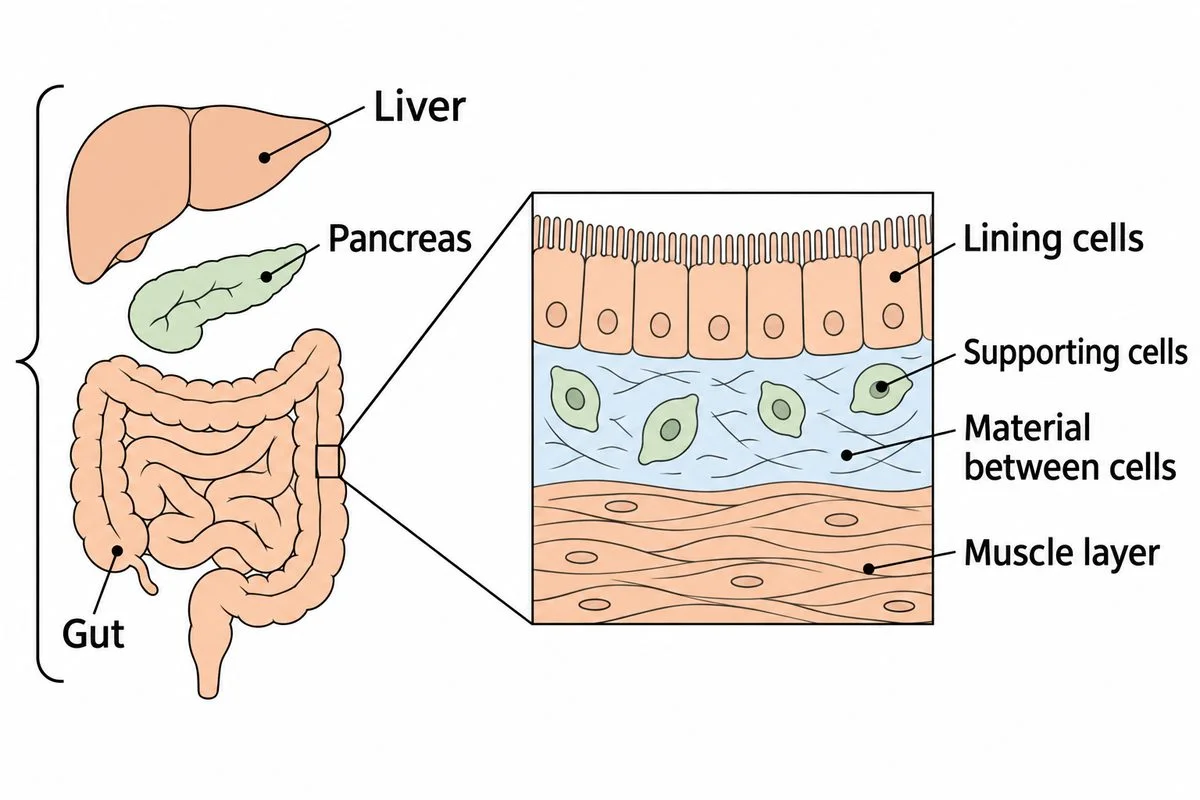
Pencil sketch of gut tissues and three digestive organs grouped by a bracket.

1. Organ and organ system

Different tissues build organs; cooperating organs form systems.

Show
In the diagram, find the gut lining, supporting material and muscle layer. Then find the gut, liver and pancreas within the bracket.
Ask
Could a gut made only of lining cells also squeeze food along?
Say
No. Different tissues build organs; organs working together form systems.
Used in
Gut muscles move food along, helping digestion continue.
If your child says…“One organ has just one kind of tissue.”
Ask
Which part lines the gut, and which part squeezes it?
What’s true
An organ needs different tissues working together to perform its jobs.
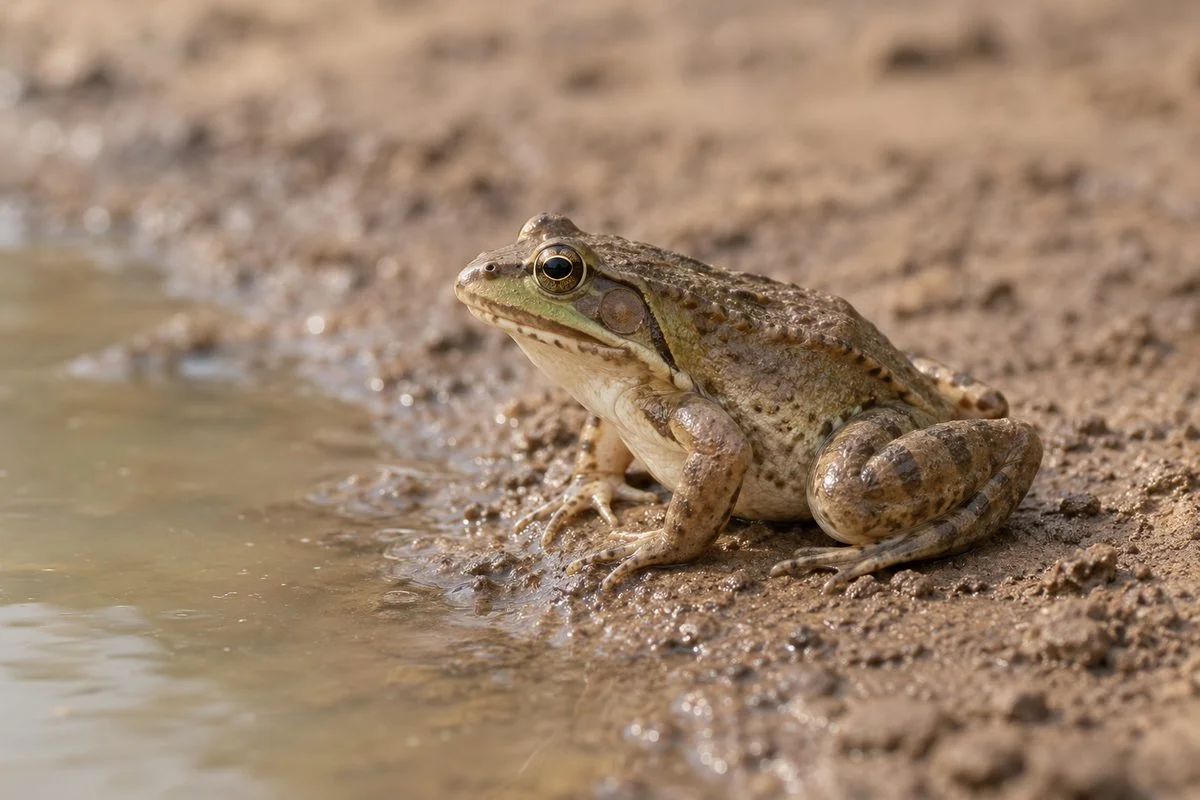
Frog resting on damp soil beside shallow water.

2. Frog: Morphology

External features help a frog live in its surroundings.

Show
Watch an undisturbed frog on damp ground. Notice its wet-looking skin and folded hind limbs.
Ask
Would a damp shelter help this frog keep taking in water?
Say
Its moist skin absorbs water.
Used in
Damp garden shelters help frogs avoid drying out.
If your child says…“Frogs drink water through their mouths.”
Ask
Which exposed surface could take in water while the mouth stays closed?
What’s true
Frogs take in the water they need across their moist skin.

Internal systems

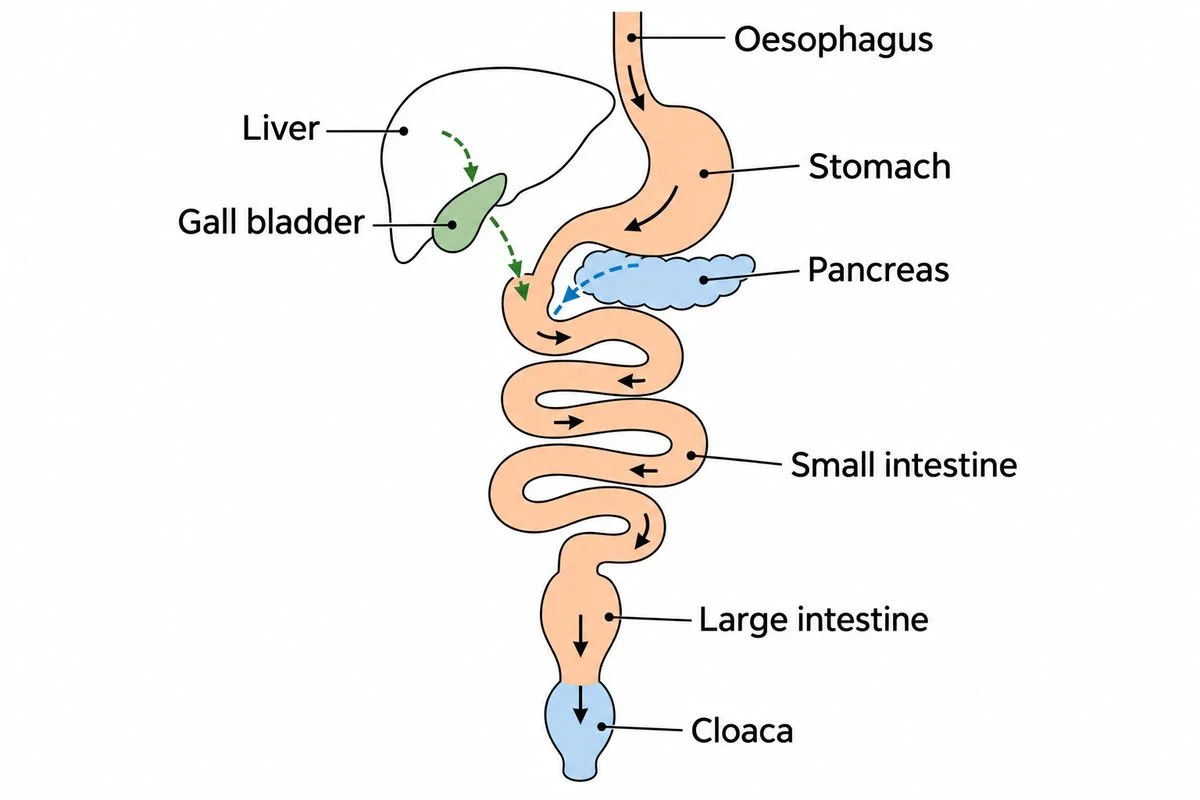
Frog digestive canal with separate arrows for food and digestive secretions.

3. Frog: Digestive system

Food is digested and absorbed along a connected canal.

Show
In the diagram, trace the solid food arrows. Follow dashed arrows from digestive glands into the intestine.
Ask
How will these glands help process food arriving in the intestine?
Say
Digestive juices finish digestion in the small intestine.
Used in
Bile divides fat into droplets, giving digestive enzymes more surface to work on.
If your child says…“The stomach finishes all digestion.”
Ask
Why would the intestine receive digestive juices if the stomach had finished everything?
What’s true
Pancreatic and intestinal enzymes continue digesting food after it leaves the stomach.
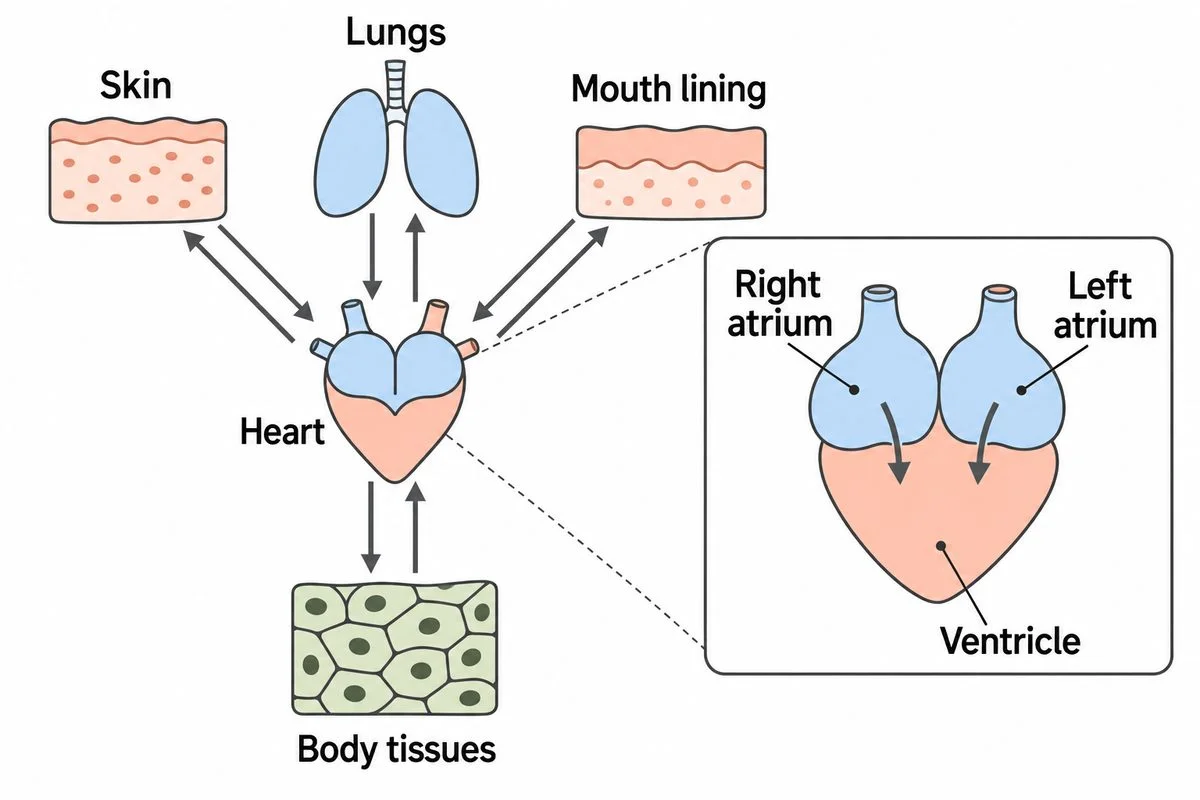
Frog circulation connections beside an enlarged heart showing two atria and one ventricle.

4. Frog: Respiration and blood vascular system

Breathing surfaces exchange gases; blood carries them to tissues.

Show
Trace the diagram's connections from skin through heart to tissues. Count the enlarged heart's chambers.
Ask
How will oxygen entering the skin reach these tissues?
Say
Oxygen enters blood through the skin. The three-chambered heart pumps this blood to tissues.
Used in
Circulating blood brings oxygen to muscles, supporting movement.
If your child says…“Frogs use their lungs to get oxygen from water.”
Ask
Which surface touches water along the route you traced?
What’s true
Dissolved oxygen crosses moist skin into blood while a frog is submerged.
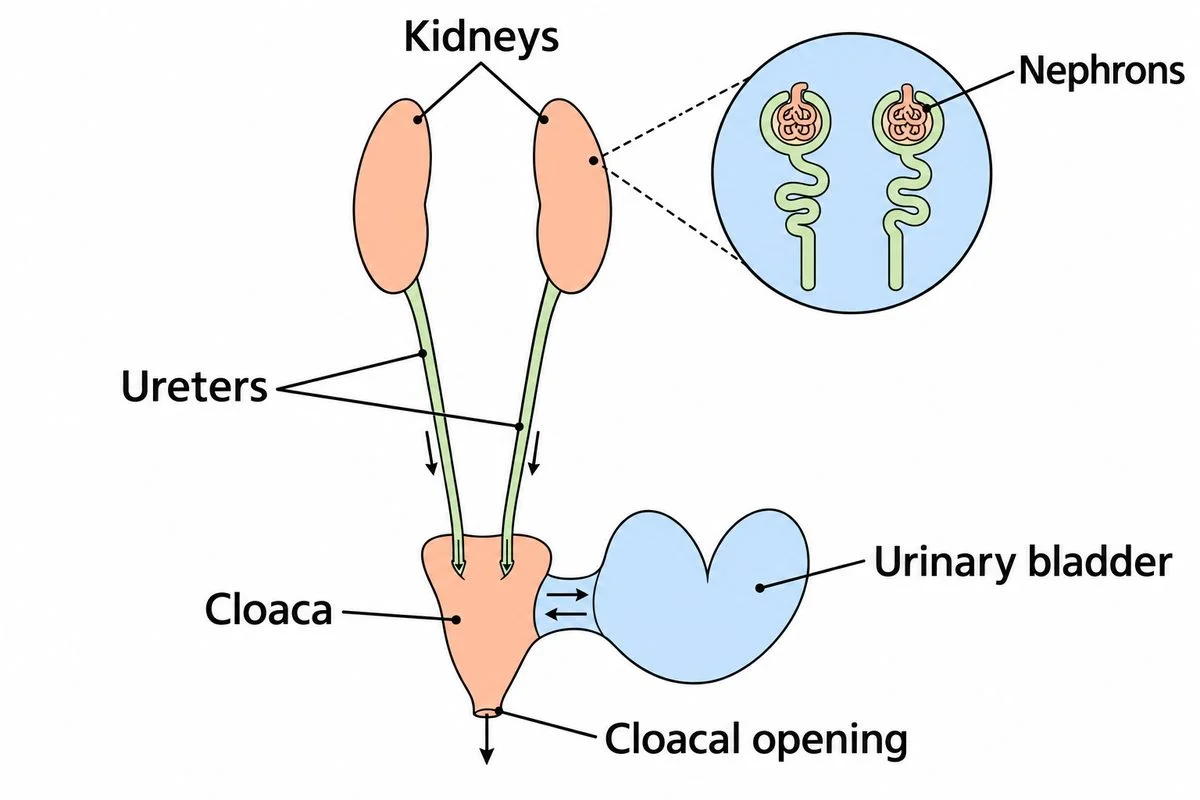
Frog kidneys drain into the cloaca, with a separate bladder connection for storage.

5. Frog: Excretory system

Kidneys form urine; ducts transport it; the bladder stores it.

Show
In the diagram, follow kidneys, ureters and cloaca. Trace both arrows between cloaca and bladder.
Ask
From these arrows, would urine already exist before reaching the bladder?
Say
Kidneys form urine, which ureters carry to the cloaca. Urine enters the bladder for storage, then returns to the cloaca before leaving.
Used in
Kidneys remove nitrogenous waste from blood, reducing its buildup.
If your child says…“The bladder makes urine.”
Ask
Which organ needs the working units that remove waste from blood?
What’s true
Nephrons belong to kidneys; the bladder holds urine that has already formed.
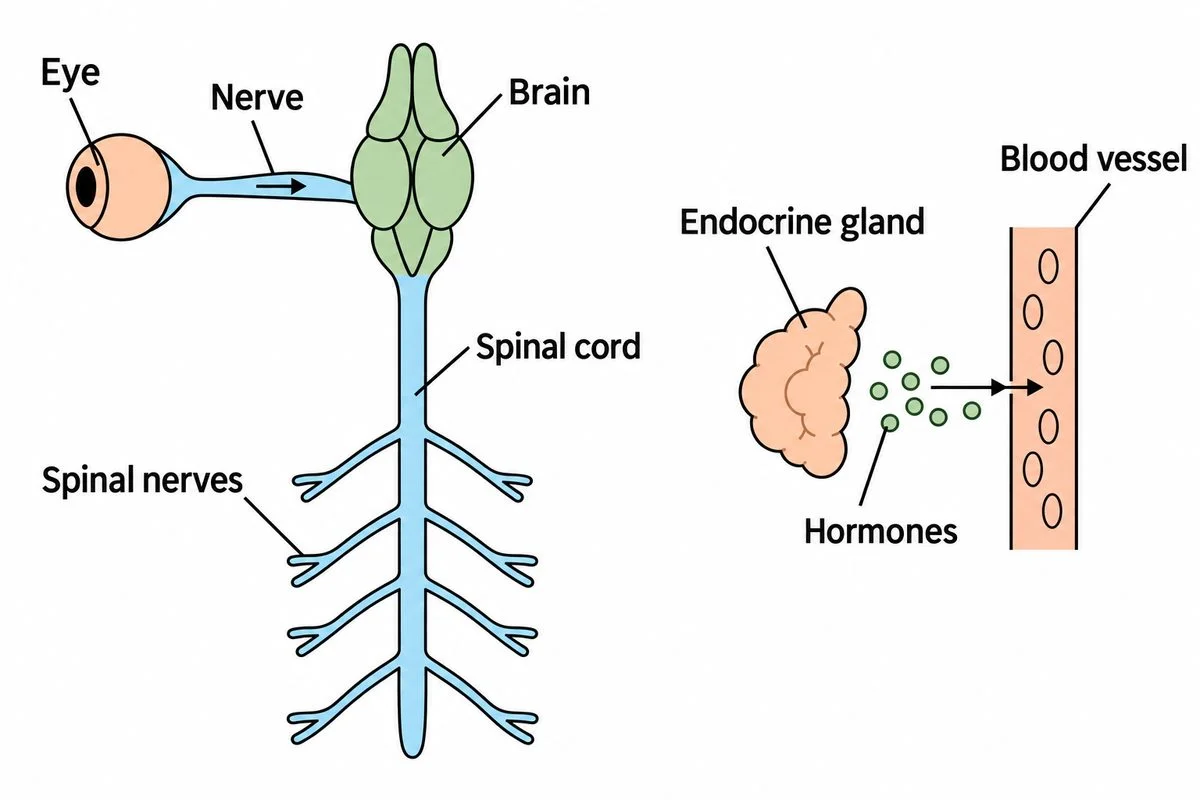
Pencil sketch separating an eye's nerve connection from a gland's blood connection.

6. Frog: Control and coordination

Nerve impulses and hormones coordinate the frog's organs.

Show
In the diagram, trace the nerve from the eye to the brain. Find the spinal cord. Compare the nerve route with the separate gland's blood route.
Ask
Which route will carry the gland's hormone: the nerve or the blood vessel?
Say
Endocrine glands release hormones into blood.
Used in
The frog's inner ear detects position and movement, helping it keep its balance.
If your child says…“Hormone glands send nerve impulses.”
Ask
Which connection leads away from the gland in your sketch?
What’s true
Hormones travel in blood, while nerve impulses travel along nerve cells.

Reproduction and ecological role

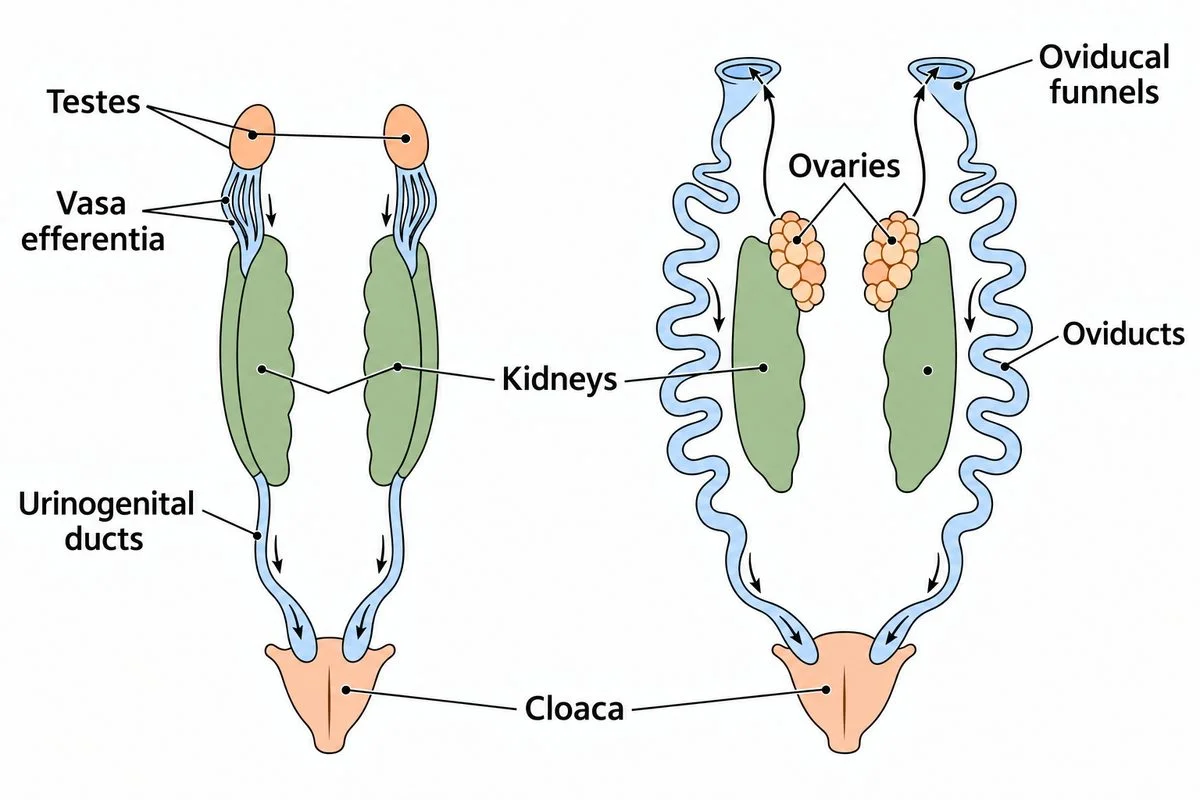
Male and female frog reproductive pathways compared beside kidneys and cloacae.

7. Frog: Reproductive system

Separate reproductive pathways lead to eggs and sperm meeting in water.

Show
Compare both diagrams. Trace sperm and eggs towards each cloaca.
Ask
Will both routes pass through the kidneys?
Say
Sperm passes through kidneys into ducts. Eggs cross the body cavity into funnels and separate oviducts.
Used in
Frogs eat damaging insects and feed other animals, supporting crops and food chains.
If your child says…“Female eggs pass through the kidneys too.”
Ask
Does the female egg route enter a kidney anywhere?
What’s true
Ovaries lie near kidneys, but eggs enter separate oviducts without travelling through kidneys.

A real problem

Frogs once helped detect pregnancy.

A report describing the frog pregnancy test appeared in 1934.

The test detected hCG, a pregnancy hormone.

Egg release showed the result without killing the frog.

Reusing frogs reduced the test's cost.

NatureMuseum of Contraception and AbortionScience History Institute

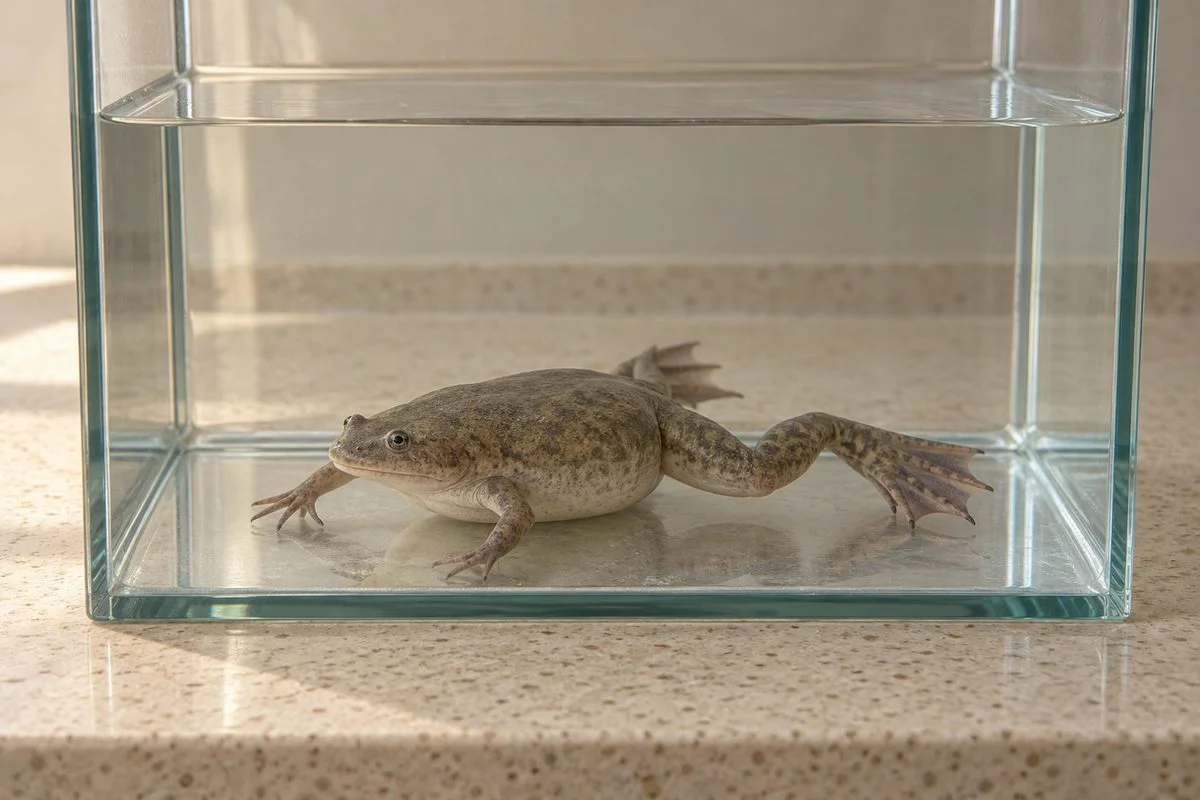
African clawed frog in a clear glass aquarium.

Concept Lab · Common misconception

The tempting mistake in Structural Organisation in Animals

Open standalone misconception page →

Can an organ be made of just one tissue type?

Wrong

The stomach is made entirely of muscle because it squeezes food.

Why it feels right. I identify it by its most visible action.

Right

An organ combines tissue types to perform several functions.

Worked example

Muscle
Contracts→Churns food
Epithelium
Faces stomach cavity→Lines and protects surface
Nerves
Carry signals→Help coordinate activity
Different tissues in the same organ contribute different functions.
  1. Muscle helps churn food.
  2. An epithelial lining faces the stomach cavity, and nerves help coordinate activity.

Ask your child seven quick questions.

One per step. The answer and the reason are given.

  1. What makes the gut and pancreas parts of one system?

    Their shared work in digestion. Organs form systems through coordinated work, not simply through closeness.

  2. Through which surface does a frog take in water?

    Its moist skin. Water passes through the skin without being swallowed.

  3. Where does chyme undergo further digestion after leaving the stomach?

    In the intestine. Chyme still contains food needing pancreatic and intestinal enzymes.

  4. Where does dissolved oxygen cross into a submerged frog's blood?

    Across its moist skin. Its lungs do not extract dissolved oxygen from water.

  5. Which organs contain the nephrons that form urine?

    The kidneys. The bladder stores urine but does not contain nephrons.

  6. What carries a frog's hormones to distant organs?

    Blood. Endocrine glands release chemical messages into blood, rather than sending nerve impulses.

  7. In which sex do urine and reproductive cells share the outgoing kidney ducts?

    Male frogs. Male ducts carry urine and sperm; female egg ducts remain separate.

15 more questions with answers, 7 with pictures