Skip to content

Teach Human Physiology in eight steps.

For each idea: show it, ask before you tell, then say one line.

Gather paper and a pencil, with access to an earthworm already visible on damp garden soil.

Common misconceptions & worked visual for this chapter · 15 practice questions with answers

How to teach it

Getting air to the lungs

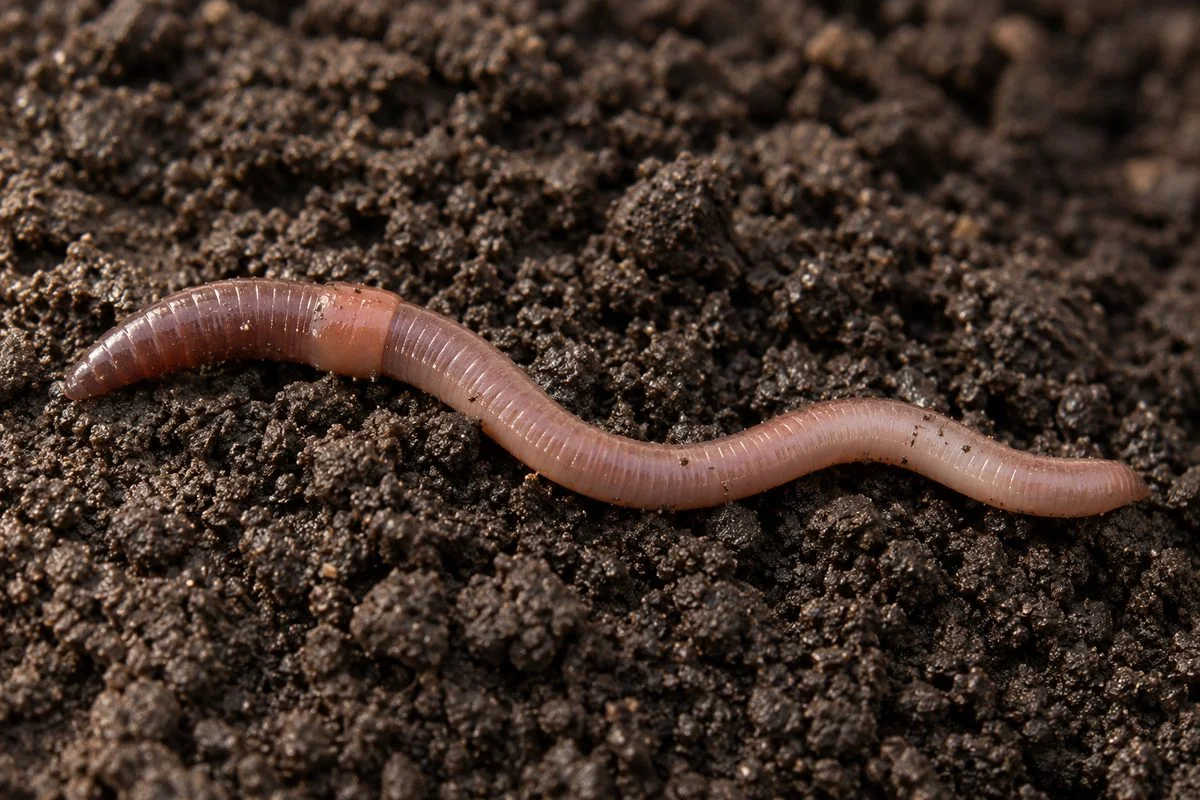
An earthworm resting on moist garden soil.

1. Respiratory organs

Animals exchange gases through different surfaces.

Show
Find an earthworm already visible on damp soil. Look at its surface without disturbing it.
Ask
Would gas exchange become harder if this surface dried?
Say
Yes, gas exchange would become harder because earthworms exchange gases through moist skin.
Used in
Damp compost supports earthworms because their gas exchange needs moist skin.
If your child says…“Every animal has lungs.”
Ask
Where can oxygen enter an earthworm that has no lungs?
What’s true
Insects use air tubes, while frogs use both lungs and skin.
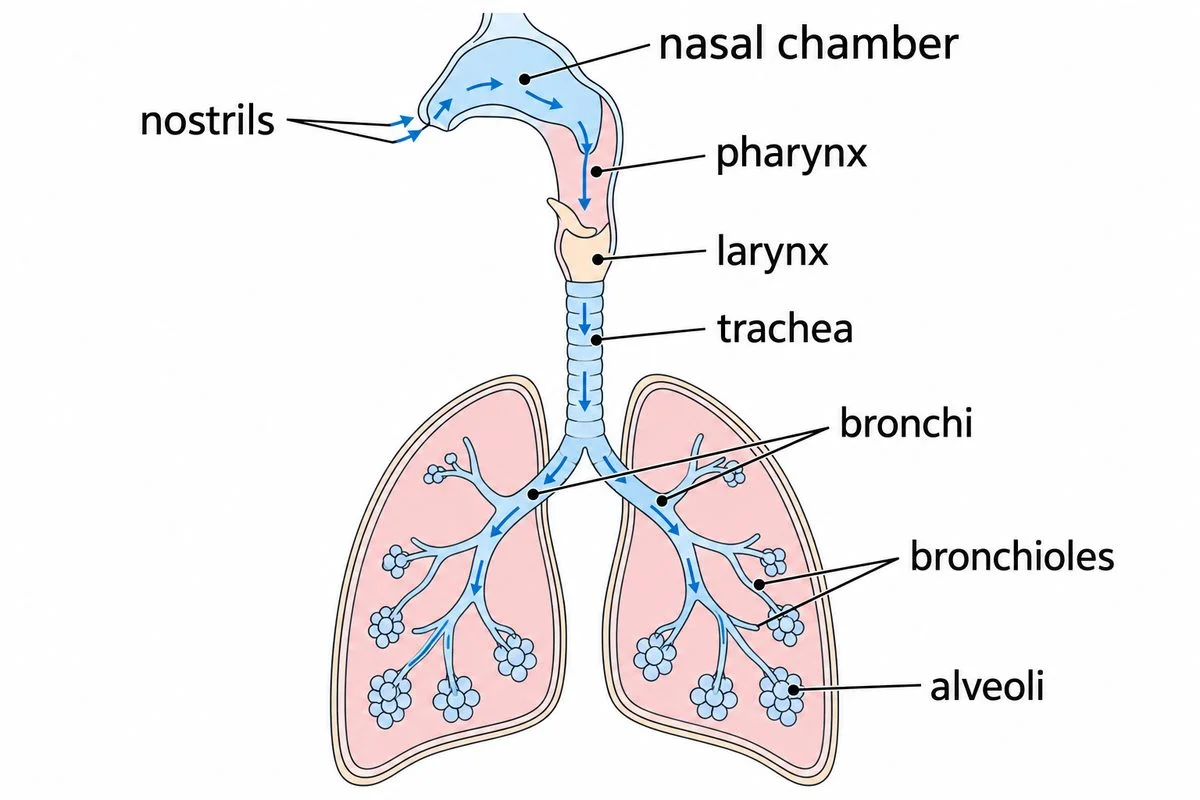
Labelled airway diagram shows alveoli, a swallowing flap and paired lung coverings.

2. Human respiratory system

Airways carry prepared air to the gas-exchanging alveoli.

Show
Look at the diagram. Trace nostrils, nasal chamber, pharynx, larynx, trachea, bronchi and bronchioles towards the alveoli. Find the double outline around each lung.
Ask
Where will oxygen cross into blood: the tiny sacs or the fluid surrounding the lungs?
Say
Oxygen crosses into blood at the tiny sacs; alveoli exchange gases.
Used in
The epiglottis helps keep swallowed food out of the airway.
If your child says…“The fluid around the lungs passes oxygen into blood.”
Ask
Does inhaled air reach the sacs or the fluid outside the lungs?
What’s true
Pleural fluid reduces rubbing between the lung coverings.
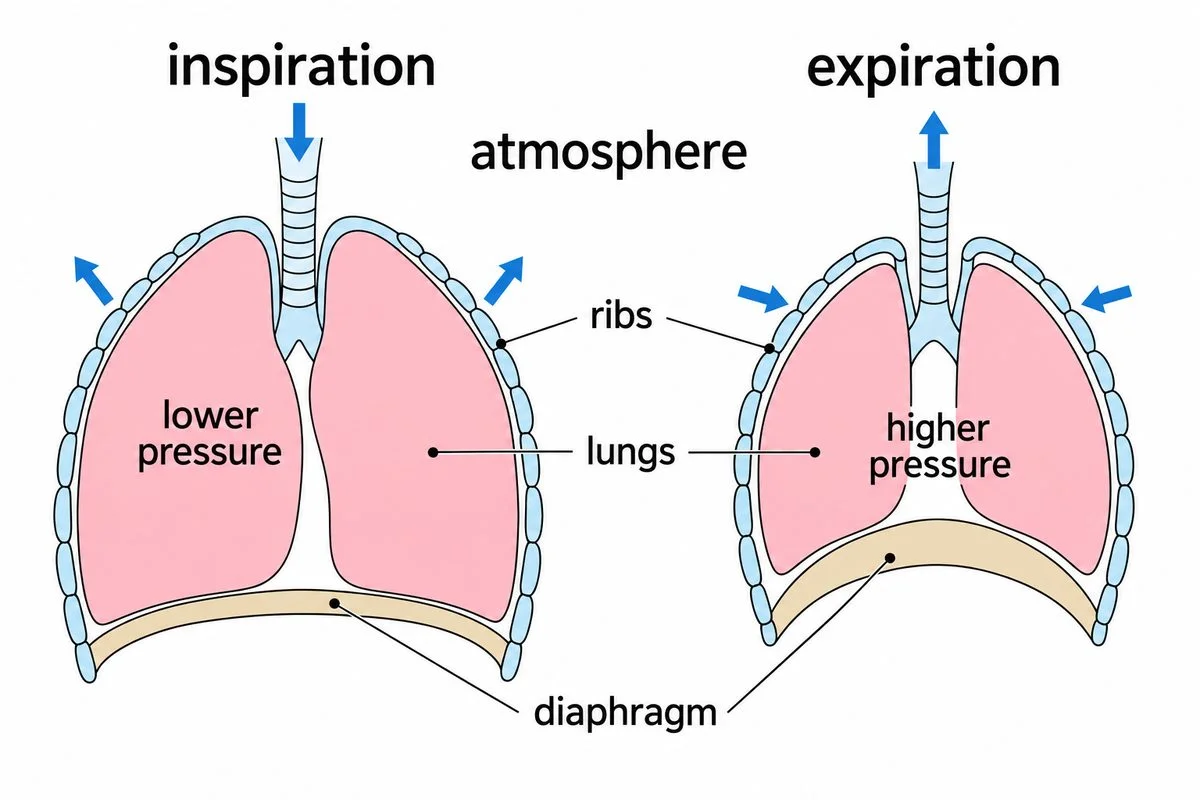
Chest sections connect diaphragm movement, lung expansion, pressure differences and airflow.

3. Mechanism of breathing

Chest expansion lowers lung pressure, allowing air to enter.

Show
Look at the diagram. Compare diaphragm shape and rib movement, then lung size and pressure.
Ask
With lower pressure inside the lungs on the left, which way will air move?
Say
The diaphragm contracts and ribs rise, expanding the lungs. Pressure inside falls below outside pressure, so air enters.
Used in
Assisted ventilation moves air when breathing muscles cannot do enough work.
If your child says…“Higher pressure inside the lungs pulls air in.”
Ask
Which way does air move between higher and lower pressure?
What’s true
Air enters when outside pressure exceeds lung pressure.
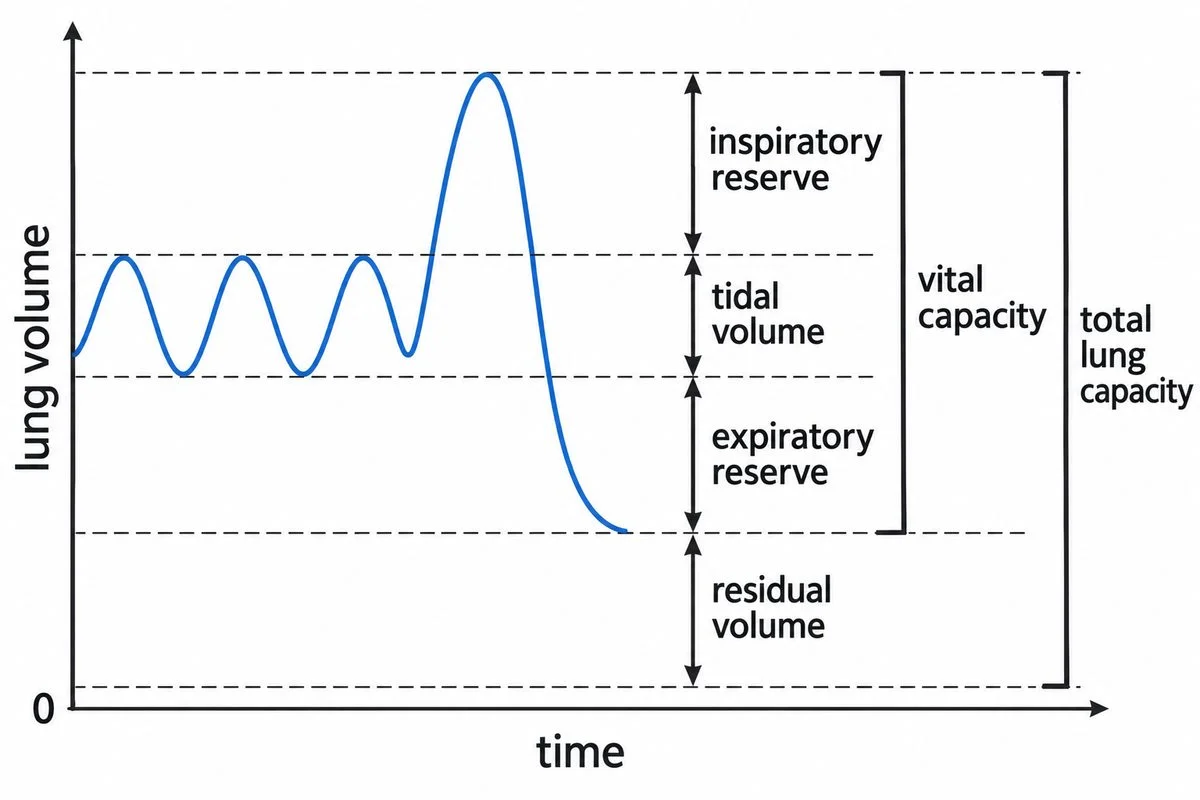
Lung-volume trace shows ordinary breaths, reserves, residual air and two capacity brackets.

4. Respiratory volumes and capacities

Ordinary breaths, reserves and remaining air make different lung volumes.

Show
Look at the diagram. Trace ordinary breaths, maximum inhalation and maximum exhalation. Compare the capacity brackets.
Ask
Will reaching the lowest trough empty the lungs?
Say
Ordinary breaths move tidal volume, and extra inhalation or exhalation uses reserves. Residual air remains after maximum exhalation. Vital capacity excludes this air, while total lung capacity includes it.
Used in
Spirometry measures movable air to help assess lung function.
If your child says…“Vital capacity includes every bit of air in my lungs.”
Ask
How could measured breathed-out air include air that stays inside?
What’s true
Vital capacity excludes residual air; total lung capacity includes it.

Exchanging and carrying gases

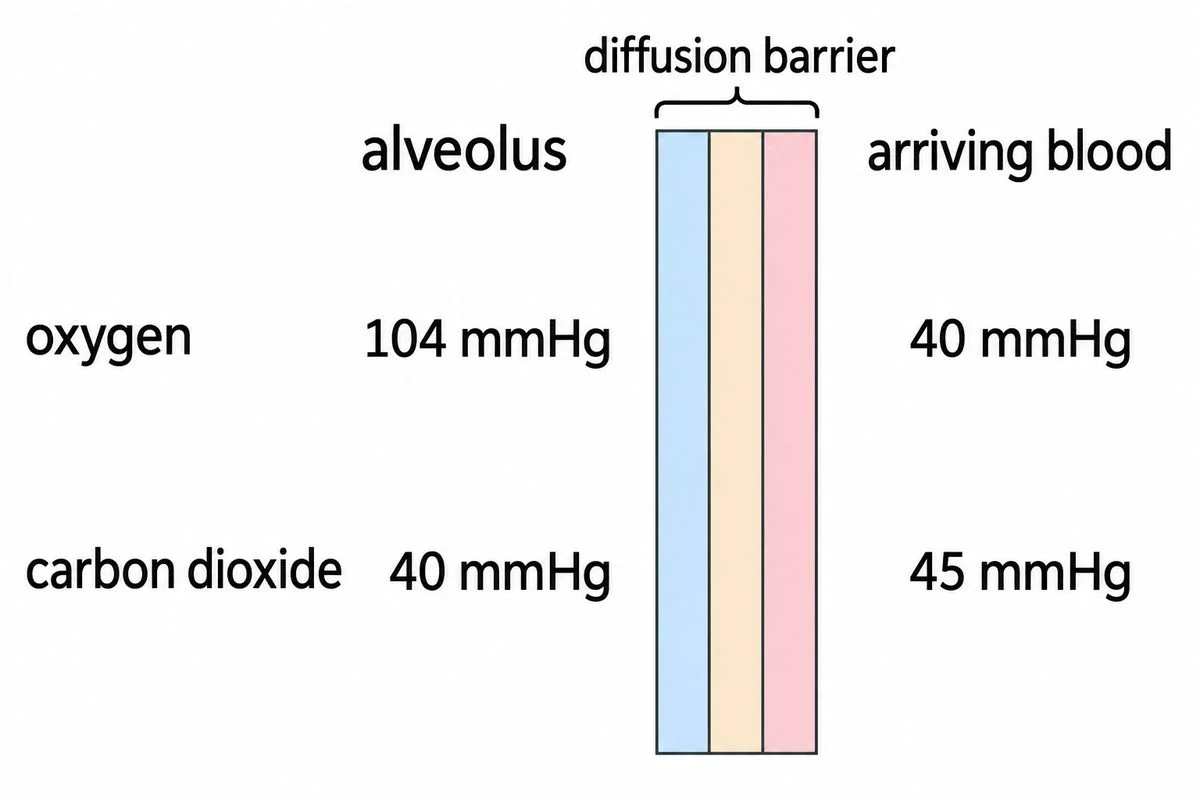
Alveolar and arriving blood gas pressures appear on opposite sides of a thin barrier.

5. Exchange of gases

Each gas crosses the lung barrier down its own pressure difference.

Show
Look at the diagram. Compare oxygen pressures across the barrier, then carbon dioxide pressures.
Ask
Which way will each gas cross the barrier?
Say
Oxygen enters blood, while carbon dioxide leaves it. Each moves from its higher partial pressure towards its lower partial pressure.
Used in
Thin alveolar walls allow rapid gas exchange to supply oxygen and remove carbon dioxide.
If your child says…“Both gases move from the air sacs into blood.”
Ask
If carbon dioxide pressure is higher in arriving blood, which way should it cross?
What’s true
Each gas follows its own pressure difference; solubility and barrier thickness also affect exchange.
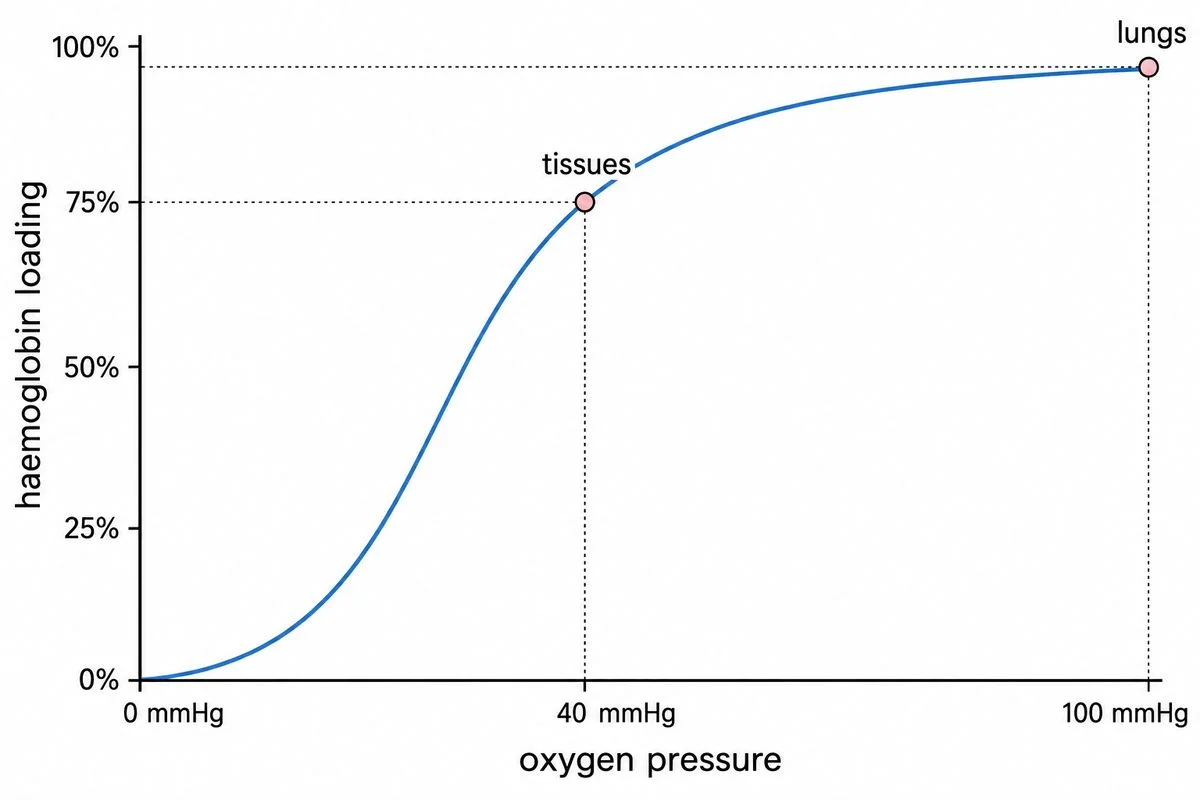
Oxygen-loading diagram shows an S-shaped curve, scaled axes, and tissue and lung points.

6. Transport of oxygen

Haemoglobin loads oxygen in lungs and releases some in tissues.

Show
Look at the diagram. Find the oxygen-pressure and haemoglobin-loading axes. Compare loading at the marked tissue and lung points.
Ask
As blood moves from lungs to tissues, will haemoglobin release some oxygen?
Say
Yes, lower oxygen pressure favours oxygen release in tissues.
Used in
Haemoglobin delivers oxygen to working muscles, supporting energy release for movement.
If your child says…“Once oxygen sticks to haemoglobin, it stays there.”
Ask
How could oxygen reach cells if it never left haemoglobin?
What’s true
Oxygen attaches reversibly, and increased carbon dioxide, acidity and warmth favour release.
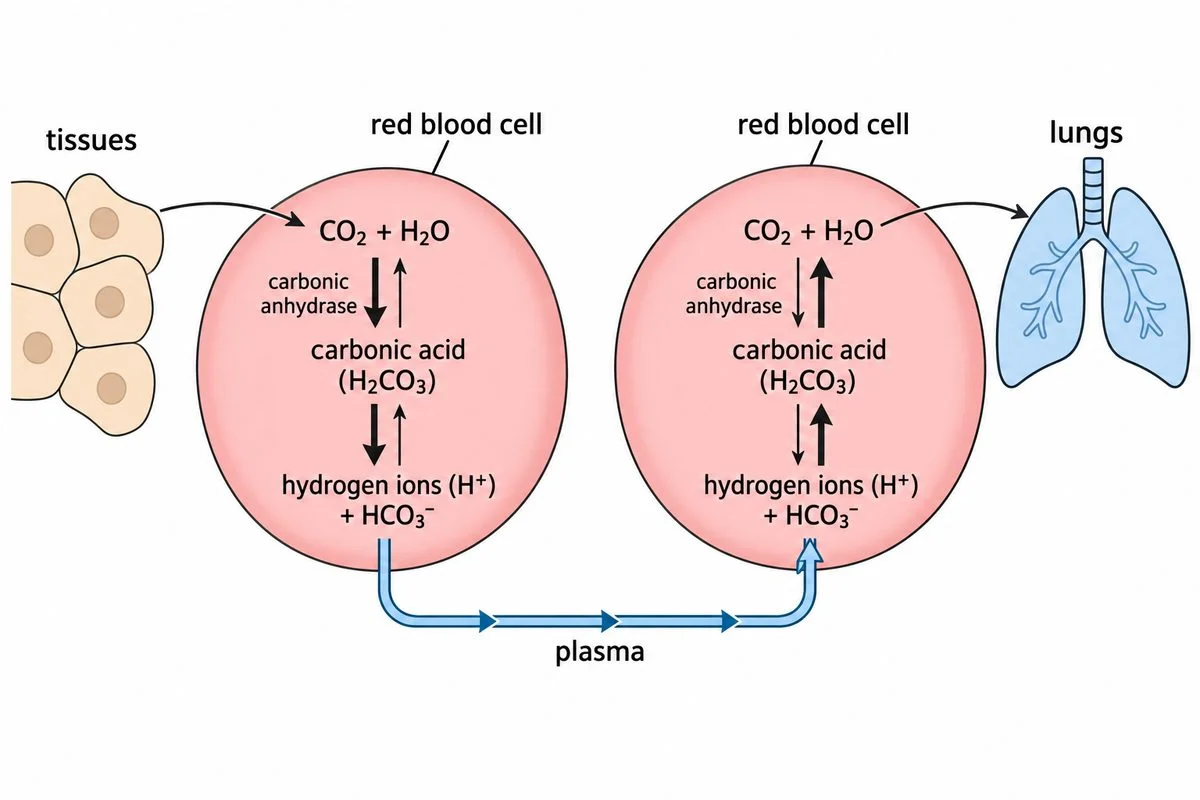
Red cells convert carbon dioxide to bicarbonate near tissues and reverse the reactions near lungs.

7. Transport of carbon dioxide

Bicarbonate carries most carbon dioxide and can release it again.

Show
In the diagram, follow carbon dioxide into red cells, then bicarbonate through plasma.
Ask
Which gas forms when the reactions reverse at the lungs?
Say
Red cells rapidly convert carbon dioxide into bicarbonate. At the lungs, this reverses, releasing carbon dioxide.
Used in
Bicarbonate transport carries waste carbon dioxide from working tissues to the lungs for removal.
If your child says…“Once carbon dioxide becomes bicarbonate, it cannot change back.”
Ask
What do the reverse arrows allow bicarbonate to become?
What’s true
Carbonic anhydrase, abundant in red cells, speeds this reversible conversion.

Controlling and protecting breathing

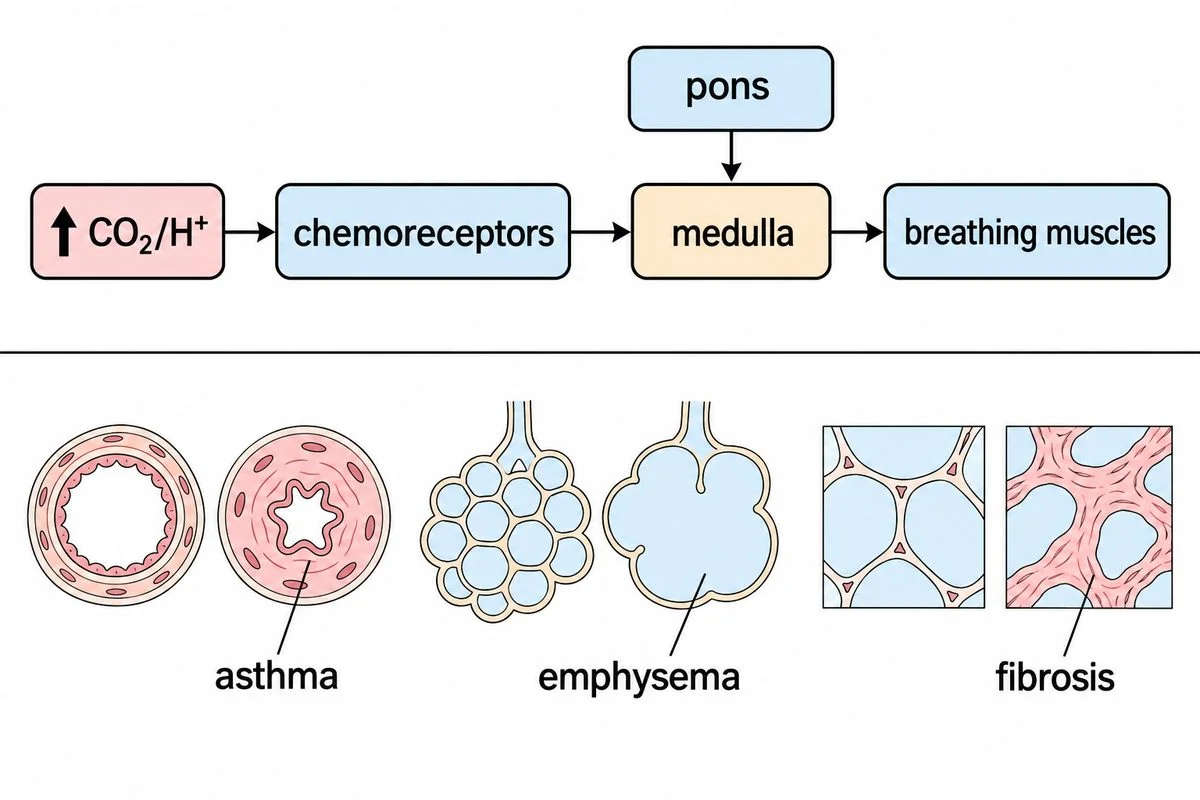
Breathing control pathway above comparisons of healthy structures with asthma, emphysema and fibrosis.

8. Regulation of respiration and disorders of the respiratory system

The brain adjusts breathing; different lung structures develop different disorders.

Show
Follow the diagram’s control pathway. Compare healthy and damaged structures below.
Ask
Can brain signals alone repair the damaged structures?
Say
The medulla controls breathing; the pons adjusts it. Carbon dioxide and acidity stimulate sensors. Signals cannot repair asthma’s inflamed airways, emphysema’s damaged alveoli or fibrosis’s scarring.
Used in
Workplace dust control reduces exposure that can cause lasting lung inflammation and scarring.
If your child says…“Oxygen is the main signal controlling ordinary breathing.”
Ask
If carbon dioxide rises without oxygen falling, should those sensors still respond?
What’s true
During ordinary regulation, rising carbon dioxide and acidity strongly stimulate breathing sensors.

A real problem

Manual ventilation supported breathing during Copenhagen’s polio outbreak.

In 1952, polio overwhelmed Copenhagen’s Blegdam Hospital.

Ibsen suspected paralysed chest muscles were preventing adequate breathing.

Medical students provided continuous ventilation using rubber bags connected to breathing tubes.

The response helped establish intensive care wards for critically ill patients.

Smithsonian MagazineJournal of Applied Physiology via PubMedWellcome Collection

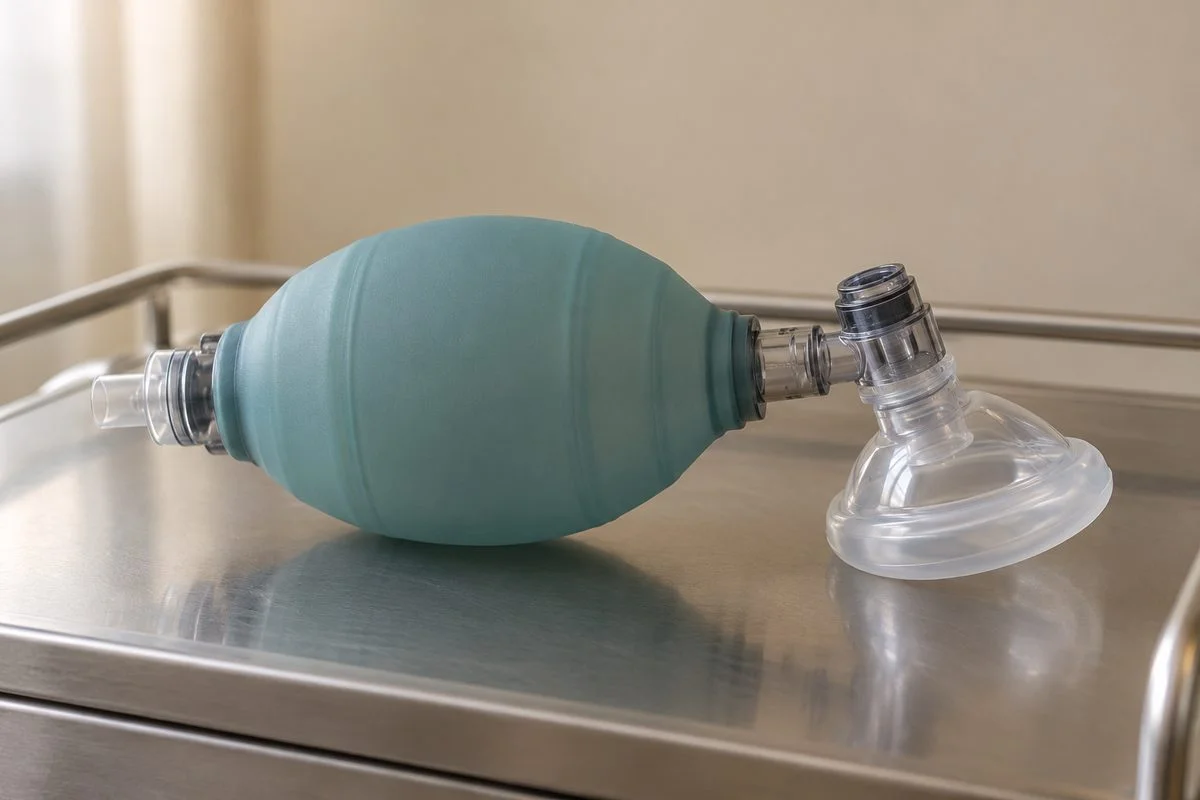
An unbranded manual resuscitation bag on a hospital trolley.

Concept Lab · Common misconception

The tempting mistake in Human Physiology

Open standalone misconception page →

Is moving air into the lungs the same as cellular respiration?

Wrong

Breathing air into the lungs is cellular respiration.

Why it feels right. Both processes involve oxygen and are described together.

Right

Ventilation moves air. Cellular respiration transfers energy from fuel to ATP.

Worked example

Oxygen path
Inhaled air in lungs→Blood→Muscle mitochondria→Supports ATP production
Ventilation moves air. Cellular respiration uses oxygen in energy transfer inside cells.
  1. Trace oxygen from the inhaled air into the blood and then to a muscle cell.
  2. The air movement occurs in the lungs.
  3. In the muscle, mitochondria use oxygen in the reactions that support ATP production.

Ask your child eight quick questions.

One per step. The answer and the reason are given.

  1. Through what surface does an earthworm take in oxygen?

    Its moist skin. Animals can exchange gases without lungs.

  2. What does the fluid between the lung coverings reduce?

    Friction. Gas exchange happens across alveolar walls, while pleural fluid lubricates the coverings.

  3. While air enters during normal inhalation, where is air pressure lower?

    Inside the lungs. Chest expansion lowers lung pressure below outside pressure.

  4. Which capacity includes vital capacity plus the air remaining after maximum exhalation?

    Total lung capacity. It includes residual air, which cannot be breathed out.

  5. Which gas moves from arriving blood into the lung air sacs?

    Carbon dioxide. Its pressure is higher in arriving blood than in the air sacs.

  6. When blood reaches active tissues, what happens to some of haemoglobin’s oxygen?

    It is released. Lower oxygen pressure and tissue conditions favour release.

  7. In which gas does bicarbonate’s carbon leave the lungs during exhalation?

    Carbon dioxide. The reversible reaction releases carbon dioxide in the lungs.

  8. Which gas’s rise strongly stimulates breathing sensors under ordinary conditions?

    Carbon dioxide. Sensors respond strongly to carbon dioxide and increased acidity.

15 more questions with answers, 8 with pictures