Skip to content

Teach Chemical Coordination and Integration in eight steps.

For each idea: show it, ask before you tell, then say one line.

Gather paper, a pencil and a household salt packet.

Common misconceptions & worked visual for this chapter · 15 practice questions with answers

How to teach it

Chemical messages and their control

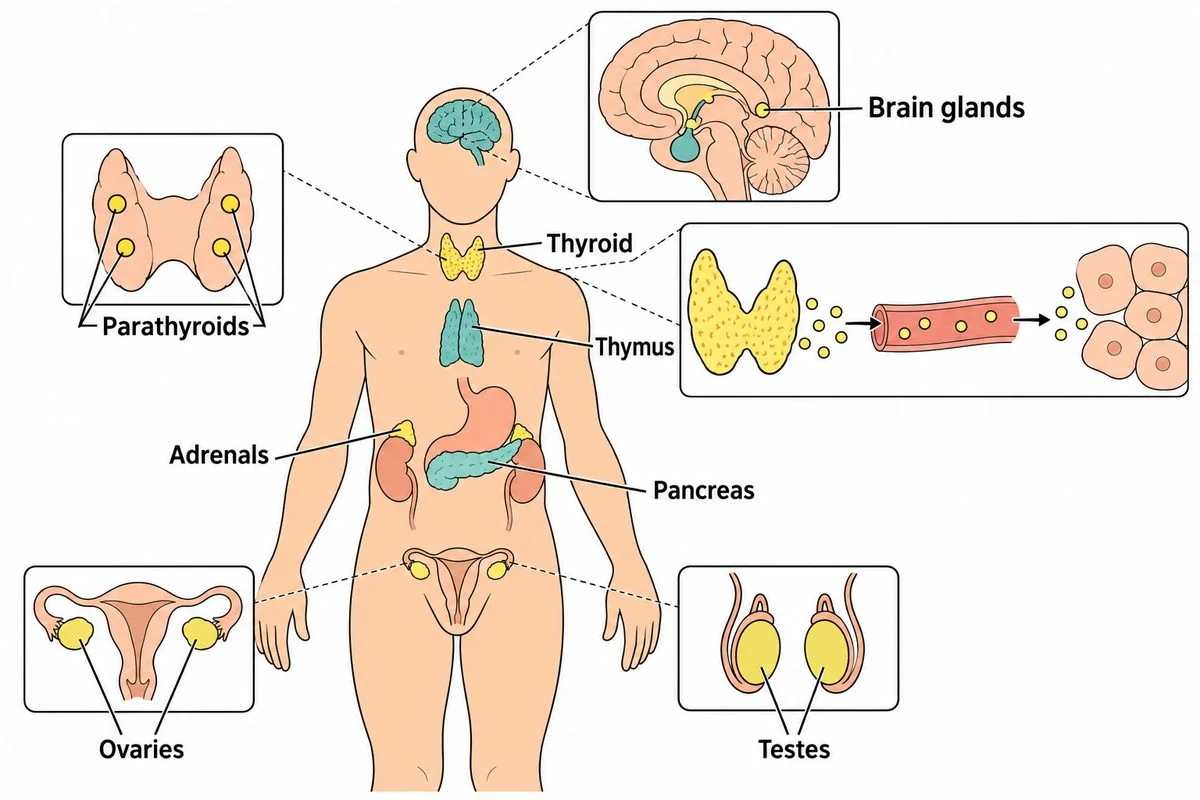
Endocrine gland locations with arrows tracing thyroid hormones into circulation and towards distant tissue.

1. Human Endocrine System

Tiny chemical messages help organs coordinate their work.

Show
Look at the diagram. Locate the brain glands, thyroid and other glands. Follow arrows from the thyroid into blood and towards distant tissues.
Ask
Would thyroid hormone entering this blood vessel reach only nearby cells, or distant cells too?
Say
Blood carries hormones to distant cells.
Used in
Growth hormone supports bone growth, helping children grow taller.
If your child says…“Glands send hormones through special ducts.”
Ask
Which shared transport route could reach glands in all these regions?
What’s true
Blood carries endocrine messages between organs without a separate duct connecting them.
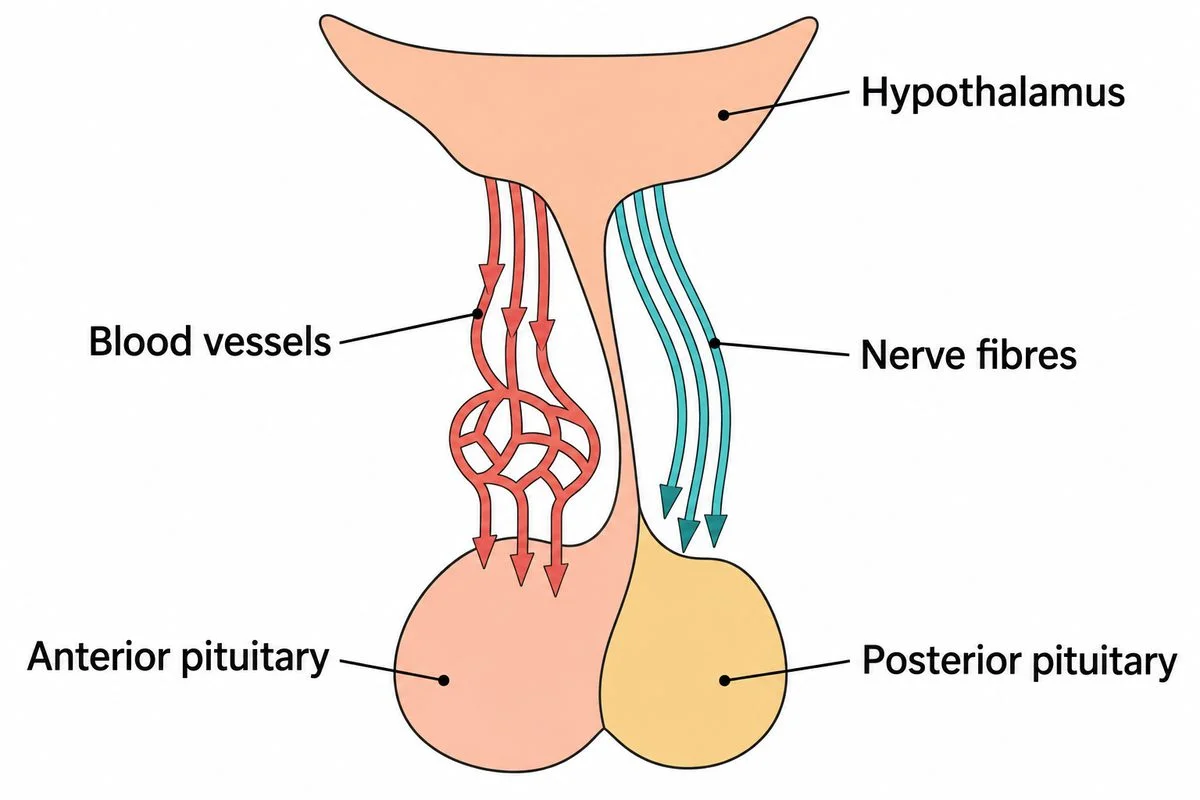
Hypothalamus connected to anterior pituitary by blood vessels and posterior pituitary by nerve fibres.

2. The Hypothalamus and Pituitary Gland

The hypothalamus controls the pituitary through blood and nerves.

Show
Find the hypothalamus in the diagram. Trace blood vessels left and nerve fibres right.
Ask
Without delivery along these nerves, could the posterior pituitary replenish ADH?
Say
No. The hypothalamus makes ADH, which nerve fibres carry to the posterior pituitary for storage and release.
Used in
ADH helps kidneys conserve water, maintaining the body’s water supply.
If your child says…“The back of the pituitary makes ADH.”
Ask
Where does the traced route begin before reaching the posterior pituitary?
What’s true
ADH production occurs in the hypothalamus, separate from its pituitary storage and release.

Hormone sources and actions

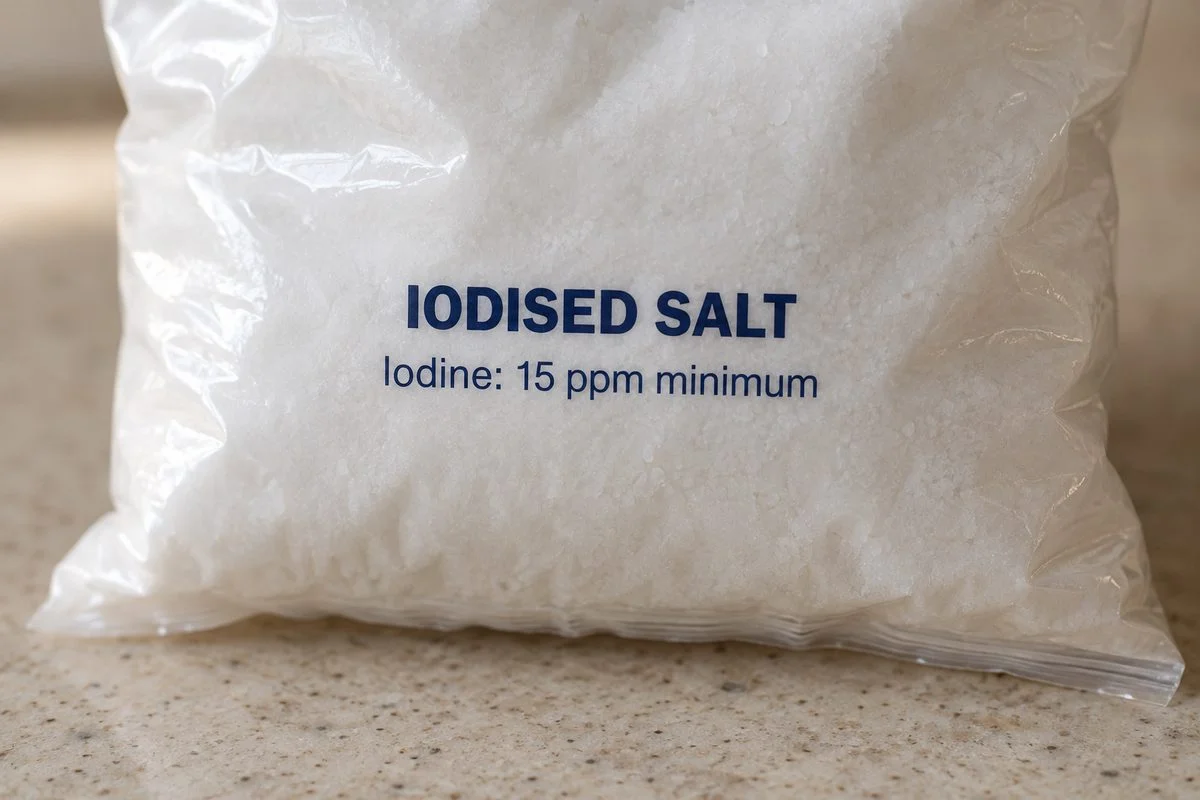
Salt packet with its iodine declaration clearly readable.

3. Pineal Gland, Thyroid Gland, Parathyroid Gland and Thymus

These glands regulate daily rhythms, metabolism, blood calcium and immune development.

Show
Find the iodine declaration on your salt packet. Read whether iodine has been added.
Ask
If iodine becomes scarce, what happens to production of triiodothyronine (T3) and thyroxine (T4)?
Say
The thyroid’s ability to make T3 and T4 decreases because iodine supplies material for T3 and T4.
Used in
Thymus thymosins help T cells develop, supporting defence against infection.
If your child says…“An enlarged thyroid must be making too much hormone.”
Ask
Can a larger gland replace the missing material needed to make its hormones?
What’s true
Iodine shortage can reduce thyroid hormone production even while the gland enlarges.
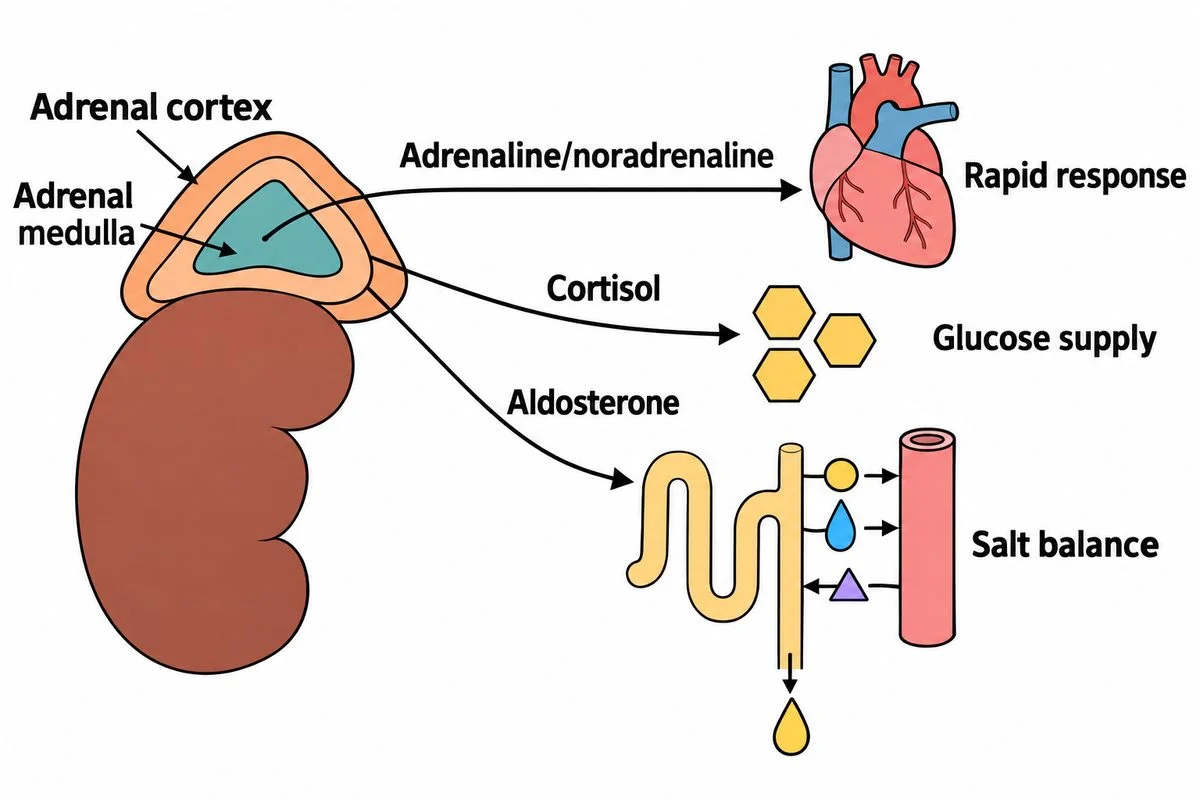
Adrenal cortex and medulla connect to hormones controlling emergency responses, glucose and salt balance.

4. Adrenal Gland

Medulla hormones support emergencies, while cortex hormones regulate fuel and fluids.

Show
Look at the adrenal diagram. Find the outer cortex and inner medulla above the kidney. Follow each hormone’s arrow to its effect.
Ask
Which region would release hormones that quicken the heartbeat during danger?
Say
The medulla releases adrenaline and noradrenaline, which quicken the heartbeat. Cortisol from the cortex increases glucose availability. Cortical aldosterone helps kidneys retain sodium and water while increasing potassium loss in urine.
Used in
Aldosterone helps kidneys conserve salt and water, supporting blood volume.
If your child says…“Emergency hormones slow the heart down.”
Ask
How would faster circulation help deliver oxygen and fuel during an emergency?
What’s true
Adrenaline and noradrenaline increase heart activity, helping prepare the body for rapid action.
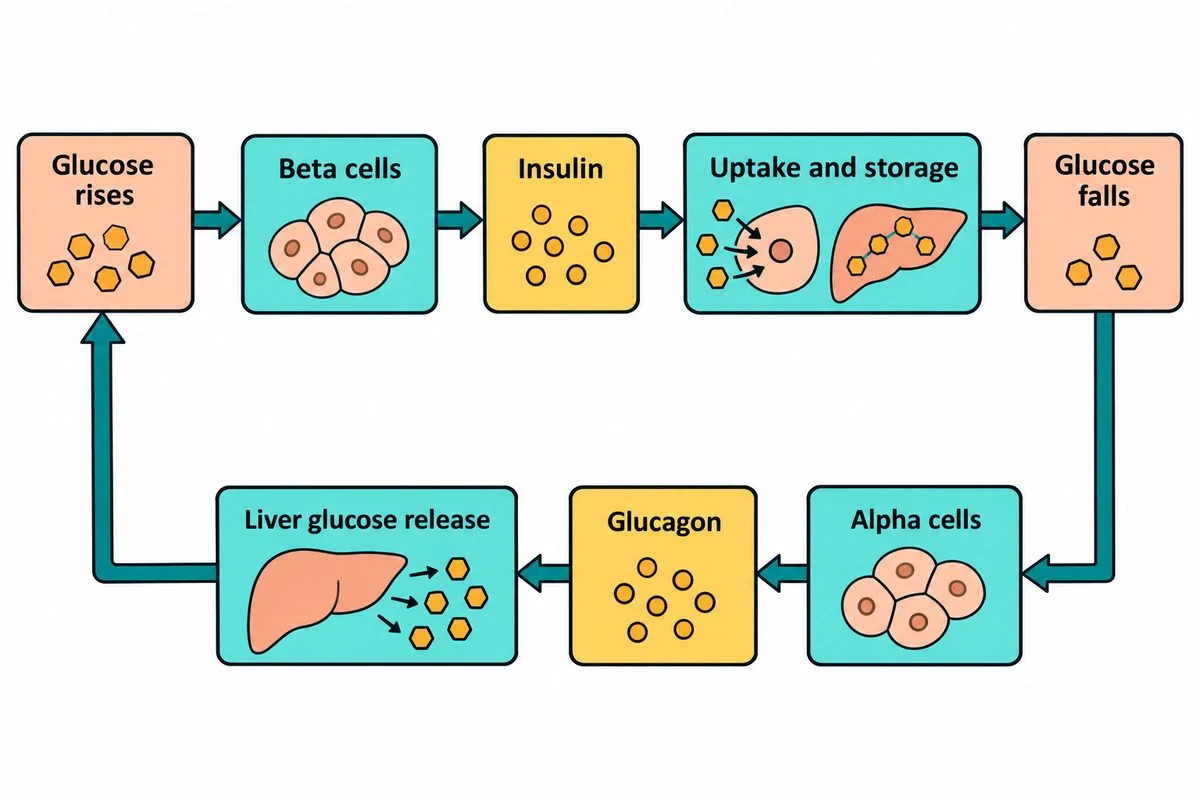
Opposing insulin and glucagon pathways lower and raise blood glucose.

5. Pancreas

Insulin lowers blood glucose, while glucagon raises it.

Show
Trace the diagram’s upper pathway through insulin. Follow the lower pathway through glucagon to the liver.
Ask
Which pathway keeps glucose available between meals?
Say
Alpha cells release glucagon, increasing liver glucose release. Beta cells release insulin, promoting glucose uptake and storage. Their opposing actions regulate blood glucose.
Used in
Insulin treatment helps lower persistently high blood glucose in diabetes mellitus.
If your child says…“Glucagon stores glucose and lowers blood glucose.”
Ask
What happens to blood glucose when the liver releases more glucose into it?
What’s true
Glucagon raises blood glucose by increasing the liver’s glucose production and release.
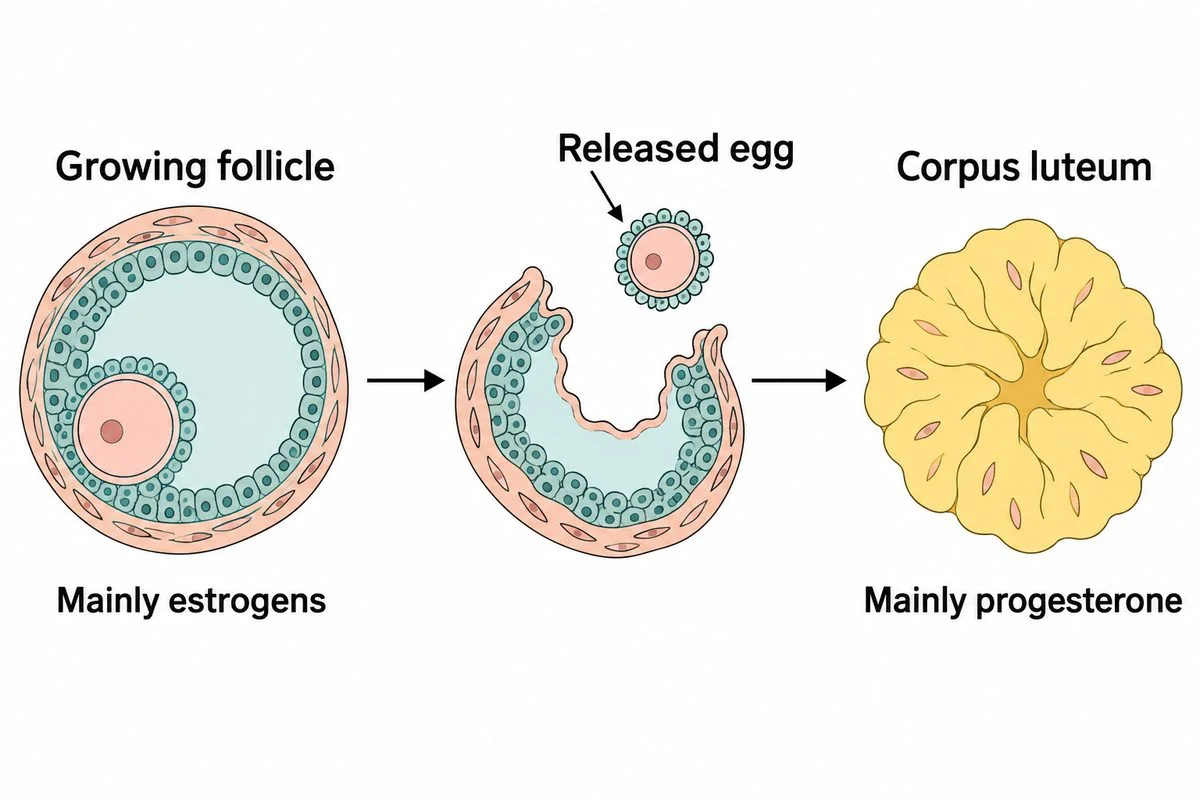
Follicle releases an egg and becomes the corpus luteum, with main hormones labelled.

6. Testis and Ovary

Ovaries and testes produce hormones as well as eggs or sperm.

Show
Look at the diagram. Find the growing follicle, released egg and remaining tissue. Read which hormone each ovarian structure mainly produces.
Ask
Which hormone will the remaining tissue mainly produce after egg release?
Say
After egg release, the follicle becomes the corpus luteum, whose main hormone is progesterone.
Used in
Progesterone maintains the uterine lining, helping support pregnancy.
If your child says…“After egg release, the remaining tissue mainly makes estrogen.”
Ask
Does the tissue keep the same main hormone after becoming a corpus luteum?
What’s true
Growing follicles mainly produce estrogens, whereas the corpus luteum mainly produces progesterone.
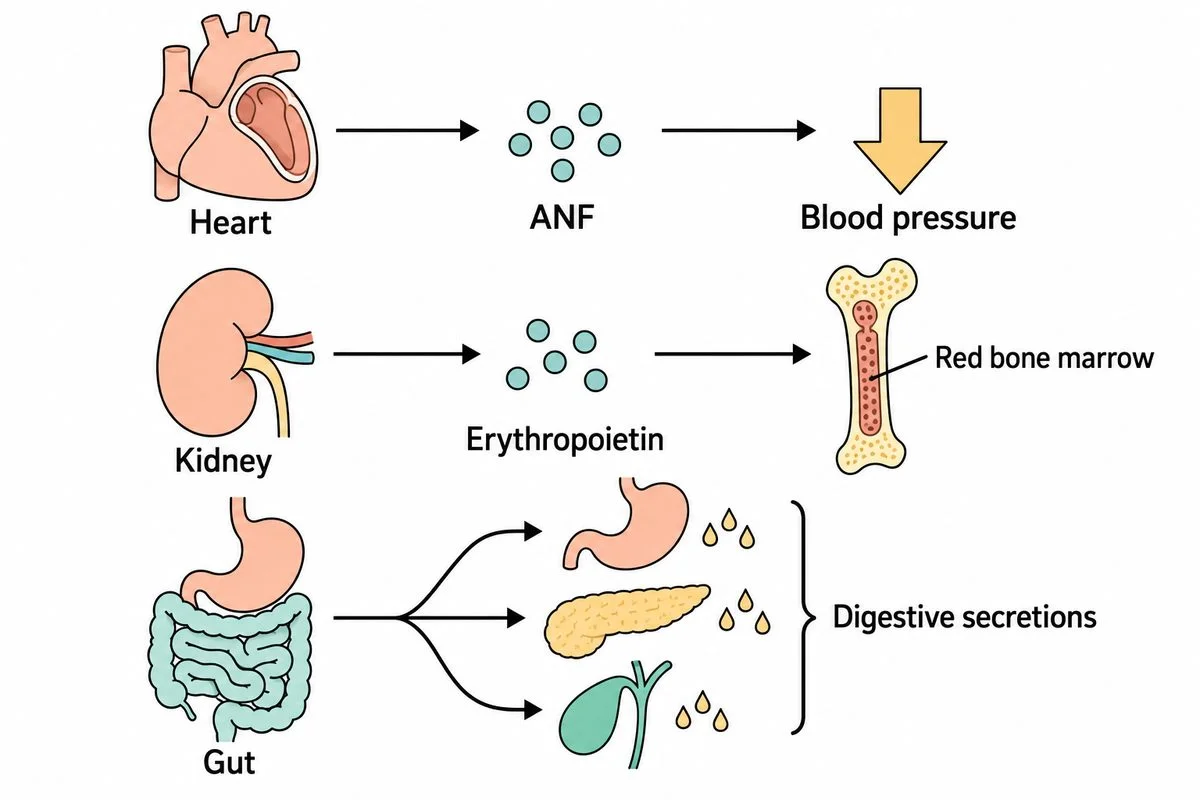
Heart, kidney and gut pathways show hormone sources and their effects.

7. Hormones of Heart, Kidney and Gastrointestinal Tract

Organs also release hormones controlling circulation, blood-cell production and digestion.

Show
Trace the diagram’s heart, kidney and gut pathways to their targets.
Ask
Could this kidney also affect red-cell production?
Say
Kidney erythropoietin stimulates red-cell production, while heart ANF lowers blood pressure. Gut hormones coordinate digestive secretions.
Used in
Secretin triggers pancreatic bicarbonate release, helping neutralise acid entering the intestine.
If your child says…“Only special hormone glands make hormones.”
Ask
What message does this kidney send beyond its role in making urine?
What’s true
Specialised cells in the heart, kidneys and digestive tract also release hormones.

How target cells respond

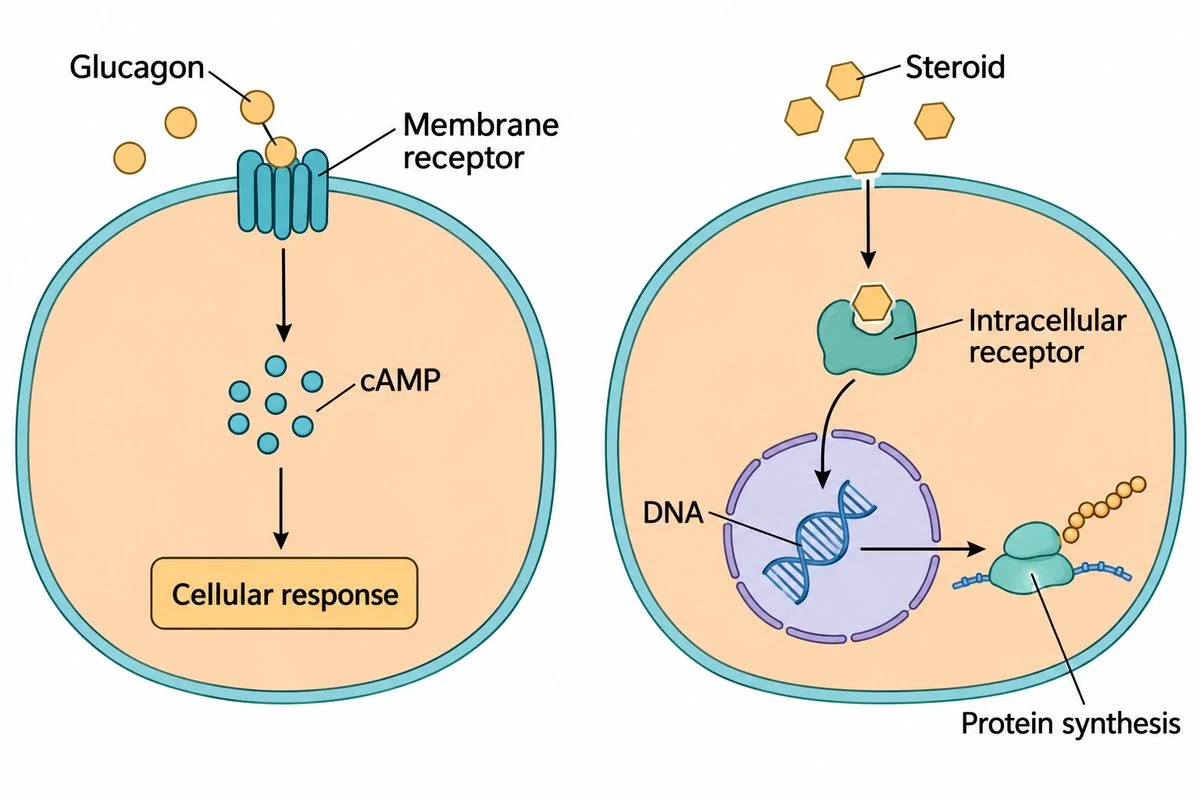
Glucagon signals through a surface receptor, while a steroid binds inside its target cell.

8. Mechanism of Hormone Action

Matching receptors start responses at the cell surface or inside cells.

Show
Trace glucagon’s surface pathway in the diagram. Follow the steroid inside to its receptor and DNA.
Ask
Would a cell lacking the matching receptor respond?
Say
No. Glucagon uses surface receptors and internal signals. Steroid hormones use internal receptors to regulate genes.
Used in
Receptor matching directs hormone responses to suitable cells.
If your child says…“Every cell reached by a hormone responds.”
Ask
What starts the pathway inside the cell when glucagon reaches its surface?
What’s true
A hormone needs its matching receptor to start a response in a target cell.

A real problem

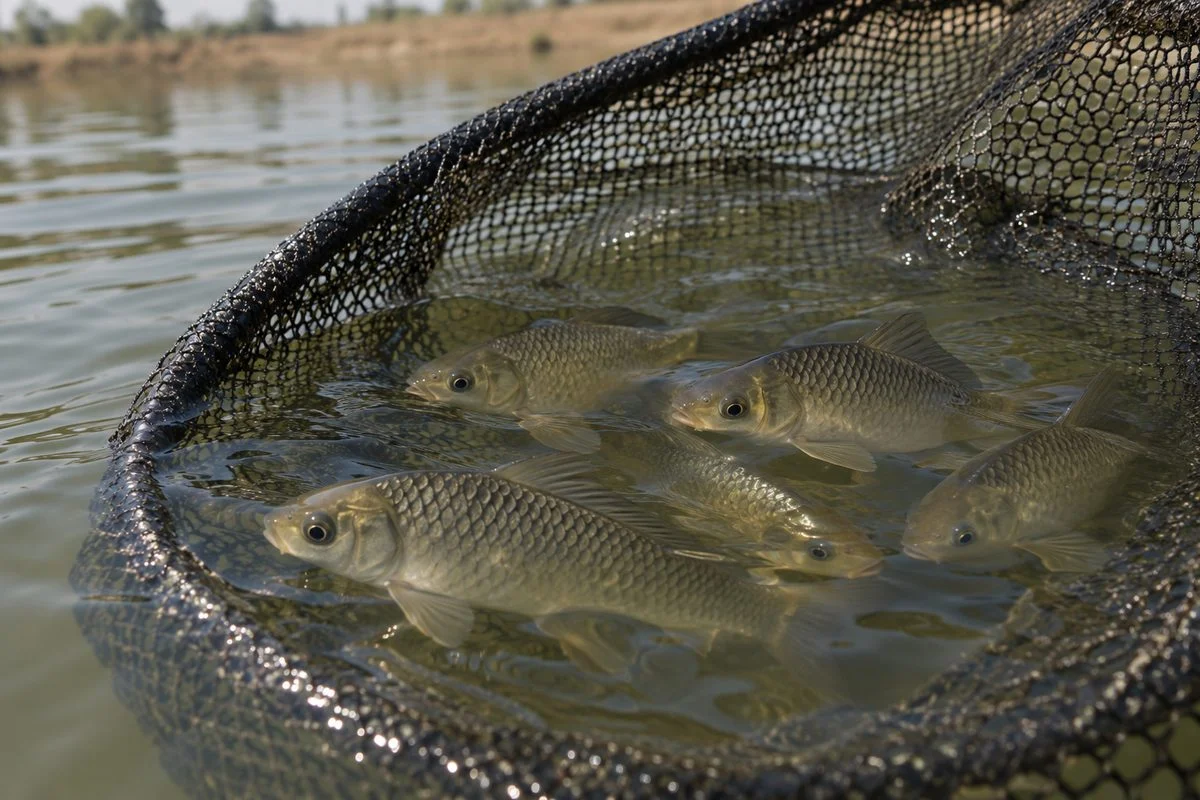
Pituitary hormones helped Indian carps spawn.

Carps could mature in farming ponds without spawning.

In 1957, injections of fish pituitary hormones successfully induced Indian carps to spawn.

Induced breeding helped farmers obtain young fish of suitable species and sizes at suitable times.

FAOFAOICAR

Young carp in a partly submerged net beside a farming pond.

Concept Lab · Common misconception

The tempting mistake in Chemical Coordination and Integration

Open standalone misconception page →

Does a hormone affect every cell it reaches?

Wrong

Insulin acts on all cells equally because blood carries it everywhere.

Why it feels right. Circulation makes the hormone widely available.

Right

A cell responds according to its receptors and signalling machinery.

Worked example

Target cell
Hormone arrives→Matching receptor binds→Response
Other cell
Hormone arrives→No matching receptor→No receptor-mediated response
Both cells encounter the circulating hormone. The matching receptor allows a specific response.
  1. Hormone molecules pass many cells in the bloodstream.
  2. A target cell with the appropriate receptor can respond when the hormone binds.

Ask your child eight quick questions.

One per step. The answer and the reason are given.

  1. What carries a thyroid hormone to a distant target organ?

    Blood. Endocrine glands release hormones without delivery ducts.

  2. Where is ADH made before the posterior pituitary releases it?

    In the hypothalamus. A hormone’s release site need not be its production site.

  3. How does iodine shortage affect thyroid hormone production?

    It reduces production. Making T3 and T4 requires iodine, even when the thyroid enlarges.

  4. What happens to heart activity when adrenaline prepares the body for an emergency?

    It increases. Faster circulation helps deliver oxygen and fuel for rapid action.

  5. Which pancreatic hormone increases the liver’s glucose release between meals?

    Glucagon. Glucagon increases glucose availability instead of promoting its storage.

  6. Which ovarian structure mainly releases progesterone after egg release?

    The corpus luteum. The emptied follicle changes into tissue whose main hormone is progesterone.

  7. Which organ releases erythropoietin to stimulate red-cell production?

    The kidney. Kidney erythropoietin stimulates marrow, showing that hormone sources extend beyond dedicated glands.

  8. Which cells reached by a hormone can respond to it?

    Cells with its matching receptor. Contact alone cannot start a response without the suitable receptor.

15 more questions with answers, 4 with pictures