Skip to content

Teach Diversity in the Living World in three steps.

For each idea: show it, ask before you tell, then say one line.

Gather an onion, paper and a pencil.

Common misconceptions & worked visual for this chapter · 15 practice questions with answers

Why it matters

  • Kitchen greens share a use, but their features help us tell them apart.
  • Scientific names let people using different local names discuss the same organism.
  • Correct pest identification helps scientists select organisms that control it.

What to teach

How to teach it

Recognising and naming organisms

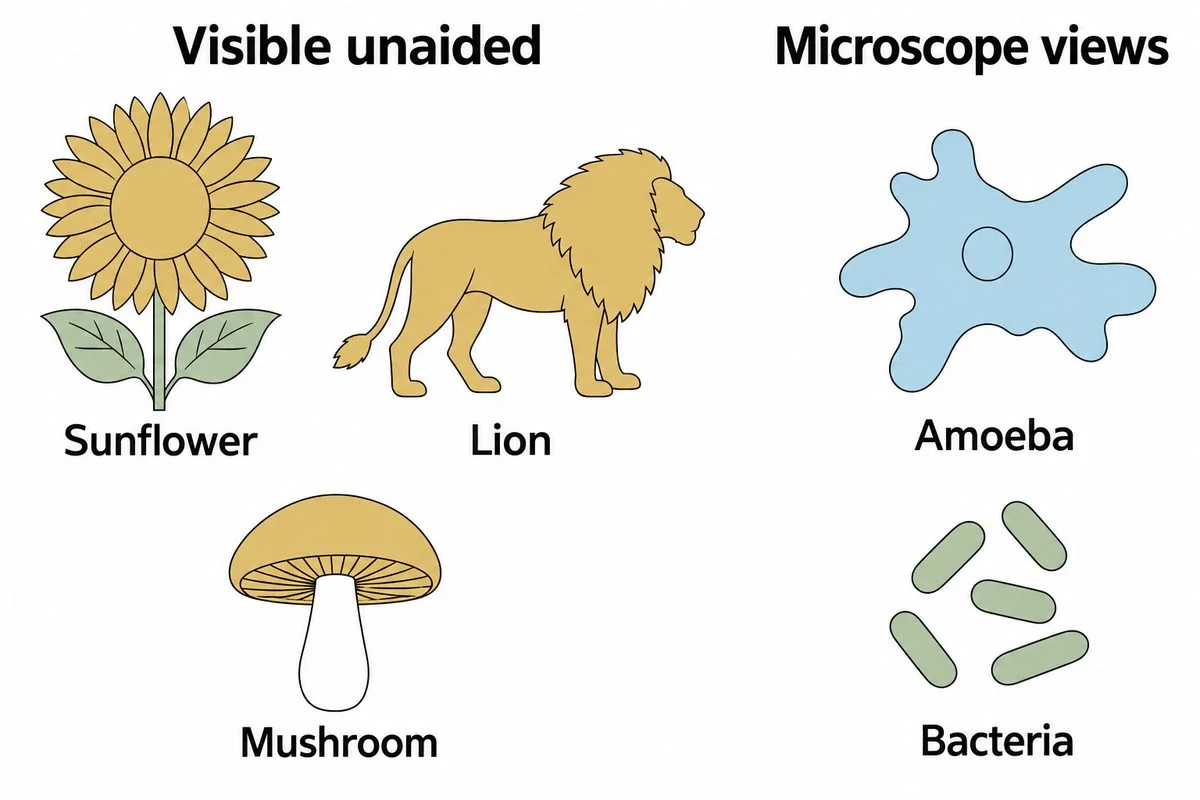
Visible organisms beside enlarged microscope views of an amoeba and bacteria.

1. Diversity in the Living World

Life’s variety includes organisms too small to see unaided.

Show
Look at the diagram’s visible organisms on the left. Find the enlarged microscope views on the right.
Ask
Which organisms would we miss when listing life using only our eyes?
Say
We would miss the amoeba and bacteria.
Used in
Biodiversity records help conservation workers identify which organisms need protection.
If your child says…“Biodiversity means only the plants and animals we can see.”
Ask
Would leaving out the microscope views give us a complete list?
What’s true
Biodiversity includes microscopic organisms too.
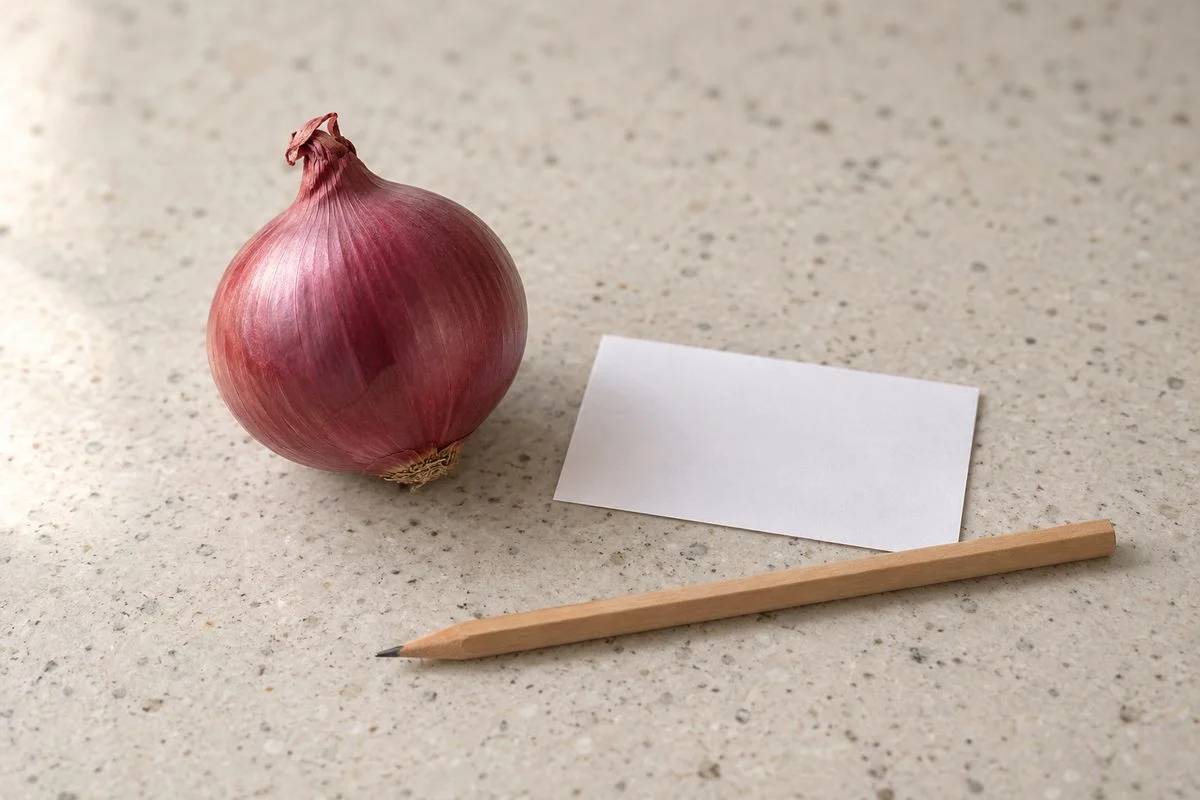
Whole onion beside blank paper and a pencil.

2. Identification and Nomenclature

Identify the organism before attaching its standard two-word scientific name.

Show
Identify an onion together. Say its local names. Place blank paper beside it, ready for its label.
Ask
Will changing this onion’s local name change the scientific name we write on its label?
Say
Changing this onion’s local name will not change its scientific name.
Used in
Scientific names on seed records help growers distinguish plants despite differences in local names.
If your child says…“cepa alone is the complete scientific name.”
Ask
Which part disappears when you shorten Allium cepa to cepa?
What’s true
The complete name needs the genus together with the specific epithet.

Putting organisms into groups

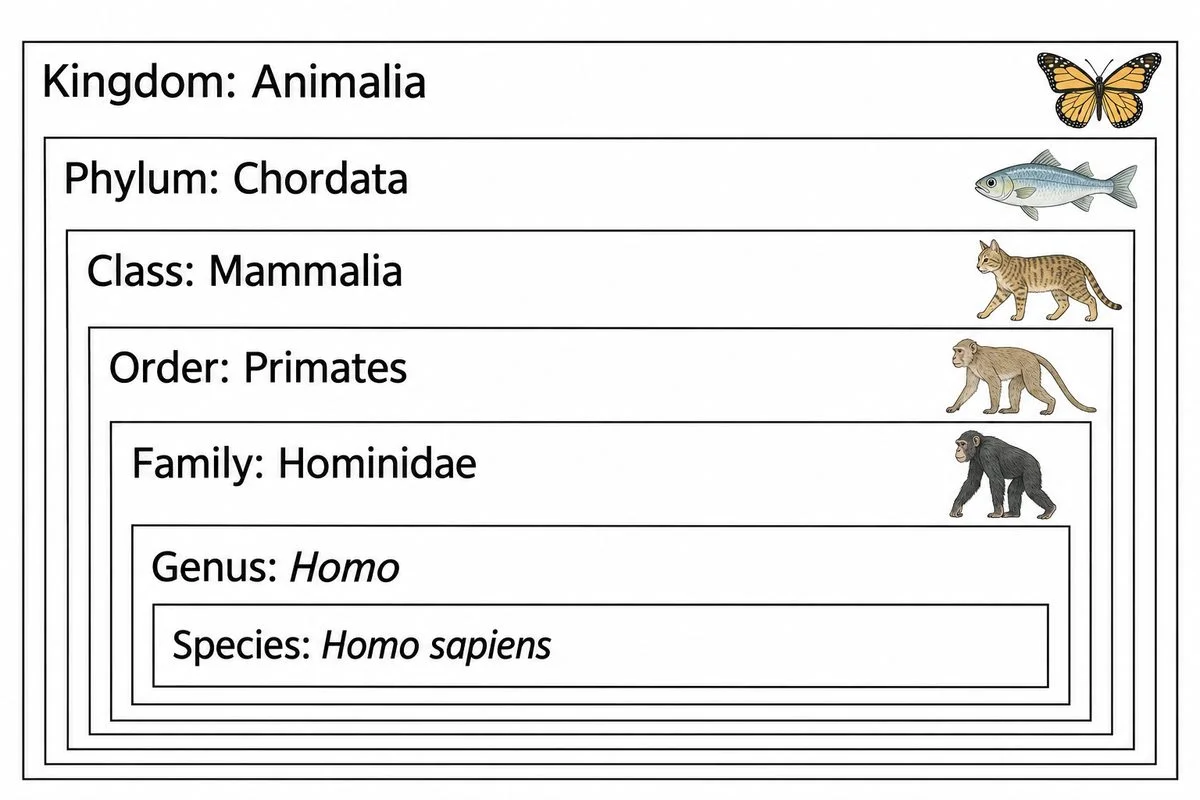
Seven nested taxonomic groups containing animals, from Animalia inward to Homo sapiens.

3. Taxonomic Categories

Smaller groups fit within broader groups at successive ranks.

Show
Find Homo sapiens in the diagram. Follow its enclosing groups outwards to Animalia.
Ask
Looking at these boxes, will humans placed inside Primates also belong inside Mammalia?
Say
Primates fits inside Mammalia, so humans belong to both.
Used in
Plant family records help gardeners recognise related crops when planning crop rotation.
If your child says…“Humans are primates, so they cannot also be mammals.”
Ask
Can anything inside the Primates box be outside the surrounding Mammalia box?
What’s true
An organism belongs to smaller and larger groups at the same time.

A real problem

Correct identification helped scientists select papaya pest controls.

Identifying the mealybug correctly helped scientists shortlist organisms that could control it.

The natural parasite feeds on the mealybug and destroys it.

In 2010, imported Acerophagus papayae successfully controlled papaya mealybug in Tamil Nadu.

Tamil Nadu Agricultural UniversityThe Indian ExpressICAR

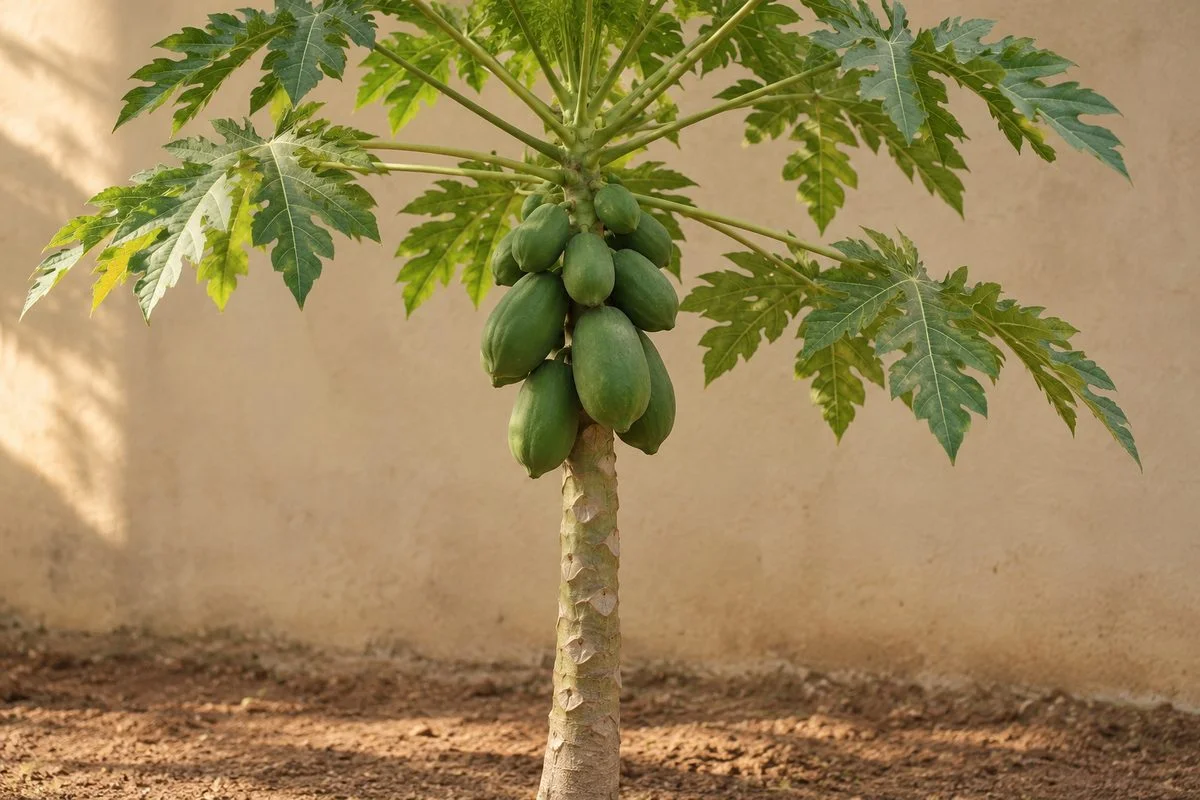
Papaya tree bearing fruit in a home garden.

Concept Lab · Common misconception

The tempting mistake in Diversity in the Living World

Open standalone misconception page →

Does a shared genus mean the same species?

Wrong

Two organisms with the same genus name belong to the same species.

Why it feels right. Their scientific names begin alike.

Right

The genus is a group. Both words together identify the species.

Worked example

Panthera
P. leo→Lion
Panthera
P. tigris→Tiger
The two names branch from one genus into separate species.
  1. Panthera leo and Panthera tigris share the genus Panthera.
  2. The two complete names refer to lions and tigers, respectively.

Ask your child three quick questions.

One per step. The answer and the reason are given.

  1. Which organisms shown would be missing from a list restricted to visible plants and animals?

    Mushroom, amoeba and bacteria. Biodiversity includes fungi and microscopic organisms, beyond visible plants and animals.

  2. What must come before cepa on the onion’s scientific label?

    Allium. The genus comes first; the specific epithet alone is incomplete.

  3. Which class contains humans even though they also belong to the order Primates?

    Mammalia. Primates lies within Mammalia, so membership of both is consistent.

15 more questions with answers, 1 with pictures